Optimizing Checkout Flows for US E-commerce: 10% Abandonment Decrease

Optimizing checkout flows on e-commerce platforms is essential for US businesses to achieve a 10% decrease in cart abandonment by year-end 2025, ensuring a smoother customer journey and increased conversions.
In the competitive landscape of online retail, a seamless checkout experience is no longer a luxury but a necessity. The goal of optimizing checkout flows on e-commerce platforms for US consumers: a 10% decrease in abandonment by year-end 2025 is an ambitious yet achievable target for businesses looking to thrive. This comprehensive guide delves into actionable strategies to transform your checkout process into a conversion powerhouse.
Understanding the US consumer checkout psyche
Understanding the unique behaviors and expectations of US consumers during the checkout process is the foundational step toward effective optimization. Their preferences are often shaped by a fast-paced digital environment and a high expectation for convenience and security.
US consumers value speed and transparency above almost all else. Any friction point, no matter how small, can lead to immediate abandonment. This means forms should be easy to fill, payment options diverse, and shipping costs clear from the outset.
The demand for speed and simplicity
Modern US shoppers are accustomed to instant gratification. Lengthy forms, multiple pages, or unexpected delays can quickly deter them. Simplifying the checkout path is paramount.
- Guest checkout options: Offering a guest checkout significantly reduces friction for first-time buyers.
- Progress indicators: Visual cues showing how many steps remain can manage expectations and encourage completion.
- Pre-filled information: For returning customers, pre-populating fields saves valuable time and effort.
Trust and security expectations
Security concerns are a major factor for US consumers when sharing personal and financial information online. A robust and visibly secure checkout process builds confidence.
Displaying trust badges, secure payment gateway logos, and clear privacy policies are not just good practices; they are essential for reassuring customers. Any hint of insecurity can lead to immediate cart abandonment, underscoring the importance of transparent security measures.
In summary, tailoring the checkout experience to the US consumer’s desire for speed, simplicity, and unwavering security is critical. By addressing these core psychological drivers, e-commerce platforms can significantly improve their conversion rates and move closer to their abandonment reduction goals.
Streamlining the checkout journey: key strategies
Streamlining the checkout journey involves meticulously analyzing each step a customer takes from cart to confirmation and identifying areas for improvement. The goal is to remove any unnecessary obstacles and make the process as intuitive as possible.
This often means reducing the number of clicks, minimizing data entry, and providing clear, concise information at every stage. A streamlined process not only benefits the customer but also enhances the overall efficiency of the e-commerce platform.
Reducing form fields and steps
One of the most common culprits for checkout abandonment is an overly complex form. Each additional field increases the cognitive load on the user and the likelihood of them giving up.
- Consolidate information: Combine related fields where possible, such as first and last name into a single ‘Full Name’ field.
- Eliminate optional fields: Question whether each piece of information is truly essential for the order.
- Single-page checkout: Consider implementing a single-page checkout to keep all necessary steps visible and accessible.
Optimizing payment options and gateways
The availability and ease of use of payment options directly impact conversion rates. US consumers expect a variety of secure and convenient payment methods.
Offering popular options like credit/debit cards, PayPal, Apple Pay, and Google Pay can cater to a wider audience. Furthermore, ensuring that payment gateways are reliable and process transactions quickly minimizes frustration and builds trust. Any delay or error at this critical stage can be a deal-breaker for impatient shoppers.
By focusing on strategic reductions in form fields, consolidating steps, and providing diverse, reliable payment solutions, e-commerce businesses can create a checkout journey that is both efficient and enjoyable for US consumers, driving down abandonment rates.
Enhancing user experience through design and functionality
Beyond simply reducing steps, the aesthetic and functional design of your checkout page plays a pivotal role in retaining customers. A well-designed checkout instills confidence and guides the user effortlessly towards completion.
This involves clear visual hierarchies, intuitive navigation, and responsive design that adapts to various devices. The overall user experience should feel consistent with the rest of the website, reinforcing brand identity and professionalism.
Responsive design for all devices
With a significant portion of online shopping occurring on mobile devices, a responsive checkout design is non-negotiable. Pages must load quickly and display correctly on smartphones, tablets, and desktops alike.
- Mobile-first approach: Design the checkout experience with mobile users in mind first, then adapt for larger screens.
- Large, tappable buttons: Ensure that interactive elements are easy to tap on smaller screens.
- Optimized image sizes: Fast loading times are crucial, especially on mobile networks, so optimize all images.
Clear error messages and validation
Mistakes happen, but how your checkout handles them can make all the difference. Ambiguous error messages are a major source of frustration and abandonment.
Providing clear, immediate, and actionable feedback when a user makes an error can guide them to correct it without leaving the page. Inline validation, where fields are checked as they are filled, is particularly effective. This proactive approach prevents users from submitting incomplete or incorrect information, saving time and reducing friction.
Ultimately, a checkout process designed with the user’s experience at its core, featuring responsive design and helpful validation, significantly contributes to a positive shopping experience and a higher conversion rate, directly supporting the goal of optimizing checkout flows on e-commerce platforms for US consumers: a 10% decrease in abandonment by year-end 2025.
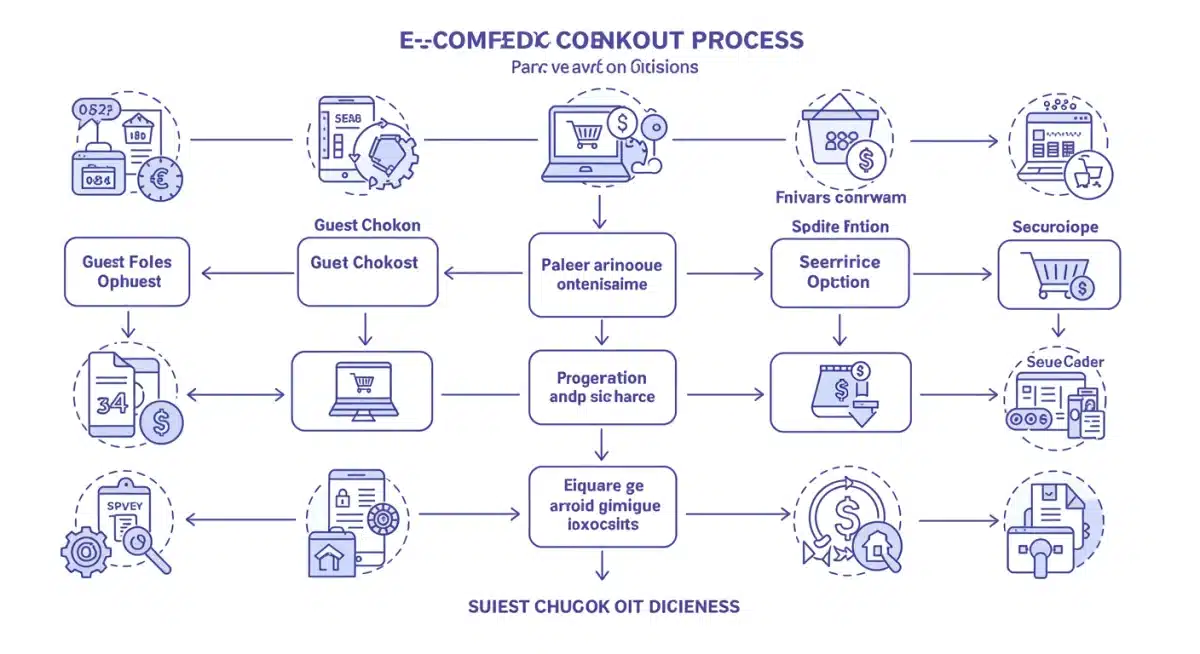
Leveraging data and analytics for continuous improvement
Data is the lifeblood of optimization. To effectively reduce cart abandonment, e-commerce platforms must continuously collect, analyze, and act upon insights derived from their checkout process. This iterative approach ensures that improvements are data-driven and address real user pain points.
Tools like Google Analytics, heatmaps, and session recordings can provide invaluable insights into user behavior, revealing where customers stumble or abandon their carts. Without this data, optimization efforts are merely guesswork.
Implementing A/B testing for checkout elements
A/B testing allows businesses to experiment with different versions of their checkout page elements to see which performs better. This scientific approach removes subjectivity from design decisions.
- Test button colors and text: Small changes to calls to action can have a significant impact.
- Experiment with form field order: The sequence of information requested can affect completion rates.
- Evaluate different payment options displays: Determine which presentation of payment methods is most effective.
Analyzing cart abandonment reports
Cart abandonment reports offer a treasure trove of information regarding why customers leave without completing a purchase. These reports often highlight common issues such as unexpected shipping costs, lack of preferred payment options, or complex forms.
By regularly reviewing these reports, businesses can identify recurring patterns and prioritize optimization efforts. For example, if a significant number of abandonments occur at the shipping information stage, it might indicate issues with shipping options or pricing transparency. Data-driven insights ensure that resources are allocated to changes that will yield the most significant improvements.
In essence, a commitment to data analysis and continuous testing is paramount for achieving the targeted 10% decrease in abandonment. By understanding user behavior through analytics and iteratively refining the checkout process, platforms can ensure their optimization efforts are truly effective.
Personalization and trust-building in the final stages
As customers approach the final stages of checkout, reinforcing trust and offering personalized touches can significantly influence their decision to complete the purchase. This goes beyond basic security measures to create a sense of bespoke service and reliability.
Personalization can make a customer feel valued, while transparent communication about shipping and returns builds confidence. These elements collectively contribute to a positive final impression, reducing last-minute hesitations.
Personalized recommendations and offers
Even at checkout, there’s an opportunity to enhance the customer experience with relevant suggestions. Personalized recommendations can not only increase average order value but also make the customer feel understood.
- Complementary product suggestions: Offer items that naturally go with what’s already in the cart.
- Exclusive offers for returning customers: A small discount or free shipping can be a powerful incentive.
- Reminders of past purchases: Show items they’ve bought before, perhaps suggesting a repurchase.
Transparent shipping, returns, and privacy policies
Clarity regarding logistics and data handling is crucial for building trust. Hidden fees, unclear return policies, or vague privacy statements can quickly erode customer confidence.
Clearly stating shipping costs and estimated delivery times upfront, providing easily accessible return policies, and explicitly outlining how customer data is protected are non-negotiable. These transparency measures not only meet legal requirements but also proactively address potential concerns, ensuring customers feel secure and informed throughout the transaction. This focus on clear communication is vital for an optimal checkout flow.
By integrating personalization and maintaining absolute transparency in policies, e-commerce platforms can foster a strong sense of trust and value in the final moments of the checkout process. This strategic approach is key to achieving a significant reduction in abandonment rates among US consumers.
Post-abandonment recovery strategies
Even with the most optimized checkout flow, some customers will inevitably abandon their carts. The battle isn’t lost at this point; effective post-abandonment recovery strategies can bring a significant portion of these customers back to complete their purchases.
These strategies focus on gently re-engaging customers, reminding them of their selections, and often providing a small incentive to overcome their initial hesitation. Timeliness and relevance are paramount for successful recovery.
Abandoned cart email campaigns
Automated email campaigns are one of the most effective tools for recovering abandoned carts. These emails serve as a gentle reminder and can often include incentives.
- Timely reminders: Send the first email within an hour of abandonment for maximum impact.
- Personalized content: Include the exact items left in the cart and a direct link back to checkout.
- Incentives: Offer a small discount, free shipping, or a limited-time offer to encourage completion.
Retargeting ads and browser notifications
Beyond emails, retargeting ads and browser notifications can keep your brand and the abandoned items top-of-mind for potential customers. These methods offer alternative channels for re-engagement.
Retargeting ads, displayed on other websites or social media, can remind users of their interest in your products. Browser push notifications, with user permission, can deliver direct messages to their desktop or mobile device, prompting them to return to their cart. These multi-channel approaches ensure a broader reach and a higher chance of conversion, contributing significantly to the overall goal of optimizing checkout flows on e-commerce platforms for US consumers: a 10% decrease in abandonment by year-end 2025.
Implementing a robust post-abandonment recovery strategy is a critical component of a holistic checkout optimization plan. By thoughtfully re-engaging customers through various channels, businesses can convert what would have been lost sales into completed transactions, bolstering their overall revenue.
| Key Optimization Area | Brief Description |
|---|---|
| Consumer Understanding | Tailoring checkout to US consumer desires for speed, simplicity, and security. |
| Streamlined Journey | Reducing steps, form fields, and offering diverse, secure payment options. |
| UX/UI Enhancements | Implementing responsive design, clear error messages, and intuitive navigation. |
| Data-Driven Decisions | Utilizing A/B testing and abandonment reports for continuous optimization. |
Frequently asked questions about checkout optimization
Guest checkout is crucial for US consumers because it offers speed and convenience, allowing them to complete purchases without the friction of creating an account. Many prefer not to register, especially for one-time purchases, prioritizing a quick transaction over long-term engagement.
Unexpected shipping costs are a major abandonment trigger. Address this by clearly displaying shipping options and costs early in the process, ideally on the product page or in the cart summary, before the customer reaches the final checkout steps.
Trust badges, such as SSL certificates, payment gateway logos, and security seals, significantly enhance consumer confidence. They reassure US shoppers that their personal and financial information is secure, reducing anxiety and encouraging them to complete their purchase on the platform.
While often preferred for its perceived speed, a single-page checkout isn’t universally better. Its effectiveness depends on the product, target audience, and amount of information required. A multi-step checkout with clear progress indicators can also be highly effective, especially for complex orders.
E-commerce platforms should analyze checkout data regularly, ideally monthly or quarterly, to identify trends and potential issues. Continuous monitoring allows for prompt adjustments and ensures that optimization efforts remain aligned with evolving consumer behavior and market dynamics.
Conclusion
Achieving a 10% decrease in cart abandonment by year-end 2025 for US consumers is an ambitious yet entirely attainable goal for e-commerce platforms. By focusing on a multi-faceted approach that encompasses a deep understanding of consumer behavior, relentless streamlining of the checkout journey, enhancing user experience through thoughtful design, leveraging data for continuous improvement, and implementing effective post-abandonment recovery strategies, businesses can significantly improve their conversion rates. The commitment to these principles will not only lead to increased sales but also foster greater customer loyalty and a more robust online presence in the competitive US market.