Inventory Management 2025: 5 Seller Solutions for Overstock

Optimizing inventory management 2025 is paramount for sellers aiming to reduce overstock by 15% and boost cash flow, demanding adoption of advanced solutions and data-driven strategies.
In the dynamic world of e-commerce, mastering inventory management 2025 is not just an advantage; it’s a necessity. Overstock can cripple cash flow and erode profits, but with the right strategies, sellers can significantly reduce excess inventory and unlock substantial financial gains. This article explores five essential solutions designed to help you achieve a 15% reduction in overstock and propel your business forward.
Understanding the Overstock Challenge in 2025
The e-commerce landscape is continually evolving, presenting new challenges for sellers. In 2025, the complexities of supply chains, fluctuating consumer demands, and increasing competition make efficient inventory management more critical than ever. Overstock, the bane of many businesses, ties up capital, incurs storage costs, and risks product obsolescence, directly impacting profitability and cash flow.
To effectively address this, sellers must first grasp the underlying causes of overstock. These often include inaccurate forecasting, inefficient order processing, lack of real-time visibility, and inadequate data analysis. Identifying these pain points is the initial step toward implementing targeted solutions that can yield significant improvements.
The direct impact of excess inventory
Excess inventory isn’t just about crowded warehouses; it’s a financial drain that affects multiple aspects of a business. It directly impacts liquidity, as capital is tied up in goods that aren’t selling. This can limit a company’s ability to invest in growth opportunities or respond to market changes.
- Increased carrying costs (storage, insurance, security)
- Risk of obsolescence and depreciation
- Markdown losses and reduced profit margins
- Reduced cash flow and working capital
Understanding these financial implications motivates sellers to seek proactive solutions. By focusing on reducing overstock, businesses can free up capital, improve their balance sheets, and become more agile in a competitive market. The goal is not just to minimize excess but to optimize inventory levels for maximum efficiency and profitability.
The challenge of overstock in 2025 demands a sophisticated approach. With advancements in technology and data analytics, sellers now have powerful tools at their disposal to mitigate these risks. The focus should be on proactive management rather than reactive problem-solving, setting the stage for sustainable growth and enhanced cash flow.
Solution 1: Predictive Analytics and AI-Driven Forecasting
In 2025, relying on historical sales data alone for inventory decisions is akin to driving while looking in the rearview mirror. Predictive analytics, powered by artificial intelligence (AI), is transforming how sellers forecast demand. These advanced systems go beyond simple trends, incorporating a myriad of external factors to provide highly accurate predictions, which is a cornerstone of effective inventory management 2025.
AI algorithms can analyze vast datasets, including economic indicators, social media trends, competitor activities, seasonal patterns, and even weather forecasts, to anticipate consumer behavior. This allows businesses to order precisely what’s needed, when it’s needed, dramatically reducing the likelihood of overstock and stockouts.
Leveraging machine learning for demand prediction
Machine learning models continuously learn and adapt, refining their forecasts over time. This iterative process ensures that predictions become more accurate with each sales cycle, leading to increasingly optimized inventory levels. For sellers, this means less capital tied up in slow-moving items and more flexibility to invest in high-demand products.
- Real-time demand sensing
- Identification of subtle market shifts
- Automated adjustment of reorder points
- Scenario planning for potential disruptions
Implementing AI-driven forecasting requires robust data infrastructure and a willingness to embrace new technologies. However, the return on investment, in terms of reduced overstock and improved cash flow, can be substantial. It’s about moving from educated guesswork to data-backed certainty in inventory planning.
By harnessing the power of predictive analytics and AI, sellers can achieve a level of forecasting accuracy previously unimaginable. This precision is vital for reducing overstock by the targeted 15% and ensuring that products are available exactly when customers want them, thereby enhancing the customer experience and increasing sales.
Solution 2: Real-Time Inventory Visibility and Centralized Data
Effective inventory management 2025 hinges on having a clear, real-time picture of every item in your stock. Without this visibility, decisions are made in the dark, often leading to inefficiencies and overstock. Centralized data systems provide a single source of truth, consolidating information from all sales channels, warehouses, and suppliers.
This holistic view allows sellers to track inventory movement, identify bottlenecks, and make informed decisions instantly. Whether a product is in transit, on a shelf, or awaiting shipment, a centralized system provides the exact status, preventing redundant orders and optimizing stock distribution across various locations.
Integrating across multiple channels and locations
Modern e-commerce often involves selling across multiple platforms—your own website, marketplaces like Amazon or eBay, and potentially physical stores. A unified inventory system integrates all these channels, ensuring that stock levels are updated in real time across the entire ecosystem. This prevents overselling and helps in efficiently fulfilling orders.
- Synchronized stock levels across all sales channels
- Automated alerts for low stock or stagnant inventory
- Improved order fulfillment accuracy
- Better allocation of stock to high-demand locations
The implementation of real-time inventory visibility and centralized data eliminates data silos, fostering better communication and coordination within the organization. This transparency is crucial for proactive inventory control, allowing sellers to react swiftly to changes in demand or supply, thereby avoiding costly overstock situations.
By investing in a robust, centralized inventory management system, businesses gain unparalleled control over their stock. This not only supports the goal of reducing overstock but also streamlines operations, improves customer satisfaction, and ultimately boosts cash flow by optimizing capital allocation.
Solution 3: Dynamic Pricing and Promotion Strategies
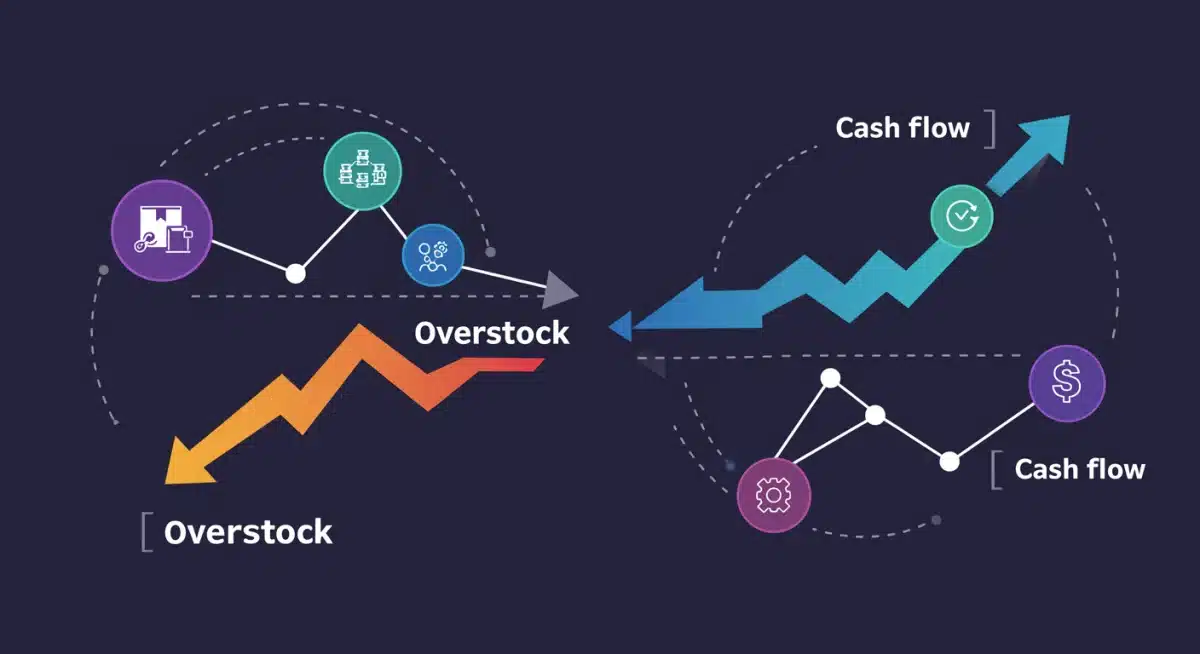
While forecasting and visibility are crucial for preventing overstock, sometimes excess inventory still accumulates. This is where dynamic pricing and strategic promotions become powerful tools in inventory management 2025. Instead of letting slow-moving items sit and incur costs, smart pricing adjustments can rapidly move products, freeing up warehouse space and capital.
Dynamic pricing involves adjusting product prices in real time based on demand, competitor pricing, inventory levels, and other market factors. This strategy ensures that products are always priced competitively, maximizing sales velocity and minimizing the time items spend in storage.

Targeted promotions for aging inventory
When dynamic pricing alone isn’t enough, targeted promotions can be highly effective. This involves identifying specific items that are becoming overstocked or are approaching their expiration date and creating compelling offers to move them quickly. These promotions should be carefully planned to avoid cannibalizing sales of other products or eroding brand value.
- Flash sales and limited-time offers
- Bundle deals (pairing slow-moving items with popular ones)
- Volume discounts for bulk purchases
- Clearance sales and liquidation strategies
The key is to be proactive. Waiting too long to address overstock with pricing and promotions can lead to deeper discounts and greater losses. By leveraging data to identify at-risk inventory early, sellers can implement timely strategies that clear stock efficiently while still maintaining acceptable profit margins.
Implementing dynamic pricing and promotion strategies requires sophisticated tools that can analyze market conditions and inventory data in real time. This approach not only helps in reducing overstock but also allows businesses to generate revenue from otherwise stagnant assets, significantly boosting cash flow and overall profitability.
Solution 4: Vendor-Managed Inventory (VMI) and Just-In-Time (JIT) Practices
In the pursuit of optimal inventory management 2025, shifting some of the inventory responsibility to suppliers can be a game-changer. Vendor-Managed Inventory (VMI) and Just-In-Time (JIT) practices are powerful strategies that minimize the amount of inventory a seller needs to hold, directly impacting overstock levels and improving cash flow.
VMI involves the supplier taking responsibility for maintaining an agreed-upon inventory level at the seller’s location. The supplier monitors the seller’s stock and automatically replenishes it as needed. This reduces the seller’s forecasting burden and ensures a steady supply without excessive stock.
Implementing JIT for lean operations
Just-In-Time (JIT) is a philosophy focused on receiving goods only as they are needed for production or sale. This minimizes storage costs, reduces waste, and virtually eliminates overstock. While challenging to implement perfectly, even partial adoption of JIT principles can yield significant benefits.
- Reduced warehouse space requirements
- Lower inventory holding costs
- Minimized risk of obsolescence
- Improved cash flow due to less capital tied up in stock
Successful VMI and JIT implementation requires strong partnerships with suppliers, built on trust and transparent communication. It demands a high level of coordination and shared data to ensure that replenishment happens seamlessly and without disruption to operations. The benefits, however, often outweigh the complexities of initial setup.
By strategically adopting VMI and JIT, sellers can transform their inventory management from a capital-intensive operation into a lean, efficient process. This not only helps in achieving the 15% overstock reduction target but also fosters stronger supplier relationships and enhances overall operational agility.
Solution 5: Returns Management Optimization and Liquidation Channels
Returns are an inevitable part of e-commerce, and how they are managed significantly impacts inventory levels and cash flow. Poor returns management can quickly turn returned items into overstock, especially if they are not processed efficiently or resold quickly. Optimizing this process is a critical component of inventory management 2025.
A streamlined returns process focuses on quickly inspecting, repackaging, and re-listing returned items that are still in sellable condition. For items that cannot be resold through primary channels, having established liquidation pathways is essential to recover some value rather than letting them become dead stock.
Efficiently handling unsellable inventory
Not all returned items can be resold as new. This unsellable inventory, if not handled properly, contributes directly to overstock. Sellers need clear strategies for these items, from repair and refurbishment to donation or responsible disposal. The goal is to extract maximum value from every returned product.
- Automated returns processing and quality checks
- Dedicated channels for refurbished or open-box sales
- Partnerships with discount retailers or liquidators
- Sustainable disposal or recycling programs
By optimizing returns management, sellers can minimize the financial impact of returns and prevent them from inflating inventory levels. This proactive approach not only helps in achieving overstock reduction goals but also enhances customer satisfaction by providing a smooth returns experience.
Establishing effective liquidation channels ensures that even unsellable inventory doesn’t become a complete loss. Recovering even a fraction of the cost through these channels contributes positively to cash flow and reduces the overall burden of excess stock, reinforcing sound inventory practices for 2025.
Implementing a Holistic Inventory Strategy for Success
Achieving a 15% reduction in overstock and significantly boosting cash flow by 2025 demands more than isolated solutions; it requires a holistic and integrated inventory strategy. Each of the five solutions—predictive analytics, real-time visibility, dynamic pricing, VMI/JIT, and returns optimization—plays a crucial role, but their combined effect is far greater than the sum of their parts. This integrated approach is the future of inventory management 2025.
Sellers must view their inventory as a dynamic asset that needs constant monitoring and strategic adjustment. This means fostering a culture of data-driven decision-making, where insights from all aspects of the business inform inventory planning and execution. The goal is to create a resilient system that can adapt to rapid market changes and unforeseen disruptions.
The continuous improvement cycle
Inventory management is not a one-time fix but an ongoing process of analysis, adjustment, and optimization. Businesses should regularly review their inventory performance, identifying areas for further improvement and refining their strategies based on new data and market conditions. This continuous improvement cycle ensures sustained efficiency and profitability.
- Regular performance audits and KPI tracking
- Feedback loops between sales, marketing, and operations
- Investment in ongoing training for inventory teams
- Adaptation to emerging technologies and best practices
By embracing a comprehensive inventory strategy, sellers can move beyond simply reacting to overstock and instead proactively manage their assets for maximum return. This strategic shift not only reduces costs but also enhances customer satisfaction, strengthens supplier relationships, and positions the business for long-term success in the competitive e-commerce landscape.
The journey to optimized inventory is continuous, but with a commitment to these advanced solutions and a focus on integration, achieving the ambitious goals of reduced overstock and increased cash flow by 2025 is well within reach for any forward-thinking seller.
| Key Solution | Brief Description |
|---|---|
| AI Forecasting | Utilizes AI and machine learning for highly accurate demand prediction, minimizing over-ordering. |
| Real-Time Visibility | Centralizes inventory data across all channels for complete, up-to-the-minute stock awareness. |
| Dynamic Pricing | Adjusts prices in real time to accelerate sales of slow-moving inventory and prevent overstock. |
| VMI/JIT Practices | Partners with suppliers for automated replenishment and minimal on-hand inventory, reducing holding costs. |
Frequently Asked Questions About Inventory Management in 2025
The primary goal is to optimize inventory levels to meet demand without incurring excessive holding costs, thereby reducing overstock by at least 15% and significantly improving cash flow. This involves leveraging advanced technologies like AI and real-time data for greater efficiency and responsiveness.
Predictive analytics, often AI-driven, forecasts demand with high accuracy by analyzing various internal and external data points. This precision allows sellers to order and stock only what is truly needed, preventing the accumulation of excess inventory and the associated costs.
Real-time visibility provides a complete, up-to-the-minute overview of stock across all channels and locations. This eliminates blind spots, prevents overselling, and enables quick decision-making to optimize stock allocation and avoid unnecessary purchases that lead to overstock.
Absolutely. Dynamic pricing adjusts product prices based on demand and inventory, accelerating the sale of slow-moving or overstocked items. This strategic pricing helps clear excess stock quickly, reducing holding costs and freeing up capital that would otherwise be tied up in stagnant inventory.
Vendor-Managed Inventory (VMI) and Just-In-Time (JIT) practices minimize the inventory a seller needs to hold by shifting responsibility to suppliers or receiving goods only when needed. This significantly reduces capital tied up in stock, lowers storage costs, and directly enhances a business’s operational cash flow.
Conclusion
The landscape of e-commerce in 2025 demands a sophisticated and proactive approach to inventory management. By embracing solutions like AI-driven forecasting, real-time visibility, dynamic pricing, VMI/JIT strategies, and optimized returns management, sellers can confidently tackle the challenges of overstock. These integrated solutions not only promise a significant reduction in excess inventory, potentially exceeding the 15% target, but also pave the way for a healthier cash flow and more robust financial performance. The future of retail success lies in intelligent, adaptive inventory practices, ensuring businesses remain agile and profitable.