Advanced Cohort Analysis for Online Retailers in 2025
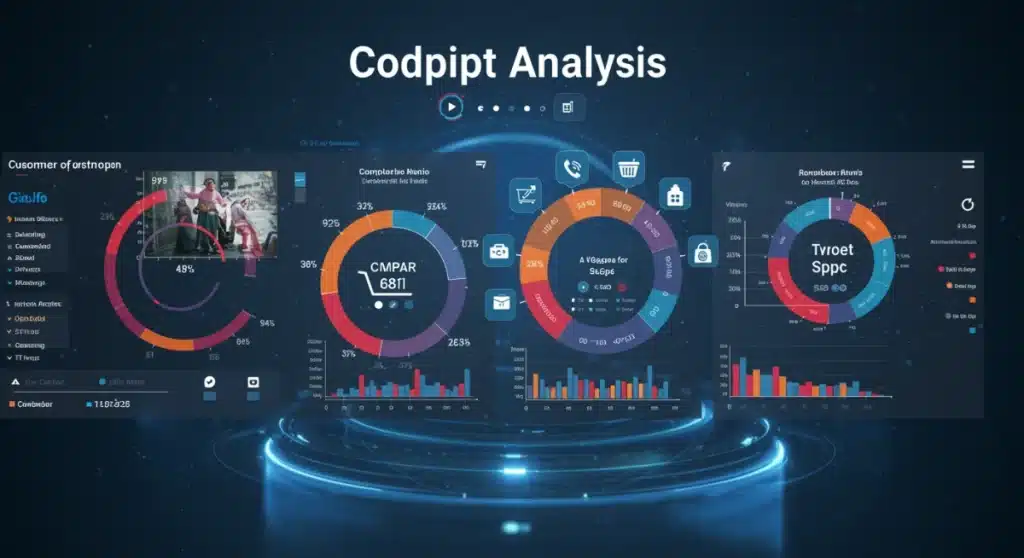
Advanced cohort analysis strategies are crucial for online retailers in 2025 to decode customer behavior, revealing patterns that optimize retention, personalize marketing, and significantly enhance customer lifetime value for sustainable growth.
In the dynamic landscape of e-commerce, understanding customer behavior is paramount.
Unlocking Customer Lifetime Value: Advanced Cohort Analysis Strategies for Online Retailers in 2025
is no longer just a buzzword but a critical methodology for sustainable growth. This approach provides deep insights into customer segments, enabling retailers to make data-driven decisions that foster loyalty and boost profitability.
The foundational principles of cohort analysis
Cohort analysis, at its core, involves grouping customers based on shared characteristics or experiences over a specific period.
This segmentation allows businesses to track how these groups behave over time, providing a much clearer picture than aggregated metrics alone.
For online retailers, understanding these foundational principles is the first step toward unlocking deeper insights into their customer base.
Historically, businesses often relied on broad metrics like overall sales or average order value, which could mask critical trends within specific customer segments.
Cohort analysis addresses this by breaking down the customer base into manageable, actionable groups.
This method enables retailers to identify patterns in engagement, purchasing habits, and churn rates that might otherwise go unnoticed.
Defining your cohorts effectively
The effectiveness of cohort analysis heavily depends on how cohorts are defined.
The most common approach for online retailers is to group customers by their acquisition date, known as acquisition cohorts.
However, more advanced strategies involve defining cohorts based on other shared attributes.
- Acquisition date: Groups customers by the month or quarter they made their first purchase.
- First product purchased: Segments customers based on the initial product category they engaged with.
- Marketing channel: Divides customers by the channel through which they were acquired (e.g., social media, organic search, paid ads).
- Behavioral triggers: Groups customers based on specific actions taken, such as viewing a certain number of products or abandoning a cart.
By carefully selecting and defining these cohorts, online retailers can begin to unravel the complex dynamics of customer behavior.
This granular view moves beyond superficial data, allowing for more targeted and impactful strategic adjustments.
Ultimately, a strong understanding of cohort definitions is the bedrock upon which all advanced analysis is built.
Moving beyond basic acquisition cohorts
While acquisition cohorts provide a good starting point, the real power of advanced cohort analysis lies in moving beyond these basic groupings.
In 2025, online retailers must leverage more sophisticated segmentation to uncover nuanced behavioral patterns and drive more precise strategic interventions.
This involves looking at a broader spectrum of customer attributes and interactions.
Advanced strategies necessitate a shift from simple acquisition date analysis to a multi-dimensional view of customer segments.
This means combining various data points to create richer, more insightful cohorts.
For instance, grouping customers by both their acquisition channel and their first purchase category can reveal distinct retention rates and lifetime values.
Behavioral cohorting for deeper insights
Behavioral cohorting is a key component of advanced strategies.
Instead of just when a customer joined, this approach focuses on what they did.
It allows retailers to understand the impact of specific actions or inactions on customer longevity and value.
- Engagement frequency: Grouping customers by how often they visit the site or interact with content.
- Product interaction: Cohorting based on specific product views, wishlist additions, or review submissions.
- Cart abandonment: Analyzing customers who consistently abandon carts versus those who complete purchases.
- Feature adoption: For retailers with subscription models or apps, grouping by adoption of key features.
By analyzing these behavioral cohorts, retailers can pinpoint critical moments in the customer journey that lead to retention or churn.
This level of detail enables the creation of highly targeted campaigns designed to nurture positive behaviors and mitigate negative ones.
The insights gained from behavioral cohorts are invaluable for optimizing the overall customer experience.
Predictive analytics and machine learning in cohort analysis
The future of cohort analysis in online retail is inextricably linked with predictive analytics and machine learning.
These technologies are transforming how retailers interpret cohort data, moving from simply understanding past behavior to forecasting future trends and proactively addressing potential issues.
This leap forward allows for more strategic and timely interventions.
By integrating machine learning algorithms, retailers can identify subtle patterns within cohorts that human analysts might miss.
These algorithms can process vast amounts of data, uncovering correlations between various customer attributes and their future behavior, such as churn risk or likelihood to purchase high-value items.
This capability transforms traditional cohort analysis into a powerful predictive tool.
Forecasting customer lifetime value (CLTV)
One of the most significant applications of predictive analytics in cohort analysis is the more accurate forecasting of Customer Lifetime Value (CLTV).
Traditional CLTV models often rely on historical averages, but predictive models leverage cohort data to estimate the future value of specific customer segments with greater precision.
- Early churn prediction: Identifying cohorts at high risk of churning within their first few months.
- High-value segment identification: Pinpointing cohorts with the highest potential CLTV for targeted nurturing.
- Personalized offer generation: Using predicted CLTV to tailor discounts and promotions to specific cohort needs.
- Resource allocation optimization: Directing marketing and customer service efforts to cohorts with the greatest expected return.
The ability to forecast CLTV with higher accuracy allows online retailers to optimize their marketing spend, personalize customer experiences, and develop more effective retention strategies.
This proactive approach ensures that resources are allocated where they will generate the most significant long-term value, moving beyond reactive measures to truly strategic planning.
Personalization and segmentation at scale
With advanced cohort analysis, online retailers can achieve unprecedented levels of personalization and segmentation at scale.
No longer is it sufficient to send generic emails or display uniform product recommendations.
Customers today expect highly relevant and tailored experiences, and cohort analysis provides the data foundation to deliver just that.
By understanding the unique characteristics and behaviors of different cohorts, retailers can craft messages, offers, and product displays that resonate deeply with each segment.
This goes beyond basic demographic segmentation, delving into purchasing motivations, browsing habits, and responsiveness to various marketing stimuli.
The result is a more engaging and effective customer journey.
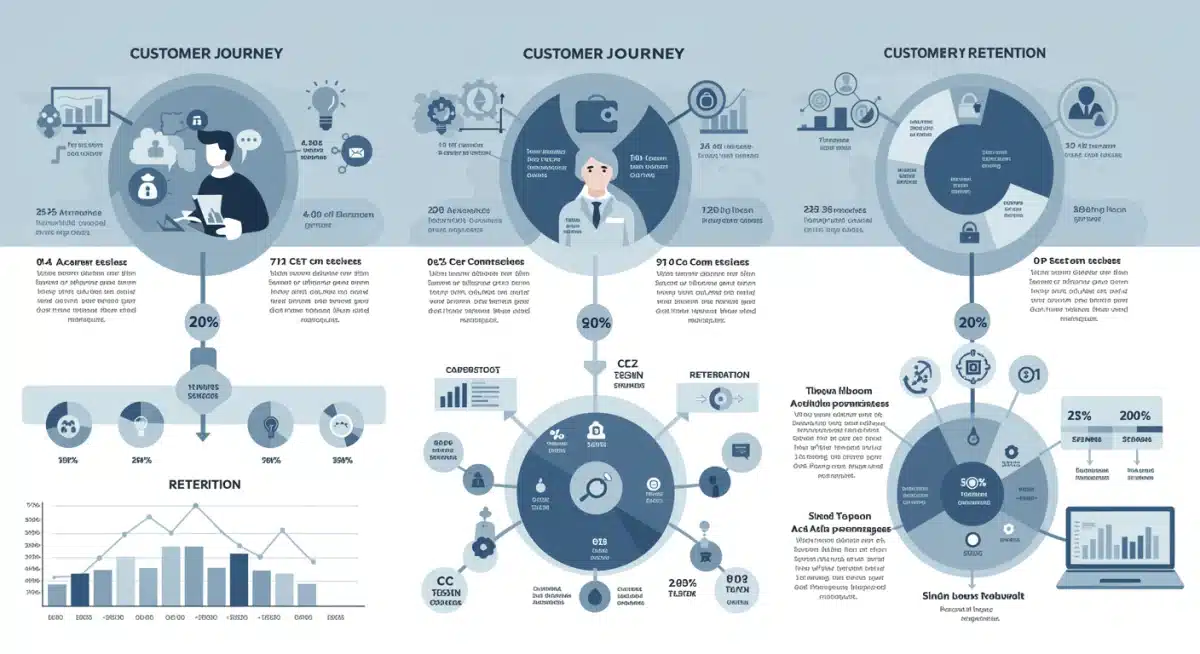
Tailoring marketing messages and product recommendations
One of the most direct applications of advanced cohort analysis is in personalizing marketing communications.
Different cohorts respond to different incentives and messaging styles.
For example, a cohort of new customers acquired through a social media campaign might respond best to introductory offers and educational content, while a loyal, high-spending cohort might prefer early access to new products or exclusive discounts.
- Lifecycle-based messaging: Sending specific communications based on a cohort’s stage in the customer journey.
- Product affinity recommendations: Using cohort purchase history to suggest highly relevant products.
- Channel optimization: Determining which marketing channels are most effective for engaging specific cohorts.
- Dynamic content display: Adjusting website content and promotions based on the identified cohort of the visiting customer.
This level of personalization not only enhances the customer experience but also significantly improves conversion rates and customer satisfaction.
When customers feel understood and valued, they are more likely to engage, purchase, and remain loyal.
Advanced cohort analysis makes this hyper-personalization achievable and scalable for online retailers.
Integrating cohort insights with business operations
For cohort analysis to truly unlock customer lifetime value, its insights must be seamlessly integrated with broader business operations.
It’s not enough to simply generate reports; the data must inform decisions across marketing, product development, customer service, and even supply chain management.
This holistic approach ensures that data-driven strategies permeate every aspect of the retail business.
By embedding cohort insights into operational workflows, online retailers can move from reactive problem-solving to proactive strategic planning.
For instance, if cohort analysis reveals a drop in retention for customers who purchased a specific product category, this insight can trigger an investigation into product quality, customer support, or even post-purchase communication for that category.
Operationalizing data for strategic impact
Operationalizing cohort data involves creating feedback loops where insights lead directly to actionable changes and improvements.
This requires collaboration across departments and the establishment of clear processes for data dissemination and decision-making.
- Marketing campaign refinement: Adjusting ad spend and targeting based on cohort acquisition costs and CLTV.
- Product roadmap prioritization: Developing new features or products that address the needs of high-value cohorts.
- Customer service training: Equipping support teams with cohort-specific insights to handle inquiries more effectively.
- Inventory management: Forecasting demand more accurately by understanding purchasing patterns within different cohorts.
Integrating cohort insights with business operations transforms data from a mere analytical exercise into a strategic asset.
It enables online retailers to build a more resilient, customer-centric business model that is responsive to evolving market demands and customer expectations, ultimately driving sustained growth and profitability.
Measuring impact and continuous optimization
The journey of advanced cohort analysis doesn’t end with implementation; it requires continuous measurement and optimization.
Online retailers must establish clear metrics to track the impact of their cohort-driven strategies and be prepared to iterate and refine their approaches based on performance data.
This iterative process is essential for maximizing CLTV and maintaining a competitive edge.
Effective measurement involves setting up dashboards that visualize cohort performance over time, allowing stakeholders to quickly grasp trends and identify areas for improvement.
Key performance indicators (KPIs) should be directly tied to the goals of each cohort strategy, whether it’s increasing retention rates, boosting average order value, or reducing churn.
Key metrics for cohort performance
To effectively measure impact, retailers need to focus on a set of core metrics that directly reflect the health and value of their cohorts.
These metrics provide the quantitative evidence needed to validate strategies and inform future adjustments.
- Retention rate: The percentage of customers within a cohort who remain active over a given period.
- Churn rate: The percentage of customers who cease to engage or purchase from a cohort.
- Average order value (AOV): The average value of purchases made by customers within a specific cohort.
- Purchase frequency: How often customers in a cohort make repeat purchases.
- Customer lifetime value (CLTV): The predicted total revenue a customer cohort will generate over their relationship with the business.
By consistently monitoring these metrics, online retailers can gain a clear understanding of what’s working and what’s not.
This data-driven feedback loop allows for rapid adjustments and continuous optimization of strategies, ensuring that the business remains agile and responsive to customer needs.
Ultimately, continuous measurement is the cornerstone of sustained success in leveraging cohort analysis for enhanced CLTV.
| Key Point | Brief Description |
|---|---|
| Advanced Cohorting | Move beyond basic acquisition dates to behavioral and multi-dimensional customer segments for deeper insights. |
| Predictive CLTV | Utilize machine learning to forecast customer lifetime value for specific cohorts, enabling proactive strategies. |
| Personalization at Scale | Tailor marketing, product recommendations, and experiences based on unique cohort behaviors and preferences. |
| Operational Integration | Embed cohort insights into all business operations for strategic impact and continuous improvement. |
Frequently asked questions about cohort analysis
The primary benefit is gaining a granular understanding of customer behavior over time, which enables highly targeted strategies for improved customer retention, personalized marketing, and ultimately, a significant increase in Customer Lifetime Value (CLTV). It shifts focus from aggregated metrics to actionable segment-specific insights.
Acquisition cohorts group customers by their initial sign-up or purchase date. Behavioral cohorts, however, segment customers based on specific actions they take post-acquisition, such as product views, engagement frequency, or cart abandonment. This allows for a deeper understanding of how particular behaviors influence their journey.
Yes, significantly. Machine learning can process vast datasets to identify subtle, complex patterns within cohorts that might be missed by human analysis. This enhances the accuracy of predictive analytics, allowing retailers to forecast CLTV more precisely and anticipate churn risks or high-value segments with greater confidence.
Cohort insights can reveal which product features or categories resonate most with high-value segments, or highlight common pain points leading to churn in other groups. This data allows product teams to prioritize development efforts, creating offerings that directly address customer needs and improve overall satisfaction and retention.
Essential metrics include retention rate, churn rate, average order value (AOV), purchase frequency, and Customer Lifetime Value (CLTV). Continuously monitoring these KPIs provides a clear picture of how different cohort strategies are performing and guides ongoing optimization efforts for maximum impact.
Conclusion
Unlocking Customer Lifetime Value: Advanced Cohort Analysis Strategies for Online Retailers in 2025
represents a fundamental shift in how e-commerce businesses approach customer understanding and growth.
By moving beyond basic segmentation to embrace behavioral and predictive analytics, retailers can gain unparalleled insights into their customer base.
These insights, when integrated across all business operations and continuously optimized, enable hyper-personalization, strategic resource allocation, and ultimately, a sustainable competitive advantage in a crowded digital marketplace.
The future of online retail success hinges on the ability to not just collect data, but to transform it into actionable intelligence that drives enduring customer relationships and profitability.