Data Visualization in E-commerce: Actionable Insights for 2025

Data visualization in e-commerce is rapidly evolving, transforming raw data into clear, actionable insights essential for strategic decision-making and competitive advantage in 2025, enabling businesses to understand customer behavior and market trends more effectively.
In the dynamic world of online retail, understanding vast amounts of information is no longer a luxury but a necessity. The Role of Data Visualization in E-commerce: Transforming Raw Data into Actionable Insights for 2025 is becoming a cornerstone for businesses aiming to thrive amidst fierce competition. This article delves into how visual representation of data empowers e-commerce platforms to make smarter, faster decisions, paving the way for unprecedented growth and customer satisfaction.
Understanding the E-commerce Data Deluge
E-commerce businesses generate an immense volume of data daily, ranging from customer browsing patterns and purchase histories to inventory levels and marketing campaign performance. This raw data, while rich in potential, often appears as an incomprehensible jumble of numbers and text without proper analysis. The sheer scale makes it challenging for decision-makers to extract meaningful information efficiently.
Traditional methods of data analysis, such as spreadsheets and basic reports, often fall short in conveying the full story hidden within these datasets. They can be time-consuming to create, difficult to interpret quickly, and prone to misinterpretation. This bottleneck prevents businesses from reacting swiftly to market changes or identifying emerging opportunities.
Recognizing this challenge, e-commerce platforms are increasingly turning to advanced data visualization techniques. These techniques offer a powerful solution by translating complex data into intuitive visual formats, making it accessible and understandable even to those without a deep analytical background. It’s about transforming noise into clear signals.
The Challenge of Raw Data
- Volume and Velocity: E-commerce data streams are constant and massive, making manual analysis impractical.
- Complexity: Data often comes from disparate sources, requiring integration and normalization.
- Lack of Context: Raw numbers alone rarely provide the full picture of underlying trends or anomalies.
The imperative for 2025 is not just to collect data, but to harness it effectively. Data visualization bridges the gap between raw information and strategic action, allowing businesses to see patterns, correlations, and outliers that would otherwise remain hidden. This capability is critical for maintaining a competitive edge and fostering sustainable growth in a rapidly evolving digital marketplace.
Ultimately, the goal is to convert data into a strategic asset. By visualizing data, e-commerce businesses can move beyond simply tracking metrics to actively understanding the ‘why’ behind their performance, enabling proactive rather than reactive strategies.
The Power of Visual Storytelling in E-commerce
Data visualization is more than just pretty charts; it’s about telling a compelling story with data. In e-commerce, this means transforming complex datasets into narratives that reveal customer behavior, market trends, and operational efficiencies. Visual storytelling helps stakeholders grasp insights quickly, fostering a shared understanding across different departments.
When data is presented visually, patterns and anomalies become immediately apparent. A well-designed dashboard can highlight a sudden drop in conversion rates, pinpoint the exact product categories experiencing slow sales, or even reveal geographical concentrations of customer interest. This immediate clarity accelerates the decision-making process, allowing businesses to respond with agility.
Beyond mere reporting, visual storytelling encourages exploration and deeper inquiry. Users can interact with dashboards, filter data, and drill down into specific segments, uncovering root causes and potential solutions. This interactive nature transforms passive data consumption into active analytical engagement, empowering teams to ask better questions and find more innovative answers.
Key Benefits of Visual Storytelling
- Enhanced Comprehension: Visuals make complex data easier to understand than tables of numbers.
- Faster Insights: Trends and outliers are identified more quickly, reducing analysis time.
- Improved Collaboration: Visualizations provide a common language for discussion among diverse teams.
- Data-Driven Culture: Encourages a company-wide reliance on data for strategic decisions.
The ability to visually articulate data’s story is crucial for e-commerce success in 2025. It allows marketing teams to fine-tune campaigns, product developers to identify popular features, and logistics managers to optimize supply chains. This holistic view, facilitated by powerful visualizations, ensures that every aspect of the e-commerce operation is aligned with data-backed insights.
The narrative power of data visualization ensures that insights are not just discovered but also effectively communicated. This leads to more informed discussions, better strategic alignment, and ultimately, superior business outcomes in the competitive e-commerce landscape.
Key Data Visualization Techniques for E-commerce in 2025
As e-commerce continues to evolve, so too do the techniques used to visualize its data. For 2025, several key visualization methods stand out for their ability to provide actionable insights. These techniques move beyond static charts, offering dynamic and interactive ways to explore complex information.
Interactive dashboards are perhaps the most critical tool. They consolidate various key performance indicators (KPIs) onto a single screen, allowing users to filter, sort, and drill down into data points. This provides a customizable view that adapts to the specific needs of different users, from marketing specialists to executive leadership.
Heat maps and geographic maps are invaluable for understanding customer distribution and engagement. A heat map can quickly show which areas of a website receive the most clicks or where customers spend the most time. Geographic maps can illustrate sales performance by region, helping to identify untapped markets or areas needing more targeted marketing efforts.
Essential Visualization Techniques
- Interactive Dashboards: Real-time, customizable views of critical e-commerce metrics.
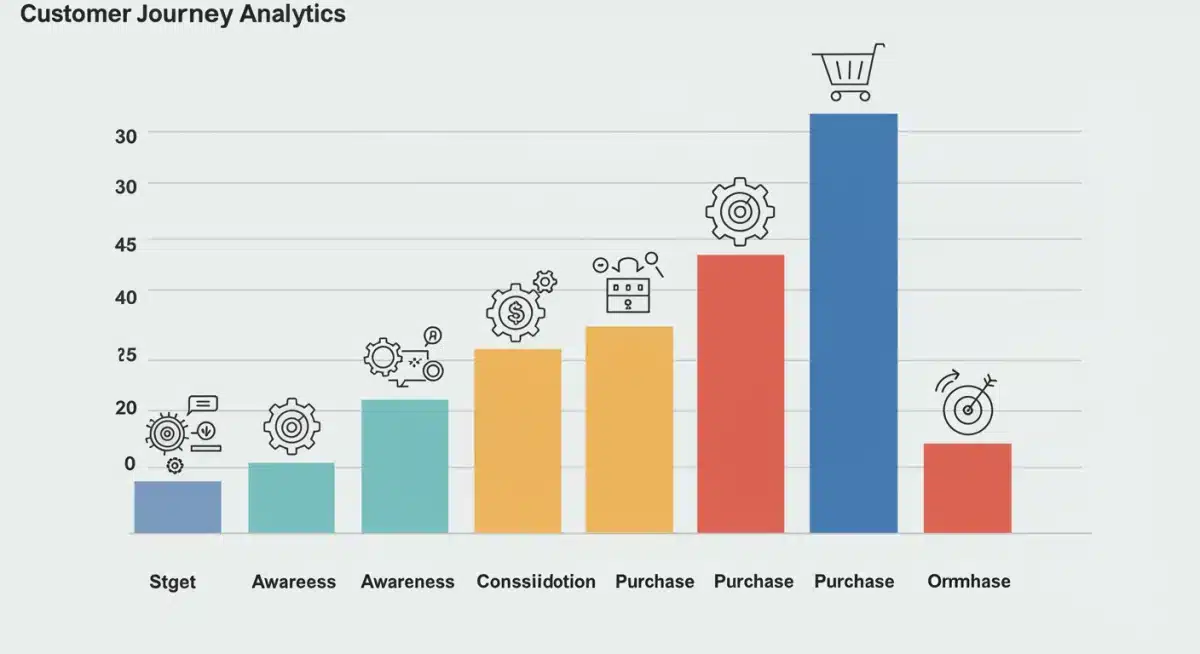
- Funnel Charts: Visualize customer journey conversion rates at each stage, from discovery to purchase.
- Geospatial Maps: Analyze sales, customer demographics, and shipping logistics by geographic location.
- Network Graphs: Understand relationships between products, customers, and promotions to identify cross-selling opportunities.
Predictive analytics, combined with visualization, will gain even more prominence. Businesses will use visual tools to forecast future sales, identify potential stockouts, and predict customer churn. These insights, presented graphically, allow for proactive adjustments to strategy, minimizing risks and maximizing opportunities.
The integration of artificial intelligence (AI) and machine learning (ML) with data visualization platforms will further enhance their capabilities. AI-powered insights can automatically highlight significant trends or anomalies within visual reports, providing even deeper, automated actionable recommendations without extensive manual analysis. This symbiotic relationship between AI and visualization is poised to revolutionize how e-commerce businesses interpret and act on their data in 2025.
Transforming Raw Data into Actionable Insights
The ultimate goal of data visualization in e-commerce is not just to display data, but to transform it into concrete, actionable insights. This transformation involves a process of careful design and strategic application, ensuring that every visual element serves a purpose in guiding decision-making.
One crucial aspect is identifying the right KPIs to visualize. For an e-commerce business, these might include conversion rates, average order value, customer lifetime value, cart abandonment rates, and product return rates. By focusing on these core metrics, visualizations can directly address business objectives and highlight areas for improvement.
Effective visualization also means providing context. A sales graph showing a sudden spike is more meaningful if it’s accompanied by information about a recent marketing campaign or a major holiday sale. Contextual data helps decision-makers understand the ‘why’ behind the numbers, leading to more informed actions.
Steps to Actionable Insights
- Define Clear Objectives: What business questions do you want to answer with your data?
- Select Relevant KPIs: Focus on metrics that directly impact your strategic goals.
- Design Intuitive Visuals: Ensure charts and dashboards are easy to understand and navigate.
- Provide Context: Integrate external factors or events that may influence data trends.
- Enable Interactivity: Allow users to explore data at different levels of detail.
Consider a visualization that reveals a high cart abandonment rate at the shipping information stage. This insight immediately suggests an investigation into shipping costs, delivery options, or the complexity of the form. The visualization doesn’t just show a problem; it points towards a specific area for intervention, making the data actionable.
Furthermore, actionable insights often arise from comparing current performance against historical data or industry benchmarks. Visual tools can easily facilitate these comparisons, showing whether a business is improving, stagnating, or falling behind its competitors. This comparative analysis is vital for strategic planning and setting realistic goals for 2025.
The process of transforming raw data into actionable insights is continuous. It requires regular review, adaptation, and a willingness to experiment with different visualization approaches. The payoff, however, is significant: a more responsive, data-driven e-commerce operation capable of navigating the complexities of the modern market.
Optimizing Customer Experience through Visual Data
A primary beneficiary of advanced data visualization in e-commerce is the customer experience. By understanding customer behavior at a granular level, businesses can tailor their offerings, personalize interactions, and streamline the purchasing journey. Visual data provides the lens through which these improvements become clear.
Visualizing customer journey maps helps identify friction points where customers might drop off or encounter difficulties. For instance, a funnel chart might show a significant drop-off at the payment gateway, prompting an investigation into payment options or security concerns. Addressing these issues directly leads to a smoother, more enjoyable experience for the customer.
Personalization, a key trend for 2025, is heavily reliant on visual data. By analyzing purchasing patterns, browsing history, and demographic information through dashboards, e-commerce platforms can dynamically recommend products, offer targeted promotions, and even customize website layouts to individual preferences. This level of personalization significantly enhances customer satisfaction and loyalty.
Visualizing Customer Insights
- Customer Journey Analysis: Pinpoint bottlenecks and optimization opportunities in the buying process.
- Personalization Dashboards: Track individual customer preferences and behavior to tailor experiences.
- Feedback Visualization: Analyze sentiment from customer reviews and support interactions to identify common issues.
- Segmentation Analysis: Visually group customers based on behavior, demographics, or value to target specific segments.
Moreover, visualizing customer feedback, whether through sentiment analysis of reviews or direct survey responses, offers direct insights into customer pain points and desires. Word clouds or bar charts representing common themes in feedback can quickly highlight areas where product improvements or service enhancements are most needed. This direct line to customer sentiment is invaluable for continuous improvement.
Ultimately, data visualization empowers e-commerce businesses to create a more customer-centric approach. By seeing and understanding their customers through a visual lens, businesses can anticipate needs, resolve issues proactively, and build lasting relationships. This focus on an optimized customer experience is a non-negotiable factor for success in the competitive e-commerce landscape of 2025.
Leveraging visual insights to refine every touchpoint of the customer journey ensures that e-commerce platforms are not just selling products, but providing exceptional value and memorable experiences, fostering loyalty and driving repeat business.
The Future Landscape: AI, AR, and Advanced Visualization in 2025
Looking ahead to 2025, the future of data visualization in e-commerce will be profoundly shaped by emerging technologies such as Artificial Intelligence (AI), Augmented Reality (AR), and even more sophisticated analytical tools. These innovations promise to push the boundaries of how businesses interact with and interpret their data.
AI will play an increasingly central role, not just in processing vast datasets but also in automating the creation of insightful visualizations. AI algorithms will be able to detect subtle patterns, predict future trends, and even generate natural language explanations for complex charts, making data analysis more accessible and efficient for everyone. Imagine an AI assistant that not only shows you a sales dip but also suggests potential causes and solutions.
Augmented Reality (AR) offers a revolutionary way to experience data. E-commerce managers could soon walk through a virtual store, seeing real-time sales data overlaid onto product displays, or visualize inventory levels in a warehouse with AR glasses. This immersive data experience will provide an unparalleled understanding of operational dynamics and customer engagement points within physical and digital spaces.
Innovations Shaping Future Visualization
- AI-Driven Insights: Automated pattern detection, predictive modeling, and natural language generation for data explanations.
- Augmented Reality (AR) Dashboards: Immersive data visualization overlaying digital information onto the real world.
- Real-time Streaming Data Visualization: Instantaneous updates for critical metrics, enabling immediate reactions.
- Personalized Data Experiences: Tailored dashboards and reports based on individual user roles and needs.
The integration of real-time streaming data with advanced visualization platforms will become standard. This means businesses will have access to the most current information, allowing for instantaneous responses to market shifts, inventory fluctuations, or unexpected events. The ability to visualize data as it happens will be a critical competitive advantage.
Furthermore, expect to see more personalized and adaptive visualization tools. Dashboards will intelligently reconfigure themselves based on user roles, preferences, and the specific questions being asked. This level of customization ensures that every user, from the CEO to the front-line marketer, receives the most relevant and actionable insights without being overwhelmed by unnecessary information.
The convergence of AI, AR, and advanced visualization techniques promises a future where data is not just seen but truly understood and experienced in e-commerce. These advancements will empower businesses to make even smarter, more intuitive decisions, driving growth and innovation at an unprecedented pace in 2025 and beyond.
| Key Aspect | Brief Description |
|---|---|
| Data Deluge | E-commerce generates vast, complex data requiring effective visualization for comprehension. |
| Actionable Insights | Visualization transforms raw data into clear, strategic recommendations for business growth. |
| Customer Experience | Visual data helps optimize customer journeys and personalize interactions. |
| Future Trends | AI, AR, and real-time streaming will revolutionize data visualization in 2025. |
Frequently Asked Questions About E-commerce Data Visualization
Data visualization is crucial because it converts vast, complex e-commerce data into easily understandable insights. This enables businesses to quickly identify trends, make informed decisions, and adapt strategies faster, which is essential for maintaining a competitive edge and driving growth in a rapidly evolving market.
Almost any type of e-commerce data can be visualized, including sales figures, customer behavior (browsing, purchase history), marketing campaign performance, inventory levels, website traffic, conversion rates, and customer feedback. Visualizing diverse data sets offers a holistic view of business operations and customer interactions.
By visualizing customer journey maps and behavior patterns, e-commerce businesses can pinpoint pain points and optimize the purchasing process. It allows for personalized product recommendations, targeted promotions, and responsive customer service, all contributing to a more satisfying and engaging experience for shoppers.
In 2025, Artificial Intelligence (AI) will automate insight generation, and Augmented Reality (AR) will provide immersive data experiences. Real-time streaming data visualization will also become standard, enabling instantaneous reactions to market changes and continuous strategic adjustments for greater agility.
Interactive dashboards offer customizable, real-time views of key performance indicators (KPIs). They allow users to filter, sort, and drill down into data, providing personalized insights. This interactivity reduces analysis time, improves collaboration, and fosters a data-driven culture across all departments, leading to more informed decisions.
Conclusion: The Indispensable Role of Visual Insights
The journey through the complex landscape of e-commerce data reveals a clear truth: data visualization is no longer merely a tool but a fundamental pillar for success in 2025. By transforming raw, disparate data into coherent, actionable visual narratives, businesses gain an unparalleled understanding of their operations, customer base, and market dynamics. This capability allows for agile decision-making, optimized customer experiences, and the proactive identification of growth opportunities. As technology continues to advance, with AI and AR integrating seamlessly into visualization platforms, the power of visual insights will only grow, solidifying its indispensable role in shaping the future of online retail. Embracing this transformation is not optional; it is essential for any e-commerce entity aiming to thrive and lead in the competitive digital era.