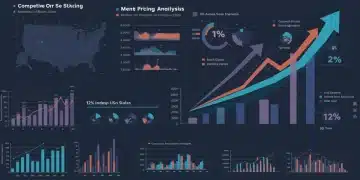
Data-Driven Customer Journey Mapping for Repeat Purchases

Implementing data-driven customer journey mapping is crucial for enhancing user experience and driving a targeted 20% increase in repeat purchases by 2025, enabling businesses to identify pain points and optimize touchpoints effectively.
In today’s competitive digital landscape, understanding your customers is not just beneficial; it’s imperative for survival and growth. The strategic adoption of customer journey data mapping is emerging as a cornerstone for businesses aiming to significantly enhance user experience and, consequently, boost repeat purchases. This approach moves beyond traditional guesswork, leveraging concrete data to illuminate every interaction a customer has with your brand, paving the way for a targeted 20% increase in repeat purchases by 2025.
The Strategic Importance of Data-Driven Customer Journey Mapping
Understanding the customer journey is no longer a qualitative exercise based on assumptions. Instead, it is a precise, data-intensive endeavor that provides unparalleled insights into customer behavior, motivations, and pain points. By meticulously mapping these journeys using robust data, businesses can pinpoint opportunities for improvement and create experiences that truly resonate.
This strategic shift allows companies to move from reactive problem-solving to proactive experience design. When every touchpoint is informed by data, from initial awareness to post-purchase support, the entire customer lifecycle becomes more seamless and satisfying. This not only builds trust but also significantly increases the likelihood of a customer returning for future purchases.
Connecting Data to Customer Touchpoints
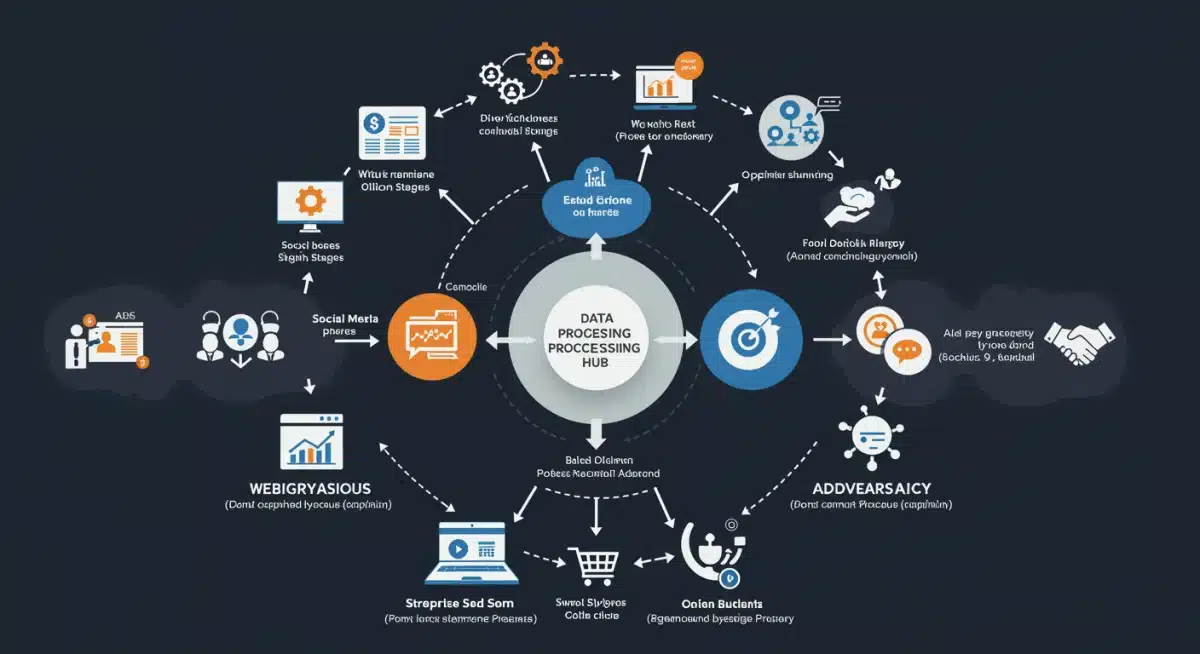
Every interaction a customer has with your brand generates data. This can range from website clicks and time spent on a page to email open rates, social media engagement, and purchase history. The challenge lies in connecting these disparate data points to form a cohesive narrative of the customer’s journey.
- Website Analytics: Tracking user navigation, bounce rates, and conversion paths provides critical insights into online behavior.
- CRM Data: Customer Relationship Management systems hold a wealth of information on purchase history, support interactions, and communication preferences.
- Social Media Insights: Monitoring engagement and sentiment on social platforms reveals how customers perceive your brand and interact with your content.
- Customer Feedback: Surveys, reviews, and direct feedback offer qualitative data that complements quantitative metrics, providing context to behavior.
By integrating and analyzing these diverse data sources, businesses can construct a comprehensive and accurate picture of their customers’ journeys. This holistic view is essential for identifying friction points and opportunities to delight customers, driving loyalty and repeat business. Ultimately, a data-driven approach to customer journey mapping empowers organizations to make informed decisions that directly impact customer satisfaction and revenue.
Leveraging Data Analytics for Enhanced User Experience
The true power of customer journey mapping emerges when robust data analytics are applied to the insights gathered. This isn’t just about collecting data; it’s about interpreting it to uncover patterns, predict behavior, and personalize experiences on a massive scale. Advanced analytics tools can transform raw data into actionable intelligence, guiding improvements that resonate with individual customer needs.
By understanding what drives customer satisfaction and frustration at each stage, businesses can proactively optimize their processes and offerings. This leads to a more intuitive and enjoyable experience, which is a direct precursor to increased customer loyalty and repeat purchases. The goal is to move beyond generic interactions to highly personalized engagements that make customers feel valued and understood.
Implementing Predictive Analytics for Future Behavior
Predictive analytics plays a pivotal role in anticipating customer needs and behaviors. By analyzing historical data, businesses can forecast future trends, identify customers at risk of churn, and predict which products or services are most likely to appeal to specific segments. This foresight enables proactive interventions and personalized recommendations that can significantly influence purchasing decisions.
- Churn Prediction: Identifying customers likely to leave allows for targeted retention strategies.
- Next Best Action: Recommending products or content based on past behavior and preferences.
- Personalized Offers: Delivering promotions that are highly relevant to individual customer profiles.
- Sentiment Analysis: Understanding customer emotions from text data to address concerns before they escalate.
The application of predictive models ensures that customer experience enhancements are not just reactive but forward-looking, creating a continuously evolving and improving journey. This strategic use of data helps in staying ahead of customer expectations, fostering a sense of delight and strengthening the customer-brand relationship.
Identifying Pain Points and Opportunities Through Data
One of the most valuable outcomes of data-driven customer journey mapping is the ability to precisely identify pain points and uncover hidden opportunities within the customer experience. Without data, these crucial elements often remain invisible, leading to missed chances for improvement and customer dissatisfaction. Data provides the objective evidence needed to prioritize and implement changes that truly matter.
By analyzing metrics such as drop-off rates at specific stages, customer support inquiries, and negative feedback trends, businesses can pinpoint where customers are struggling. This granular understanding allows for targeted interventions, transforming frustrating experiences into smooth, positive interactions that build trust and encourage repeat business.
Tools and Techniques for Data-Driven Analysis
Various tools and techniques are indispensable for effectively analyzing customer journey data. These range from sophisticated analytics platforms to specialized mapping software, all designed to help visualize and interpret complex datasets.
- Heatmaps and Session Replays: Visualizing user interaction on websites to identify areas of confusion or interest.
- A/B Testing: Experimenting with different versions of touchpoints to determine which performs best.
- Customer Feedback Platforms: Collecting and analyzing direct feedback through surveys, polls, and review sites.
- Journey Mapping Software: Dedicated platforms that integrate various data sources to create visual customer journey maps.
By employing these tools, businesses can systematically break down the customer journey, revealing not only where problems exist but also where unexpected positive interactions occur. This dual perspective is essential for both problem-solving and leveraging existing strengths, ultimately leading to a more optimized and enjoyable customer experience that encourages repeat purchases.
Personalization and Predictive Engagement for Repeat Purchases
Personalization, driven by deep data insights, is no longer a luxury but a fundamental expectation for modern customers. By understanding individual preferences, past behaviors, and anticipated needs, businesses can deliver highly relevant content, offers, and support that significantly enhance the user experience. This tailored approach fosters a stronger emotional connection, which is a powerful driver of repeat purchases and long-term loyalty.
Predictive engagement takes personalization a step further, allowing brands to anticipate customer actions and deliver timely, relevant interactions before the customer even explicitly requests them. This proactive strategy demonstrates a profound understanding of the customer, making them feel valued and understood, thereby increasing their propensity to return.
Strategies for Hyper-Personalization
Achieving hyper-personalization requires a strategic approach to data collection, analysis, and application across all customer touchpoints. It involves more than just addressing customers by name; it’s about anticipating their next move and providing precisely what they need, when they need it.
- Dynamic Content Delivery: Showing website content and product recommendations tailored to individual browsing history and preferences.
- Segmented Email Campaigns: Sending targeted emails based on customer segments, purchase history, and engagement levels.
- Real-time Offer Generation: Presenting personalized discounts or bundles based on current browsing behavior.
- Proactive Customer Support: Identifying potential issues through data and reaching out to customers before they escalate.
These strategies, powered by sophisticated data analytics, enable businesses to move beyond generic interactions to create a truly bespoke customer journey. This level of personalization not only enhances satisfaction but also significantly influences buying decisions, making customers more likely to choose your brand repeatedly.
Measuring Impact: Metrics for Repeat Purchase Growth
To effectively drive a 20% increase in repeat purchases by 2025, it is crucial to establish clear metrics and consistently measure the impact of data-driven customer journey mapping initiatives. Without robust measurement, it’s impossible to ascertain the effectiveness of implemented strategies, identify areas for further optimization, or prove return on investment. Data analytics provides the framework for this continuous evaluation.
The focus should be on key performance indicators (KPIs) that directly reflect customer loyalty and repeat business. By tracking these metrics over time, businesses can gain valuable insights into what’s working, what isn’t, and how different interventions affect customer behavior. This data-driven feedback loop is essential for iterative improvement and achieving ambitious growth targets.
Key Metrics for Tracking Repeat Purchases
Several metrics are particularly relevant when assessing the success of strategies aimed at increasing repeat purchases. These provide a comprehensive view of customer loyalty and the effectiveness of experience enhancements.
- Repeat Purchase Rate: The percentage of customers who have made more than one purchase.
- Customer Lifetime Value (CLV): The total revenue expected from a customer throughout their relationship with the brand.
- Purchase Frequency: How often customers make purchases within a specific period.
- Time Between Purchases: The average duration between a customer’s consecutive purchases.
- Churn Rate: The percentage of customers who stop doing business with a company over a given period.
By diligently monitoring these metrics and correlating them with specific changes made to the customer journey, businesses can demonstrate a direct link between data-driven enhancements and increased repeat purchases. This evidence-based approach not only validates efforts but also informs future strategic decisions, ensuring sustained growth and customer loyalty.
Implementing a Data-Driven Journey Mapping Strategy
Successfully implementing a data-driven customer journey mapping strategy requires more than just access to data; it demands a structured approach, cross-functional collaboration, and a commitment to continuous optimization. It’s a transformative process that reshapes how an organization understands and interacts with its customers, moving from departmental silos to a unified, customer-centric vision.
This implementation involves several key phases, from initial data gathering and analysis to the design and execution of improved experiences, followed by rigorous measurement and iteration. The ultimate goal is to embed data-driven decision-making into the organizational culture, ensuring that every customer interaction is optimized for satisfaction and loyalty.
Steps for Effective Implementation
A systematic approach is critical for translating data insights into tangible improvements in the customer journey and achieving the desired increase in repeat purchases.
- Define Objectives: Clearly articulate what you aim to achieve, e.g., a 20% increase in repeat purchases by 2025.
- Identify Customer Segments: Understand diverse customer groups and their unique journeys.
- Map Current Journeys: Document existing customer paths using all available data sources.
- Analyze Data for Insights: Use analytics to uncover pain points, moments of delight, and opportunities.
- Design Future State Journeys: Based on insights, design optimized journeys with improved touchpoints.
- Implement and Test Changes: Roll out improvements and use A/B testing to validate their effectiveness.
- Monitor and Iterate: Continuously track KPIs and refine the journey based on ongoing data.
By following these steps, businesses can build a robust framework for data-driven customer journey mapping. This ensures that every decision is informed by evidence, leading to a more engaging and satisfying customer experience that directly contributes to achieving the target of increased repeat purchases.
| Key Point | Brief Description |
|---|---|
| Data-Driven Mapping | Utilizing analytics to understand customer interactions and behaviors across all touchpoints. |
| Enhanced UX | Optimizing the customer journey based on data insights to create seamless and satisfying experiences. |
| Repeat Purchase Growth | Strategic goal of increasing customer loyalty and repeat transactions by 20% through data optimization. |
| Personalization & Prediction | Leveraging data to deliver tailored content and anticipate future customer needs and actions. |
Frequently Asked Questions About Data-Driven Customer Journey Mapping
Data-driven customer journey mapping is the process of visualizing and understanding the entire customer experience with a brand, from initial contact to post-purchase, using quantitative and qualitative data. It identifies key touchpoints, pain points, and opportunities for improvement to optimize the customer experience and drive specific business outcomes.
By identifying and addressing friction points in the customer journey and personalizing interactions based on data, businesses can create more satisfying experiences. This leads to increased customer loyalty, trust, and a higher likelihood of customers returning for subsequent purchases, directly boosting repeat purchase rates.
Essential data types include website analytics (behavioral data), CRM data (transactional and interaction history), social media insights (sentiment and engagement), and direct customer feedback (surveys, reviews). Combining these sources provides a holistic and accurate view of the customer’s journey.
Absolutely. While large enterprises may have more resources, small businesses can start with accessible tools like Google Analytics, basic CRM systems, and customer surveys. The key is to begin collecting and analyzing data systematically, focusing on the most impactful touchpoints for their specific customer base.
The ambitious yet achievable target is a 20% increase in repeat purchases by 2025. This goal emphasizes the significant impact that a well-executed, data-driven customer journey mapping strategy can have on business growth and sustained customer loyalty within a defined timeframe.
Conclusion
The journey towards achieving a 20% increase in repeat purchases by 2025 is fundamentally rooted in a deep, data-driven understanding of the customer experience. By meticulously mapping every touchpoint, leveraging advanced analytics to uncover insights, and acting on these findings to personalize interactions, businesses can not only meet but exceed customer expectations. This strategic approach transforms abstract customer understanding into concrete, actionable steps, fostering loyalty and driving sustainable growth in the competitive e-commerce landscape. Embracing data-driven customer journey mapping is no longer an option but a necessity for future success.