Attribution Modeling in E-commerce: Measuring ROI in 2025

Attribution modeling in e-commerce is crucial for accurately measuring the return on investment (ROI) of marketing spend by assigning credit to various touchpoints in the customer journey, enabling data-driven optimization for 2025.
In the dynamic world of online retail, understanding the true impact of every marketing dollar spent is not just an advantage, but a necessity. This is precisely where attribution modeling in e-commerce: accurately measuring ROI for marketing spend in 2025 comes into play, offering a sophisticated lens through which businesses can evaluate and optimize their strategies. As the digital landscape continues to evolve at an unprecedented pace, the ability to precisely credit each customer touchpoint for its contribution to a sale becomes paramount for sustained growth and profitability.
The evolving landscape of e-commerce attribution in 2025
The year 2025 presents a complex yet exciting environment for e-commerce marketers. Consumer journeys are increasingly fragmented, spanning multiple devices, platforms, and channels before a purchase is made. This intricate web of interactions demands a more refined approach to understanding which marketing efforts truly drive conversions. Traditional, simplistic models are no longer sufficient to capture the nuanced influence of each touchpoint.
The shift towards privacy-centric regulations, such as the deprecation of third-party cookies, significantly impacts how data is collected and utilized. Marketers must now innovate, exploring first-party data strategies and privacy-preserving analytics techniques to maintain accurate insights. This evolution is not merely a challenge but an opportunity to build stronger, trust-based relationships with customers while still gaining valuable intelligence on their purchasing behaviors. The focus is moving from simply tracking clicks to understanding the entire customer narrative.
The rise of AI and machine learning in attribution
- Predictive Analytics: AI-driven models can forecast future customer behaviors and campaign performance.
- Dynamic Attribution: Machine learning algorithms can adapt attribution weights in real-time based on evolving data.
- Holistic View: AI integrates data from diverse sources, offering a more complete picture of the customer journey.
Furthermore, the integration of artificial intelligence and machine learning is revolutionizing attribution. These advanced technologies can process vast datasets, identify complex patterns, and assign credit with greater precision than ever before. This allows for dynamic adjustments to marketing strategies, ensuring that resources are allocated to the channels and campaigns that yield the highest return. The goal is to move beyond mere reporting to actionable insights that directly influence budget allocation and campaign optimization.
In conclusion, the e-commerce attribution landscape in 2025 is characterized by increased complexity and technological advancement. Marketers must embrace innovative data strategies and leverage AI to navigate privacy concerns and gain deeper insights into customer behavior, ultimately driving more effective marketing spend.
Understanding the core principles of attribution modeling
At its heart, attribution modeling is the process of assigning credit for conversions to various touchpoints a customer encounters on their path to purchase. Without a clear understanding of these principles, marketers risk misallocating budgets, underestimating the value of certain channels, and ultimately failing to maximize their ROI. It’s about moving beyond the last click and recognizing the cumulative impact of all interactions.
Different models exist, each with its own methodology for distributing credit. From the straightforward last-click model to more complex data-driven approaches, the choice of model profoundly impacts how marketing performance is interpreted. Selecting the right model requires a deep understanding of business objectives, customer journeys, and the specific characteristics of each marketing channel. It’s not a one-size-fits-all solution, but a strategic decision.
Common attribution models and their implications
- Last-Click Attribution: Assigns 100% of the credit to the final touchpoint before conversion. Simple, but often overlooks earlier influences.
- First-Click Attribution: Gives full credit to the very first interaction a customer has with your brand. Useful for understanding initial awareness.
- Linear Attribution: Distributes credit equally across all touchpoints in the customer journey. Provides a balanced view.
- Time Decay Attribution: Assigns more credit to touchpoints closer to the conversion, acknowledging recency.
- Position-Based Attribution (U-shaped): Gives more credit to the first and last interactions, with the remaining credit distributed among middle touchpoints.
Each model offers a unique perspective on marketing effectiveness. While a last-click model might suggest that paid search is the most effective channel, a first-click model might highlight the importance of display advertising for initial brand exposure. The key is to analyze performance across multiple models to gain a comprehensive understanding of channel interplay and true impact. This multi-model analysis helps to mitigate the biases inherent in any single attribution approach.
Ultimately, a solid grasp of attribution principles allows e-commerce businesses to make informed decisions about where to invest their marketing budgets. It transforms raw data into actionable intelligence, ensuring that every marketing effort is optimized for maximum impact and a higher return on investment.
Challenges in accurate ROI measurement for e-commerce
Measuring ROI accurately in e-commerce is fraught with challenges, particularly as customer journeys become more convoluted. The sheer volume of data, coupled with the increasing number of touchpoints, makes it difficult to isolate the precise impact of individual marketing activities. This complexity often leads to incomplete or misleading insights, hindering effective decision-making and resource allocation.
One significant hurdle is data siloization. Marketing teams often operate with disparate data sources for different channels, making it challenging to consolidate and analyze information holistically. This fragmentation prevents a unified view of the customer journey, making accurate attribution a formidable task. Overcoming these silos requires robust data integration strategies and a commitment to a centralized data infrastructure.
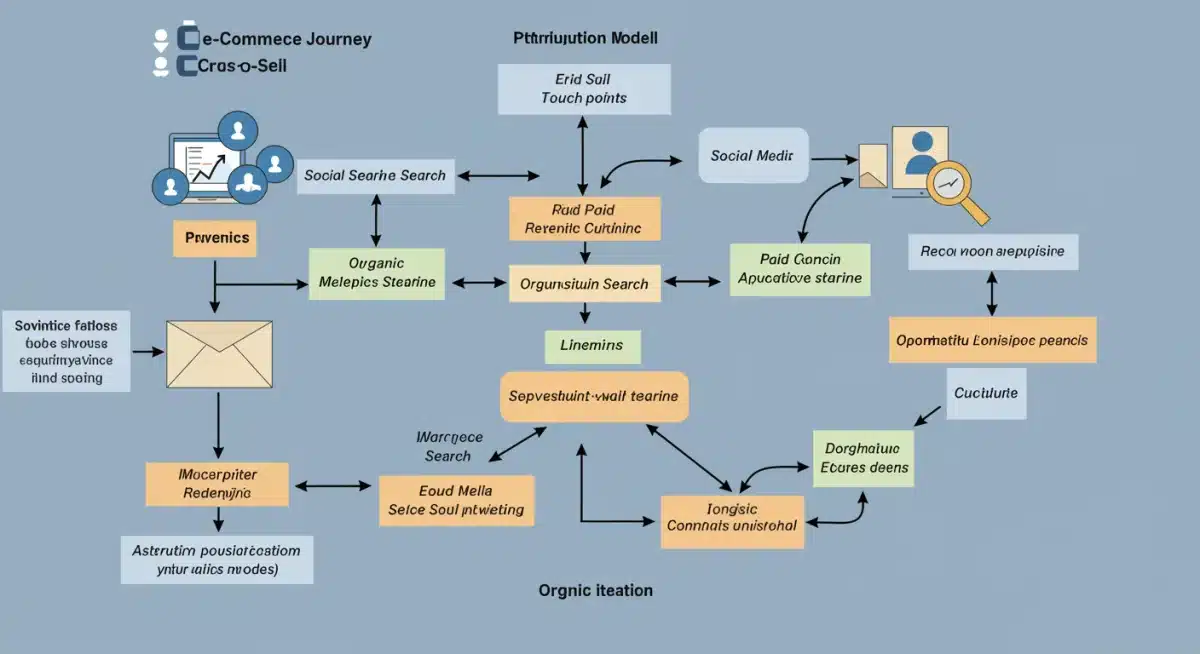
Overcoming data fragmentation and privacy concerns
The push for enhanced user privacy, exemplified by regulations like GDPR and CCPA, further complicates data collection and tracking. While essential for consumer trust, these regulations limit the availability of certain data points, forcing marketers to find alternative, compliant methods for understanding customer behavior. This includes a greater reliance on first-party data and privacy-preserving technologies that can still provide meaningful insights without compromising user anonymity.
Another challenge lies in the difficulty of attributing offline interactions to online conversions, or vice-versa. A customer might see an ad on social media (online), then visit a physical store for more information (offline), and finally complete a purchase on a desktop computer (online). Bridging these online-offline gaps requires sophisticated tracking mechanisms and a unified customer profile that captures all interactions, regardless of the channel. This omnichannel view is critical for truly accurate ROI measurement.
In conclusion, accurate ROI measurement in e-commerce is hindered by data complexity, fragmentation, and evolving privacy standards. Addressing these challenges requires strategic data integration, innovative tracking methods, and a commitment to privacy-compliant analytics to gain a true understanding of marketing effectiveness.
Advanced attribution models for 2025: beyond the basics
As e-commerce matures, so too must its attribution strategies. In 2025, relying solely on basic models like last-click is akin to driving with a blindfold. Advanced attribution models offer a more nuanced and accurate reflection of marketing effectiveness, allowing businesses to optimize their spend with greater precision. These models leverage sophisticated algorithms and comprehensive data sets to provide a holistic view of the customer journey.
One such advancement is the rise of data-driven attribution (DDA) models. Unlike rule-based models, DDA uses machine learning to analyze all conversion paths and assign fractional credit to each touchpoint based on its actual contribution. This approach moves beyond predetermined rules, allowing the data itself to dictate the value of each interaction. Google Analytics 4, for instance, offers data-driven attribution as its default, highlighting its growing importance.
Implementing data-driven and algorithmic attribution
- Leveraging Machine Learning: DDA models analyze vast datasets to identify unique patterns in conversion paths.
- Customizable Weights: Algorithms can be trained to assign credit based on specific business objectives and industry benchmarks.
- Predictive Capabilities: Some advanced models can predict the future impact of different touchpoints.
- Integration with CRM: Connecting attribution data with CRM systems provides a 360-degree view of the customer.
Another powerful approach involves algorithmic attribution models, which often incorporate concepts from game theory, such as Shapley values. These models mathematically determine the incremental contribution of each marketing channel, even when channels interact in complex ways. This helps to overcome the problem of interaction effects, where the combined impact of two channels is greater than the sum of their individual contributions. Such models are particularly valuable for high-value, long-cycle purchases.
Furthermore, probabilistic attribution is gaining traction, especially in a cookie-less world. Instead of relying on deterministic identifiers, this method uses statistical likelihoods to connect touchpoints to conversions, based on various user characteristics and behaviors. While not 100% precise for individual users, it provides valuable aggregate insights. The adoption of these advanced models is crucial for any e-commerce business aiming for truly optimized marketing spend in 2025.
In summary, advanced attribution models, particularly data-driven and algorithmic approaches, are essential for e-commerce in 2025. They offer superior accuracy by leveraging machine learning and statistical methods, enabling marketers to move beyond basic insights to truly optimize their marketing investments.
Integrating attribution data for strategic decision-making
The true power of attribution modeling isn’t just in generating numbers; it’s in transforming those numbers into actionable insights that drive strategic decision-making. In 2025, e-commerce businesses must seamlessly integrate attribution data into their broader analytics and operational frameworks to truly capitalize on its potential. This integration allows for a holistic view of performance, moving beyond siloed channel reporting to a comprehensive understanding of marketing ROI.
Effective integration means breaking down the walls between different data sources. This includes combining attribution insights with customer relationship management (CRM) data, sales figures, website analytics, and even customer feedback. When all these pieces come together, marketers can create a rich, detailed picture of the customer journey and identify precisely where and how marketing efforts are making the most impact.
Actionable insights from unified data
By unifying attribution data with other business intelligence, e-commerce managers can make more informed decisions about budget allocation. Instead of guessing which channels are most effective, they can see, with data-backed confidence, which campaigns are driving the highest ROI at different stages of the customer journey. This enables a more dynamic and responsive approach to marketing spend, allowing for quick adjustments based on real-time performance data.
Moreover, integrated attribution data empowers teams to optimize specific campaigns and creative assets. If a particular ad copy consistently performs well as an early-stage touchpoint but less so as a final conversion driver, attribution insights can guide content strategists to tailor messaging appropriately. This level of granular optimization leads to more efficient use of resources and ultimately, higher overall marketing effectiveness. It’s about making every interaction count.
Finally, integrating attribution data fosters better cross-functional collaboration. Sales, marketing, and product development teams can all benefit from a shared understanding of customer behavior and marketing impact. This unified perspective helps align goals, streamline processes, and create a more cohesive customer experience across all touchpoints. Strategic decision-making becomes a collaborative, data-driven effort, rather than a series of isolated initiatives.
In conclusion, integrating attribution data is crucial for strategic decision-making in e-commerce. By unifying various data sources, businesses can gain actionable insights, optimize budget allocation and campaigns, and foster cross-functional collaboration, leading to a more efficient and effective marketing strategy.
Future-proofing your attribution strategy for 2025 and beyond
As the digital landscape continues its rapid evolution, future-proofing your attribution strategy is not an option, but a necessity for sustained e-commerce success. In 2025, marketers must adopt a forward-thinking approach, anticipating changes in technology, consumer behavior, and privacy regulations to ensure their ROI measurement remains accurate and effective. This involves continuous adaptation and a willingness to embrace new methodologies.
One critical aspect of future-proofing is investing in flexible and scalable attribution platforms. Solutions that can integrate with various data sources, adapt to new tracking technologies, and offer customizable modeling capabilities will be invaluable. Proprietary systems that lock businesses into rigid frameworks will quickly become obsolete. The ability to pivot and evolve your attribution model as external factors change is paramount.
Embracing privacy-centric data collection and analysis
The increasing emphasis on data privacy means that first-party data strategies will become the cornerstone of future attribution. E-commerce businesses must focus on building direct relationships with their customers, collecting consent-based data, and leveraging this information responsibly. This not only enhances attribution accuracy but also builds trust and loyalty, which are increasingly important competitive differentiators. Moving away from reliance on third-party cookies is a proactive step.
Furthermore, staying abreast of emerging technologies like server-side tracking and privacy-enhancing technologies (PETs) is crucial. Server-side tracking allows for more resilient data collection by bypassing client-side blockers, while PETs enable insights to be derived from data without exposing sensitive personal information. These advancements offer promising avenues for maintaining robust attribution in a privacy-first world.
Finally, fostering a culture of continuous learning and experimentation within your marketing team is essential. The attribution landscape will continue to change, and static strategies will fail. Regularly reviewing your attribution models, testing new approaches, and analyzing their impact on ROI will ensure your e-commerce business remains agile and competitive. Future-proofing is an ongoing process of adaptation and innovation.
In conclusion, future-proofing your attribution strategy for 2025 and beyond requires investing in flexible platforms, prioritizing first-party data and privacy-centric approaches, and fostering a culture of continuous learning. These proactive measures ensure accurate ROI measurement in an ever-evolving digital environment.
Maximizing ROI through optimized attribution insights
The ultimate goal of sophisticated attribution modeling is not merely to understand where conversions come from, but to actively maximize ROI through optimized insights. In 2025, e-commerce businesses must move beyond passive reporting to proactive strategy adjustments, using attribution data as a powerful lever for growth. This involves a continuous cycle of analysis, optimization, and re-evaluation to ensure every marketing dollar is working as hard as possible.
By accurately attributing sales to specific touchpoints, marketers can identify their most effective channels and campaigns. This clarity allows for strategic reallocation of budgets, shifting resources from underperforming areas to those that consistently deliver high returns. For example, if a particular social media campaign consistently acts as a strong top-of-funnel initiator, more budget can be allocated to early-stage brand awareness efforts on that platform, knowing its contribution will be accurately credited later.
Practical steps for ROI optimization
- Identify High-Performing Channels: Use attribution data to pinpoint which channels consistently contribute to conversions.
- Optimize Budget Allocation: Reallocate marketing spend based on the true ROI of each channel and campaign.
- Refine Campaign Messaging: Tailor ad copy and creatives to specific touchpoints in the customer journey.
- Enhance Customer Journey: Identify bottlenecks or underperforming touchpoints and improve the user experience.
- Test and Iterate: Continuously experiment with different attribution models and marketing strategies.
Attribution insights also enable granular optimization of campaign elements. If certain keywords in paid search consistently contribute to conversions at a specific stage, those keywords can be prioritized and their bids adjusted accordingly. Similarly, email marketing segments that show high engagement early in the customer journey can receive more targeted content designed to nurture leads further down the funnel. This level of detail transforms general marketing efforts into highly targeted, efficient operations.
Moreover, optimized attribution insights facilitate a deeper understanding of customer lifetime value (CLTV). By linking marketing touchpoints to long-term customer behavior and repeat purchases, businesses can identify which initial acquisition channels bring in the most valuable customers. This strategic view allows for investments that not only drive immediate sales but also foster sustainable, long-term growth. Maximizing ROI in 2025 is about leveraging every piece of data to make smarter, more profitable decisions across the entire customer lifecycle.
In conclusion, leveraging optimized attribution insights is key to maximizing ROI. By identifying high-performing channels, refining campaigns, and understanding customer lifetime value, e-commerce businesses can make data-driven decisions that lead to more efficient marketing spend and sustainable growth.
| Key Aspect | Brief Description |
|---|---|
| Evolving Landscape | Complex customer journeys and privacy changes demand advanced attribution in 2025. |
| Advanced Models | Data-driven and algorithmic models offer more precise ROI measurement than basic models. |
| Data Integration | Unifying attribution data with other business intelligence enables strategic decisions. |
| Future-Proofing | Embracing flexible platforms and first-party data is crucial for long-term success. |
Frequently asked questions about e-commerce attribution
Attribution modeling in e-commerce is the process of assigning credit to various marketing touchpoints that contribute to a customer’s conversion. It helps businesses understand which channels and campaigns are most effective in driving sales and accurately measure their return on investment (ROI).
Accurate ROI measurement is crucial because it enables businesses to optimize their marketing budgets, allocate resources effectively, and identify underperforming campaigns. Without it, companies risk wasting money on ineffective strategies and missing opportunities for growth, directly impacting profitability.
Privacy changes, such as the deprecation of third-party cookies, necessitate a shift towards first-party data strategies and privacy-enhancing technologies. This impacts traditional tracking methods, requiring marketers to innovate in data collection and analysis to maintain accurate insights while respecting user privacy.
Advanced attribution models, like data-driven and algorithmic models, use machine learning and statistical methods to assign credit more precisely than basic rule-based models. They analyze complex customer journeys, factoring in interactions and their actual contribution to conversion, providing a more holistic view of performance.
Future-proofing involves adopting flexible platforms, prioritizing first-party data, embracing privacy-centric technologies, and fostering a culture of continuous learning. Regularly review and adapt your models to technological advancements and regulatory changes to ensure long-term accuracy and effectiveness in measuring ROI.
Conclusion
In conclusion, the landscape of attribution modeling in e-commerce: accurately measuring ROI for marketing spend in 2025 is undeniably complex yet ripe with opportunity. As customer journeys become increasingly intricate and privacy regulations evolve, e-commerce businesses must move beyond outdated, simplistic attribution methods. Embracing advanced data-driven and algorithmic models, integrating diverse data sources, and proactively future-proofing strategies with first-party data are no longer options but imperatives. By doing so, marketers can gain unparalleled clarity into the true impact of their efforts, optimize budget allocation with precision, and ultimately drive sustainable, profitable growth in a highly competitive digital marketplace. The future of e-commerce success hinges on this sophisticated approach to understanding and valuing every customer interaction.