Leveraging 2025 E-commerce Data Trends for Q1 Growth
Leveraging 2025 e-commerce data trends through predictive analytics is crucial for businesses aiming to achieve substantial Q1 growth by optimizing operations and enhancing customer experiences.
The digital storefront is a dynamic, ever-evolving landscape where data reigns supreme. For businesses aiming to secure a competitive edge and achieve ambitious targets like 15% Q1 growth, understanding and effectively leveraging 2025 e-commerce data trends is not merely an advantage but a necessity. This deep dive will explore how predictive analytics can transform raw data into actionable insights, propelling your e-commerce strategy forward.
Understanding the 2025 E-commerce Data Landscape
The e-commerce landscape in 2025 is characterized by an unprecedented volume and variety of data. From customer interactions and transaction histories to supply chain logistics and market fluctuations, every digital footprint offers a potential insight. The challenge lies not in data scarcity, but in extracting meaningful patterns and predictions from this vast ocean of information.
As we move further into the digital age, the complexity of consumer behavior continues to increase. Shoppers interact with brands across multiple channels, leaving behind a rich trail of data points. This includes website visits, social media engagement, email opens, in-app activity, and even voice search queries. Understanding how to synthesize these disparate data sources into a cohesive narrative is the first step toward effective data utilization.
The rise of real-time data processing
Real-time data processing is becoming indispensable. Traditional batch processing, while still relevant for historical analysis, often falls short when immediate decision-making is required. E-commerce businesses need to react instantly to inventory changes, price fluctuations, and sudden shifts in customer demand.
- Instant inventory updates: Prevents overselling and stockouts.
- Dynamic pricing adjustments: Responds to competitor actions and demand elasticity.
- Personalized recommendations: Delivers relevant product suggestions in the moment.
- Fraud detection: Identifies suspicious transactions as they occur, minimizing losses.
The ability to process and act upon data in real-time empowers businesses to optimize their operations and enhance customer experiences proactively, rather than reactively. This agility is a significant differentiator in a crowded market, directly contributing to improved Q1 performance.
Ultimately, a holistic view of the 2025 e-commerce data landscape involves integrating diverse data streams and employing robust processing capabilities. This foundational understanding is critical for anyone looking to harness the power of data for strategic growth.
Predictive Analytics: The Engine for Growth
Predictive analytics transforms historical and real-time data into forecasts about future events and behaviors. For e-commerce, this means anticipating customer needs, predicting market shifts, and optimizing internal processes before they become critical. It’s about moving from reactive problem-solving to proactive opportunity seizing.
The core of predictive analytics lies in sophisticated algorithms and machine learning models that identify patterns and correlations within datasets. These models can then project these patterns onto future scenarios, offering a data-backed glimpse into what might happen next. This foresight is invaluable for strategic planning and execution.
Forecasting customer behavior
One of the most impactful applications of predictive analytics is in understanding and forecasting customer behavior. By analyzing past purchases, browsing history, and demographic information, businesses can predict future buying patterns, churn risk, and customer lifetime value.
- Purchase prediction: Anticipates what customers are likely to buy next.
- Churn risk identification: Flags customers at risk of leaving, enabling targeted retention efforts.
- Customer lifetime value (CLV) estimation: Helps prioritize marketing spend on high-value segments.
- Personalized marketing: Delivers highly relevant content and offers, increasing conversion rates.
This deep understanding of customer behavior allows for hyper-personalized marketing campaigns and product recommendations, directly influencing conversion rates and average order value. By predicting what customers want before they even know it, businesses can foster stronger relationships and drive repeat purchases, directly contributing to a robust Q1.
Predictive analytics acts as a powerful engine, driving informed decision-making across all facets of an e-commerce operation. Its ability to foresee future trends and behaviors is what truly sets apart leading online retailers, enabling them to consistently outperform competitors and achieve significant growth milestones.
Optimizing the Customer Journey with Data Insights
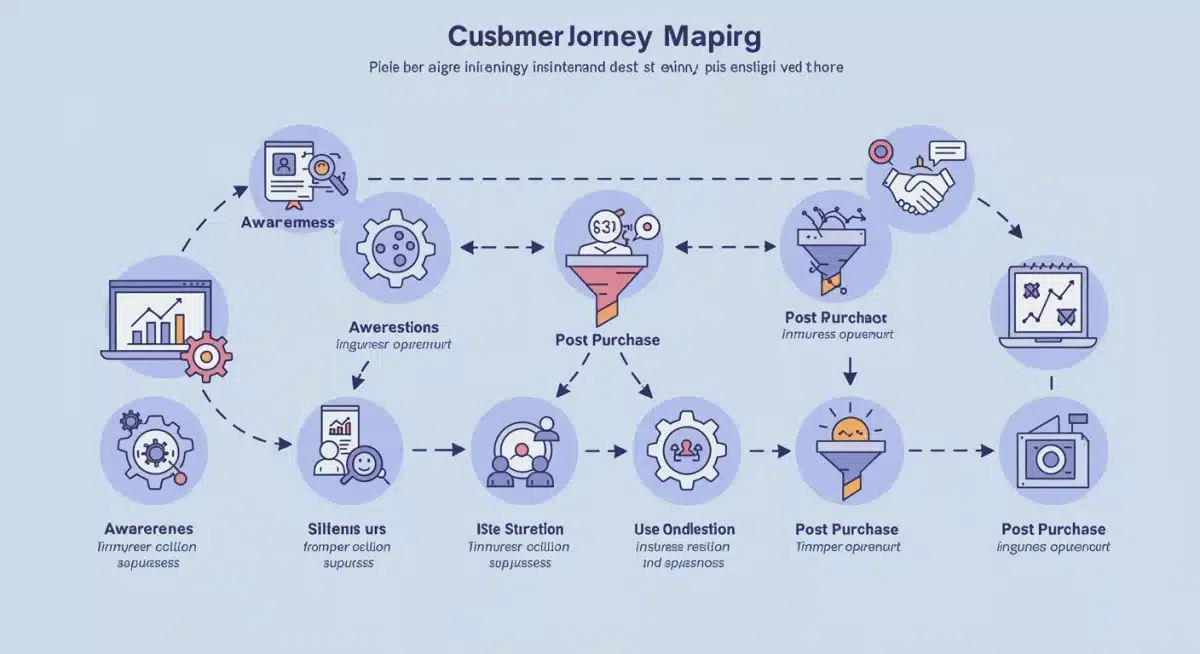
The modern customer journey is rarely linear. It involves multiple touchpoints across various channels, and each interaction generates valuable data. Optimizing this journey requires a continuous feedback loop where data insights inform improvements at every stage, from initial awareness to post-purchase support.
By mapping out the customer journey, businesses can identify friction points, understand customer motivations, and personalize experiences. This data-driven approach ensures that every step a customer takes is as smooth and engaging as possible, ultimately leading to higher satisfaction and conversion rates.
Personalization at scale
Personalization is no longer a luxury but an expectation. Consumers anticipate tailored experiences that reflect their preferences and past interactions. Data insights enable businesses to deliver this personalization at scale, ensuring every customer feels seen and valued.
- Dynamic content delivery: Shows different website content based on user profiles.
- Product recommendations: Suggests items highly relevant to individual tastes and browsing history.
- Targeted email campaigns: Sends promotions and updates that resonate with specific segments.
- Personalized checkout experiences: Simplifies the purchase process based on user preferences.
From personalized product recommendations to customized email campaigns, data allows e-commerce platforms to create a unique shopping experience for each individual. This level of personalization significantly enhances customer engagement and loyalty, fostering repeat business and positive word-of-mouth, both vital for Q1 growth.
Optimizing the customer journey through data insights is a continuous process of analysis, adaptation, and refinement. By focusing on personalization and seamless experiences, e-commerce businesses can cultivate a loyal customer base and drive sustained growth.
Inventory and Supply Chain Optimization
Efficient inventory management and a resilient supply chain are critical pillars of e-commerce success, especially when aiming for ambitious Q1 growth targets. Predictive analytics plays a transformative role here, moving businesses beyond reactive stock management to proactive demand forecasting and supply chain resilience.
The complexities of global supply chains, coupled with fluctuating consumer demand, make traditional inventory methods insufficient. Predictive models, however, can analyze historical sales data, seasonal trends, external factors like weather, and even social media sentiment to forecast demand with remarkable accuracy.
Demand forecasting accuracy
Accurate demand forecasting is the cornerstone of effective inventory management. Misjudging demand can lead to costly overstocking or missed sales opportunities due to stockouts. Predictive analytics significantly enhances this accuracy.
- Reduced carrying costs: Minimizes expenses associated with storing excess inventory.
- Minimized stockouts: Ensures products are available when customers want them.
- Optimized order quantities: Places orders with suppliers based on precise future needs.
- Improved cash flow: Frees up capital that would otherwise be tied up in inventory.
By predicting future demand with greater precision, businesses can optimize inventory levels, reduce carrying costs, and minimize stockouts. This not only improves profitability but also enhances customer satisfaction by ensuring product availability. A streamlined inventory directly contributes to improved Q1 financial performance.
Beyond inventory, predictive analytics can also identify potential disruptions in the supply chain, such as shipping delays or material shortages, allowing businesses to implement contingency plans. This proactive approach to inventory and supply chain optimization is essential for maintaining operational efficiency and achieving growth targets in a dynamic market.
Leveraging AI and Machine Learning for Deeper Insights
As we delve deeper into 2025, the synergy between artificial intelligence (AI), machine learning (ML), and e-commerce data analytics is becoming increasingly profound. These advanced technologies are not just enhancing existing processes but are unlocking entirely new possibilities for understanding data and driving growth.
AI and ML algorithms can process and analyze vast datasets at speeds and scales impossible for humans. They excel at identifying subtle patterns, anomalies, and correlations that might otherwise go unnoticed, leading to more nuanced and powerful insights. This capability is pivotal for extracting maximum value from the complex e-commerce data trends.
Automated anomaly detection
One of the significant benefits of AI in data analysis is its ability to automate anomaly detection. This means identifying unusual patterns or outliers in data that could indicate emerging trends, system errors, or even fraudulent activities, all without constant human oversight.
- Early identification of fraud: Protects revenue and customer trust.
- Spotting emerging market trends: Allows for rapid adaptation and new product opportunities.
- Detecting operational inefficiencies: Highlights areas for process improvement.
- Monitoring website performance: Alerts to sudden drops in traffic or conversion rates.
Automated anomaly detection allows e-commerce businesses to react quickly to unexpected events, whether they are sudden surges in demand, potential security threats, or shifts in customer behavior. This real-time intelligence is crucial for maintaining operational health and safeguarding Q1 growth initiatives.
Furthermore, AI-powered tools can automate repetitive data analysis tasks, freeing up human analysts to focus on higher-level strategic thinking and interpretation. By integrating AI and ML into their data strategies, e-commerce businesses can gain a significant competitive advantage, transforming raw data into intelligent, actionable insights that fuel sustainable growth.
Measuring Impact and Continuous Improvement
The journey of leveraging e-commerce data trends and predictive analytics doesn’t end with implementation; it’s a continuous cycle of measurement, analysis, and refinement. To truly achieve and sustain 15% Q1 growth, businesses must establish robust frameworks for tracking performance and iterating on their strategies.
Defining clear Key Performance Indicators (KPIs) is the first step. These metrics should directly align with the overarching business objectives, providing a quantifiable way to assess the effectiveness of data-driven initiatives. Without clear benchmarks, it’s impossible to determine success or identify areas needing improvement.
Key metrics for Q1 growth
Focusing on specific metrics that directly correlate with Q1 growth is essential. These metrics provide a clear picture of progress and highlight which strategies are yielding the best results.
- Conversion rate: Percentage of visitors who complete a purchase.
- Average order value (AOV): The average amount spent per customer transaction.
- Customer acquisition cost (CAC): The cost to acquire a new customer.
- Customer lifetime value (CLV): The predicted total revenue a customer will generate.
- Return on ad spend (ROAS): Revenue generated for every dollar spent on advertising.
Regularly reviewing these KPIs against established targets allows businesses to quickly identify what’s working and what isn’t. This data-driven feedback loop enables agile adjustments to marketing campaigns, product offerings, and operational processes, ensuring that efforts are always aligned with growth objectives.
Moreover, continuous improvement involves not just tracking metrics but also experimenting with new models, refining algorithms, and staying abreast of the latest data science advancements. By fostering a culture of continuous learning and adaptation, e-commerce businesses can ensure their predictive analytics strategies remain effective and continue to drive substantial Q1 growth year after year.
| Key Trend | Impact on Q1 Growth |
|---|---|
| Real-time Data Processing | Enables immediate operational adjustments and dynamic customer experiences, boosting conversions. |
| Predictive Customer Behavior | Anticipates future purchases and churn, leading to targeted marketing and improved CLV. |
| AI-driven Inventory Optimization | Minimizes stockouts and overstocking, enhancing profitability and customer satisfaction. |
| Personalized Customer Journeys | Increases engagement and loyalty through tailored experiences, driving repeat purchases. |
Frequently Asked Questions About E-commerce Data Trends
Predictive analytics in e-commerce involves using historical data, statistical algorithms, and machine learning techniques to identify the likelihood of future outcomes. This includes forecasting customer behavior, sales trends, and inventory needs, enabling businesses to make data-driven decisions that optimize operations and marketing efforts for better financial results.
By analyzing 2025 e-commerce data trends, businesses can anticipate consumer demand, personalize customer experiences, and optimize inventory management. These insights lead to more effective marketing campaigns, reduced operational costs, and increased conversion rates, all of which are critical drivers for achieving significant Q1 growth targets.
Key data sources include website analytics (traffic, bounce rate, conversions), transaction history (purchase patterns, average order value), customer relationship management (CRM) data, social media engagement, email marketing performance, and supply chain logistics data. Integrating these sources provides a comprehensive view of business operations.
Yes, real-time data processing is becoming increasingly essential. It enables immediate responses to dynamic market conditions, such as sudden shifts in demand or competitive pricing changes. This agility allows for instant inventory updates, dynamic pricing, and personalized recommendations, crucial for maintaining a competitive edge and maximizing revenue.
AI and machine learning enhance data analysis by automating complex tasks, identifying subtle patterns, and detecting anomalies at scale. This leads to more accurate demand forecasts, hyper-personalized customer experiences, efficient fraud detection, and optimized operational processes, ultimately driving greater profitability and sustainable growth.
Conclusion
The journey to achieve and sustain significant growth in the competitive e-commerce landscape of 2025 hinges on a profound understanding and strategic application of data. By diligently leveraging 2025 e-commerce data trends through advanced predictive analytics, businesses can move beyond traditional reactive strategies to a proactive, insight-driven approach. This involves not only understanding customer behavior and optimizing the customer journey but also streamlining inventory and supply chain operations, all while harnessing the power of AI and machine learning for deeper, actionable insights. The path to a robust 15% Q1 growth is paved with data, demanding continuous measurement, adaptation, and a commitment to innovation to stay ahead in this ever-evolving digital marketplace.