Data-Driven Personalization: Boost Engagement by 25% in 2025
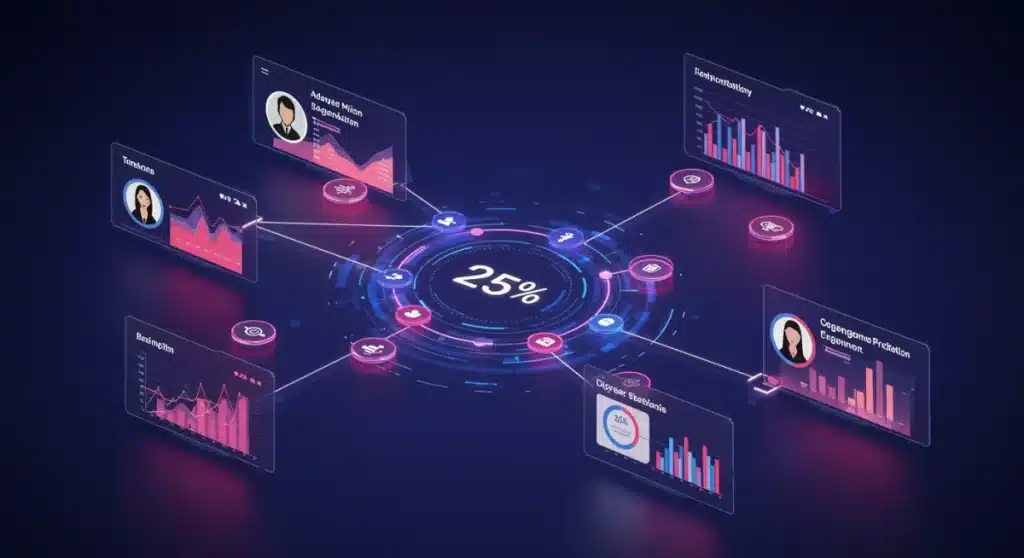
Data-driven personalization, utilizing advanced segmentation and artificial intelligence, is projected to increase customer engagement by 25% by 2025, offering tailored experiences that resonate deeply with individual preferences and behaviors.
The digital landscape is constantly evolving, making genuine customer connection more challenging and crucial than ever. For businesses aiming to thrive, mastering data-driven personalization is no longer optional; it’s a strategic imperative for boosting customer engagement by 25% with advanced segmentation in 2025.
The imperative of data-driven personalization
In today’s hyper-competitive market, generic marketing messages fall flat. Consumers expect experiences that are not only relevant but also anticipate their needs. This shift has elevated data-driven personalization from a desirable feature to a fundamental business strategy.
By leveraging vast amounts of customer data, businesses can craft bespoke interactions that foster loyalty and drive conversions. This approach moves beyond simple demographic targeting, delving into behavioral patterns, purchase history, and real-time interactions to create truly individualized journeys.
Understanding the modern customer expectation
Today’s customers are empowered by choice and information. They value brands that understand them and provide value beyond a transactional relationship. Personalization, when done right, builds this essential bridge of understanding.
- Relevance: Delivering content, products, or services that directly align with individual interests.
- Timeliness: Reaching customers at the precise moment they are most receptive or in need.
- Consistency: Maintaining a personalized experience across all touchpoints, from website to email to customer service.
- Value: Offering genuine benefits that enhance the customer’s overall journey and satisfaction.
Ultimately, the goal of data-driven personalization is to create a seamless, intuitive, and highly satisfying customer journey that feels uniquely crafted for each individual. This deep level of engagement is what translates into sustained growth and a stronger market position for businesses in 2025.
Advanced segmentation: more than just demographics
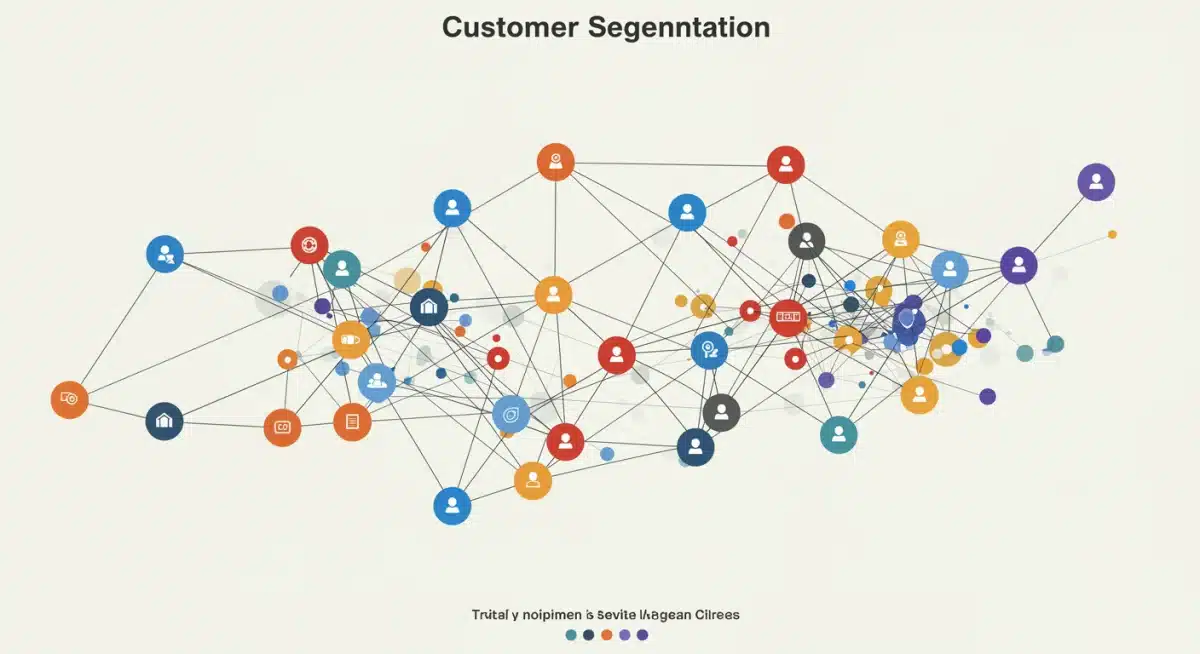
Traditional segmentation, based on broad demographics, is rapidly becoming obsolete. Advanced segmentation goes much deeper, utilizing sophisticated analytical techniques to group customers based on a multitude of dynamic factors. This approach allows for a granular understanding of customer behavior and preferences.
Instead of just knowing a customer’s age or location, businesses can now identify their specific buying habits, preferred communication channels, product affinities, and even their emotional responses to certain marketing stimuli. This level of detail is critical for creating truly impactful personalization strategies.
Behavioral segmentation in action
Behavioral segmentation analyzes how customers interact with a brand, offering powerful insights into their intent and preferences. This includes tracking website navigation, purchase frequency, product views, and engagement with marketing campaigns.
- Purchase behavior: Identifying frequent buyers, high-value customers, or those prone to churn.
- Engagement patterns: Categorizing users based on their interaction with emails, ads, and website content.
- Product affinity: Grouping customers who show interest in specific product categories or features.
- Lifecycle stage: Segmenting customers based on where they are in their journey, from new prospects to loyal advocates.
By understanding these behaviors, businesses can tailor their messaging and offerings with unprecedented accuracy. For instance, a customer who frequently browses a specific product category but hasn’t purchased might receive a targeted offer or content related to that category, significantly increasing the likelihood of conversion.
Leveraging AI and machine learning for superior personalization
Artificial intelligence (AI) and machine learning (ML) are the backbone of modern data-driven personalization. These technologies enable businesses to process vast datasets, identify complex patterns, and make predictive analyses that would be impossible for humans to achieve manually. The power of AI lies in its ability to learn and adapt.
AI algorithms can continuously refine customer segments, predict future behaviors, and even generate personalized content in real-time. This dynamic capability ensures that personalization efforts remain relevant and effective, constantly evolving with customer preferences and market trends.
Predictive analytics and recommendation engines
One of the most impactful applications of AI in personalization is predictive analytics. By analyzing historical data, AI can forecast which products or services a customer is likely to be interested in next, or which marketing messages will resonate most effectively.
- Next best action: Recommending the most appropriate action for a customer based on their current behavior.
- Churn prediction: Identifying customers at risk of leaving and proactively engaging them with retention strategies.
- Dynamic pricing: Adjusting prices in real-time based on individual customer value and market demand.
- Personalized product recommendations: Offering highly relevant product suggestions that drive cross-sells and upsells.
Recommendation engines, powered by ML, are ubiquitous in e-commerce and streaming services. They analyze individual viewing or purchase history, along with the behavior of similar users, to suggest items that are highly likely to appeal. This not only enhances the customer experience but also significantly boosts sales and engagement metrics.

Measuring success: key metrics for engagement
Implementing data-driven personalization is only half the battle; accurately measuring its impact is equally critical. Without clear metrics, businesses cannot understand what’s working, what isn’t, and where to optimize their strategies. The focus should be on engagement metrics that directly reflect customer interaction and satisfaction.
Tracking these key performance indicators (KPIs) allows for continuous refinement of personalization efforts, ensuring that the investment in data and technology yields tangible returns. It provides the necessary feedback loop to adapt and improve over time, ultimately contributing to the goal of boosting customer engagement by 25%.
Essential engagement KPIs
Several metrics can help gauge the effectiveness of personalization initiatives. These go beyond simple conversion rates, offering a deeper insight into how customers are interacting with personalized content and experiences.
- Click-through rate (CTR): Measuring how often customers click on personalized recommendations or links.
- Conversion rate: Tracking the percentage of personalized interactions that lead to a desired action, such as a purchase.
- Time on site/app: Indicating increased engagement and interest in personalized content.
- Repeat purchase rate: Reflecting customer loyalty and satisfaction with personalized experiences.
- Customer lifetime value (CLTV): A long-term measure of the total revenue a customer is expected to generate, often boosted by effective personalization.
By diligently monitoring these metrics, businesses can gain a comprehensive understanding of their personalization ROI. This data-driven approach to measurement is fundamental for validating strategies and making informed adjustments to achieve engagement targets.
Challenges and ethical considerations in personalization
While the benefits of data-driven personalization are undeniable, there are significant challenges and ethical considerations that businesses must navigate. The collection and use of personal data raise concerns about privacy, transparency, and potential algorithmic biases. Addressing these issues responsibly is paramount for maintaining customer trust.
A misstep in these areas can lead to reputational damage, customer backlash, and even regulatory penalties. Therefore, a careful balance must be struck between delivering highly personalized experiences and respecting individual rights and expectations regarding data privacy.
Ensuring data privacy and transparency
Customers are increasingly aware of their data rights and expect brands to be transparent about how their information is used. Businesses must adhere to regulations like GDPR and CCPA, but also go beyond mere compliance to build genuine trust.
- Clear consent mechanisms: Ensuring customers explicitly agree to data collection and usage.
- Data anonymization: Protecting individual identities where possible and appropriate.
- Opt-out options: Providing easy ways for customers to manage their data preferences.
- Robust security measures: Safeguarding customer data from breaches and unauthorized access.
Furthermore, businesses must be mindful of algorithmic bias, which can inadvertently lead to discriminatory or unfair personalization. Regular audits and diverse data inputs are crucial to mitigate these risks. Ethical considerations should be woven into the fabric of any data-driven personalization strategy.
The future of personalization: hyper-personalization and beyond
The journey of data-driven personalization is far from over. As technology advances and customer expectations evolve, the future points towards hyper-personalization and even more sophisticated approaches. This next frontier will involve real-time, context-aware personalization that anticipates needs even before the customer explicitly expresses them.
Imagine a scenario where your smart devices communicate with brands to provide truly seamless and predictive experiences. This level of integration, while exciting, will also amplify the need for robust ethical frameworks and customer control over their data.
Emerging trends and technologies
- Voice interfaces: Personalization extending to natural language interactions with AI assistants.
- Augmented reality (AR) and virtual reality (VR): Creating immersive, personalized shopping and brand experiences.
- Emotion AI: Analyzing emotional cues to tailor content and tone in real-time.
- Blockchain for data privacy: Giving customers more control and transparency over their personal data.
These emerging technologies promise to make personalization even more intuitive and impactful. However, the core principle remains the same: leveraging data to understand and serve the individual customer better. The businesses that embrace these advancements while prioritizing ethical data practices will be the ones that truly excel in boosting customer engagement in 2025 and beyond.
| Key Point | Brief Description |
|---|---|
| Data-Driven Imperative | Essential strategy for tailored customer experiences and expected 25% engagement boost by 2025. |
| Advanced Segmentation | Moves beyond demographics to behavioral patterns, purchase history, and real-time interactions for granular insights. |
| AI & Machine Learning | Powers predictive analytics, recommendation engines, and real-time content generation for dynamic personalization. |
| Ethical Considerations | Crucial for data privacy, transparency, and avoiding algorithmic bias to maintain customer trust. |
Frequently asked questions about data-driven personalization
Data-driven personalization involves using customer data to create tailored experiences, content, or product recommendations. It moves beyond generic marketing, aiming to make every interaction feel unique and relevant to the individual based on their past behaviors and preferences, significantly boosting engagement.
Advanced segmentation uses a broader range of data points, including behavioral, psychographic, and real-time interaction data, beyond basic demographics like age or location. This allows for more precise grouping of customers, leading to highly specific and effective personalization strategies that drive engagement.
AI and machine learning are crucial for processing large datasets, identifying complex patterns, and making predictive analyses. They power recommendation engines, personalize content in real-time, and forecast customer needs, all of which contribute significantly to enhancing and boosting customer engagement.
Key metrics include click-through rate (CTR), conversion rate, time on site/app, repeat purchase rate, and customer lifetime value (CLTV). These indicators help assess how effectively personalized experiences are resonating with customers and driving desired actions and loyalty.
Ethical concerns primarily revolve around data privacy, transparency in data usage, and potential algorithmic bias. Businesses must ensure clear consent, robust security, and provide control over personal data to build and maintain customer trust while delivering personalized experiences.
Conclusion
The journey towards enhancing customer engagement through data-driven personalization is an ongoing evolution, not a destination. As businesses look to 2025, the strategic integration of advanced segmentation, powered by AI and machine learning, will be the defining factor in achieving significant engagement boosts. By prioritizing ethical data practices and continuously measuring impact, companies can forge deeper connections with their customers, ensuring sustained growth and a resilient market presence in an increasingly personalized digital world.