Customer Churn: Key Indicators & 2025 Retention with Data Analytics
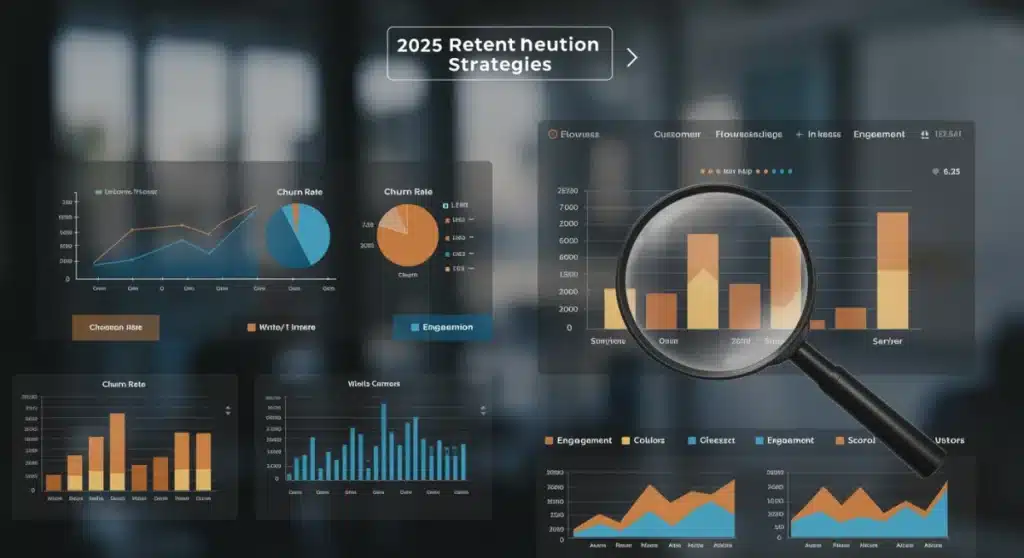
Data analytics is pivotal for understanding customer churn, enabling businesses to identify critical indicators and implement proactive retention strategies essential for sustained growth in 2025.
In the dynamic world of e-commerce, customer loyalty is the bedrock of sustainable growth. Losing customers, a phenomenon known as customer churn analytics, can significantly impact revenue and market share. This article delves into how businesses can leverage data analytics to pinpoint crucial churn indicators and develop robust retention strategies for 2025.
The Imperative of Understanding Customer Churn
Customer churn represents a significant challenge for online businesses, often indicating underlying issues with product, service, or customer experience. Recognizing the signs of an impending departure is the first step toward mitigating its impact.
Ignoring churn can lead to a vicious cycle of dwindling customer bases and increased acquisition costs. Proactive management, driven by insightful data, transforms a reactive problem into a strategic opportunity. By understanding why customers leave, businesses can refine their offerings and build stronger, more lasting relationships.
Why Churn Matters More Than Ever
- Cost of Acquisition: Acquiring new customers is often significantly more expensive than retaining existing ones.
- Revenue Stability: A stable customer base provides predictable revenue streams, essential for forecasting and investment.
- Brand Reputation: High churn rates can signal dissatisfaction, negatively impacting brand perception and word-of-mouth marketing.
- Competitive Edge: Businesses that excel at retention gain a significant advantage in crowded markets.
Ultimately, a deep understanding of customer churn allows businesses to move beyond mere damage control. It enables them to foster loyalty, optimize customer journeys, and ensure long-term viability in an increasingly competitive digital landscape.
Identifying Key Churn Indicators through Data Analytics
Data analytics provides the tools necessary to sift through vast amounts of customer information, revealing patterns and behaviors that precede churn. These indicators are not always obvious, making sophisticated analytical techniques indispensable.
By analyzing historical data, businesses can identify common threads among customers who have previously churned. This predictive capability is invaluable for intervening before it’s too late. It transforms raw data into actionable intelligence, guiding targeted retention efforts.
Behavioral Churn Indicators
Customer behavior offers a wealth of clues about their satisfaction and likelihood to churn. Declining engagement, changes in purchasing patterns, and interaction frequency are all critical signals.
For instance, a sudden drop in website visits or a decrease in the average order value could indicate waning interest. Monitoring these subtle shifts allows businesses to identify at-risk customers early.
- Decreased Engagement: Less frequent logins, fewer product views, or reduced interaction with marketing emails.
- Reduced Purchase Frequency/Value: Longer gaps between purchases or a decrease in the amount spent per transaction.
- Negative Service Interactions: Multiple complaints or unresolved support tickets.
- Feature Underutilization: Not using key features of a service or product that are typically associated with high satisfaction.
These behavioral indicators are often the most direct predictors of churn, as they reflect a customer’s diminishing connection with a brand or service. Capturing and interpreting this data accurately is vital for effective intervention.
Leveraging Predictive Models for Proactive Retention
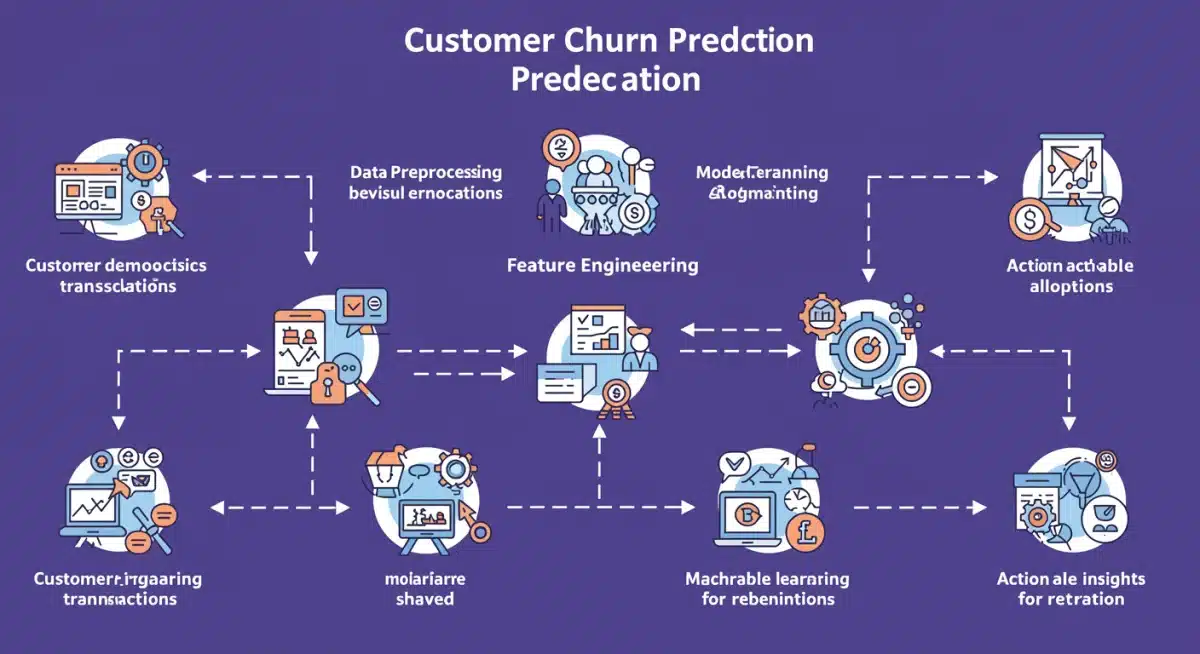
Beyond identifying current indicators, the true power of data analytics lies in its ability to predict future churn. Predictive models, powered by machine learning, can assess the probability of a customer churning, allowing businesses to act proactively.
These models learn from historical data, recognizing complex relationships between various customer attributes and churn events. The insights gained enable businesses to segment their customer base and tailor retention strategies with precision.
Common Predictive Modeling Techniques
Various machine learning algorithms are employed to build churn prediction models, each with its strengths and ideal use cases. Choosing the right model depends on the nature of the data and the specific business objectives.
Logistic regression, decision trees, and neural networks are among the most popular choices, providing different levels of interpretability and predictive power. The goal is always to find a balance between accuracy and the ability to extract actionable insights.
- Logistic Regression: A straightforward statistical model for binary classification, predicting whether a customer will churn (yes/no).
- Decision Trees/Random Forests: These models can handle complex, non-linear relationships and are good for identifying key churn drivers.
- Support Vector Machines (SVMs): Effective for high-dimensional data, creating clear boundaries between churners and non-churners.
- Neural Networks: Capable of learning intricate patterns, often delivering high accuracy, especially with large datasets.
The continuous refinement of these models, through ongoing data collection and performance monitoring, ensures their effectiveness in an evolving market. This iterative process is key to maintaining a competitive edge in customer retention.
Crafting Effective Retention Strategies for 2025
Once potential churners are identified, the next step is to implement targeted retention strategies. These strategies should be diverse, addressing various reasons for churn, and personalized to maximize their impact.
The landscape of customer expectations is constantly shifting, making it crucial for retention strategies to evolve. For 2025, personalization, proactive engagement, and superior customer experience will be paramount.
Personalization and Proactive Engagement
Generic retention efforts often fall flat. Customers expect experiences tailored to their individual needs and preferences. Leveraging data analytics to personalize communications and offers is a game-changer.
Proactive engagement means reaching out to at-risk customers before they even consider leaving. This could involve personalized recommendations, exclusive discounts, or even direct outreach from customer success teams.
- Targeted Offers: Providing discounts or special promotions on products or services relevant to an individual customer’s history.
- Personalized Communication: Sending tailored emails or in-app messages based on user behavior and preferences.
- Customer Success Programs: Dedicated teams to support high-value customers, ensuring they maximize product utility.
- Feedback Loops: Actively soliciting and acting upon customer feedback to address pain points before they escalate.
By making customers feel valued and understood, businesses can significantly increase their chances of retaining them. This human-centric approach, amplified by data insights, forms the core of effective retention in 2025.
The Role of Customer Experience (CX) in Churn Prevention
A seamless and positive customer experience is perhaps the most powerful deterrent to churn. Every interaction a customer has with a brand, from website navigation to post-purchase support, contributes to their overall satisfaction.
In 2025, CX will extend beyond mere functionality to encompass emotional connections and brand values. Businesses that prioritize creating delightful and memorable experiences will naturally foster greater loyalty.
Optimizing the Customer Journey
Mapping the entire customer journey allows businesses to identify potential friction points and opportunities for improvement. Data analytics plays a crucial role in understanding how customers move through these touchpoints.
By streamlining processes, providing intuitive interfaces, and offering exceptional support, businesses can reduce frustration and enhance satisfaction at every stage. This holistic approach builds a strong foundation for retention.
- Seamless Onboarding: Ensuring new customers can easily understand and utilize the product or service.
- Intuitive Interface: A user-friendly website or app that minimizes frustration and maximizes efficiency.
- Responsive Support: Providing quick and effective solutions to customer queries and issues across multiple channels.
- Post-Purchase Engagement: Following up after sales, offering relevant content, and soliciting feedback.
Investing in a superior customer experience is not just about preventing churn; it’s about building a loyal community of advocates who will champion the brand and contribute to long-term success.
Measuring the Impact of Retention Initiatives
Implementing retention strategies is only half the battle; measuring their effectiveness is equally critical. Data analytics provides the metrics needed to evaluate performance, identify areas for improvement, and demonstrate ROI.
Without proper measurement, businesses risk investing in strategies that yield little return. Continuous monitoring and analysis allow for agile adjustments, ensuring resources are allocated effectively and retention goals are met.
Key Metrics for Retention Success
Several key performance indicators (KPIs) can help businesses gauge the success of their retention efforts. Tracking these metrics over time provides a clear picture of what’s working and what needs refinement.
From customer lifetime value to repeat purchase rates, these metrics offer tangible proof of the impact of retention strategies. They also provide valuable insights into customer behavior and the overall health of the customer base.
- Customer Lifetime Value (CLTV): The predicted total revenue a business can expect from a customer throughout their relationship.
- Churn Rate: The percentage of customers who stop using a product or service over a given period.
- Repeat Purchase Rate: The percentage of customers who make more than one purchase.
- Net Promoter Score (NPS): A measure of customer loyalty and willingness to recommend a product or service.
- Customer Satisfaction (CSAT): Directly measures how satisfied customers are with specific interactions or the overall experience.
By diligently tracking and analyzing these metrics, businesses can continuously optimize their retention strategies, ensuring they remain effective and aligned with evolving customer needs and market dynamics.
| Key Aspect | Brief Description |
|---|---|
| Churn Definition | Customer attrition, a critical metric for business health and revenue stability. |
| Data Analytics Role | Identifies patterns, predicts churn, and informs targeted retention strategies. |
| Key Indicators | Behavioral shifts, declining engagement, and negative service interactions. |
| 2025 Strategies | Personalization, proactive engagement, and exceptional customer experience. |
Frequently Asked Questions About Customer Churn Analytics
Customer churn in e-commerce refers to the rate at which customers stop doing business with an online store. It signifies a loss of customers over a specific period, often measured by tracking repeat purchases or subscription cancellations. High churn rates can severely impact revenue and growth.
Data analytics utilizes historical customer data, including purchase history, engagement metrics, and demographics, to identify patterns associated with churn. Machine learning models then learn from these patterns to predict which current customers are most likely to churn in the future, enabling proactive intervention.
Key indicators of impending churn include decreased engagement (fewer logins, less interaction), reduced purchase frequency or average order value, negative customer service interactions, and a decline in product or feature usage. These behavioral shifts often signal growing dissatisfaction or disinterest.
In 2025, customers expect tailored experiences. Personalization, driven by data analytics, allows businesses to offer relevant products, services, and communications, making customers feel valued and understood. This individualized approach significantly boosts engagement and loyalty, reducing the likelihood of churn.
A superior customer experience is fundamental to churn prevention. It encompasses every touchpoint, from website usability to customer support. A seamless, positive, and emotionally resonant CX reduces frustration, builds trust, and fosters loyalty, making customers less likely to seek alternatives.
Conclusion
In the competitive e-commerce landscape of 2025, mastering customer churn is not merely an option but a strategic imperative. By harnessing the power of data analytics, businesses can move beyond reactive measures to proactively identify at-risk customers, understand their underlying motivations, and implement highly targeted retention strategies. The focus on personalized experiences, predictive modeling, and an unwavering commitment to exceptional customer experience will be the hallmarks of successful online stores that not only survive but thrive by cultivating lasting customer loyalty.