AI Data Analytics: 10% Higher Sales by Mid-2025
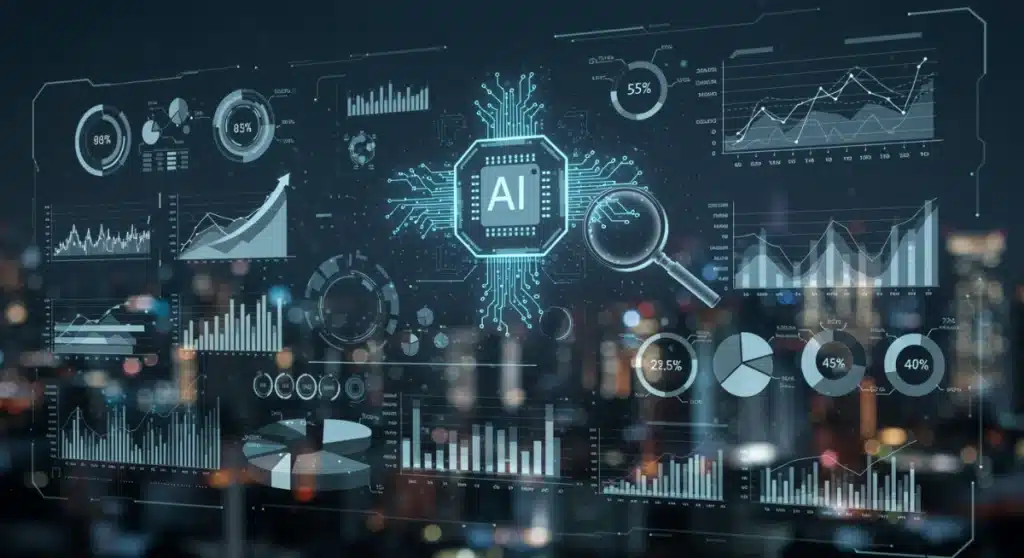
AI-driven data analytics is poised to significantly elevate conversion rates, offering businesses a tangible path to achieving at least 10% higher sales by mid-2025 through sophisticated insights and predictive modeling.
Are you ready to transform your sales strategy? The escalating influence of artificial intelligence in business is undeniable, particularly when it comes to refining how companies understand and engage with their customers. We’re on the cusp of an era where organizations leveraging AI data analytics conversion strategies are not just competing, but dominating their markets, with projections pointing towards a significant 10% increase in sales by mid-2025. This isn’t merely a prediction; it’s a rapidly approaching reality for those willing to embrace the power of intelligent data.
Understanding AI-Driven Data Analytics
AI-driven data analytics represents a paradigm shift from traditional data processing. Instead of simply collecting and reporting historical data, AI algorithms delve deeper, identifying complex patterns, predicting future trends, and offering actionable insights that human analysts might miss. This advanced capability is fundamentally changing how businesses approach everything from marketing to customer service.
At its core, AI analytics uses machine learning (ML) models to process vast datasets at speeds and scales impossible for manual review. These models learn from the data, continuously improving their accuracy and relevance over time. This iterative learning process means that the more data an AI system processes, the smarter and more effective it becomes, leading to increasingly precise and impactful business recommendations.
The Evolution from Traditional Analytics
Traditional analytics often relies on predefined rules and human-generated queries, which can be limited by the analyst’s assumptions. AI, on the other hand, can uncover hidden correlations and causal relationships without explicit programming for every scenario. This allows for a more comprehensive and nuanced understanding of customer behavior and market dynamics.
- Predictive Modeling: AI excels at forecasting future outcomes based on historical data, allowing businesses to anticipate customer needs and market shifts.
- Anomaly Detection: It can quickly identify unusual patterns that might indicate fraud, system errors, or emerging opportunities.
- Natural Language Processing (NLP): AI interprets text and speech, extracting sentiment and themes from customer feedback, reviews, and social media.
- Automated Insights: AI platforms can generate reports and suggest actions automatically, reducing manual effort and speeding up decision-making.
The transition to AI-driven analytics is not just an upgrade; it’s a strategic imperative for businesses aiming to stay competitive. By providing a clearer, more predictive view of their operations and customer base, AI empowers companies to move beyond reactive decision-making to proactive, data-informed strategies.
The Direct Link between AI and Conversion Rates
The ultimate goal for many businesses is to convert prospects into customers efficiently. AI-driven data analytics directly impacts this by optimizing various touchpoints throughout the customer journey. From initial awareness to post-purchase engagement, AI provides the intelligence needed to personalize experiences and remove friction, thereby boosting conversion rates significantly.
Imagine a scenario where every customer interaction is tailored to their specific preferences and predicted needs. AI makes this possible by analyzing individual behaviors, purchase histories, and demographic data to create highly accurate customer profiles. This level of personalization leads to more relevant marketing messages, product recommendations, and overall customer experiences, which are critical drivers of conversion.
Personalized Customer Journeys
AI algorithms can dynamically adjust website content, email campaigns, and even in-app notifications based on real-time user behavior. This creates a hyper-personalized journey for each individual, increasing the likelihood of them taking the desired action, whether it’s making a purchase or signing up for a service.
- Dynamic Content Delivery: Websites can display different products or offers to different users based on their browsing history and preferences.
- Targeted Advertising: AI optimizes ad placements and creative, ensuring ads reach the most receptive audiences at the right time.
- Email Campaign Optimization: AI predicts the best time to send emails and personalizes subject lines and content for higher open and click-through rates.
- Chatbot Assistance: AI-powered chatbots provide instant, relevant support, guiding users through their buying process and resolving queries efficiently.
The ability of AI to learn and adapt means that these personalized strategies continuously improve. As more data is gathered, the AI refines its understanding of what drives conversions for different customer segments, leading to increasingly effective campaigns and a measurable uplift in sales figures.
Key Strategies for Leveraging AI in Conversion Optimization
Implementing AI for conversion optimization requires a strategic approach, focusing on areas where AI can provide the most significant impact. It’s not just about deploying AI tools, but about integrating them into existing workflows and leveraging their unique capabilities to gain a competitive edge. The strategies often revolve around understanding customer intent, predicting behavior, and automating responses.
One of the most powerful applications of AI in this context is its ability to segment audiences with unprecedented precision. Beyond basic demographics, AI can identify psychographic patterns, behavioral clusters, and subtle indicators of purchase intent, allowing businesses to target their efforts more effectively than ever before.
Optimizing User Experience (UX) with AI
A seamless and intuitive user experience is paramount for high conversion rates. AI can analyze user interactions on a website or app, identifying pain points, confusing navigation, or areas where users abandon their journey. This data then informs design changes that directly address these issues.
- Heatmap and Session Recording Analysis: AI can process vast amounts of user interaction data to pinpoint areas of friction or interest.
- A/B Testing Automation: AI can autonomously run and analyze A/B tests, identifying winning variations much faster than manual methods.
- Personalized Search Results: AI-powered search engines within e-commerce sites provide more relevant product suggestions, mimicking a personal shopper.
- Recommendation Engines: AI algorithms suggest products or content based on past behavior and similar users, increasing engagement and average order value.
By constantly monitoring and optimizing the user experience, AI ensures that potential customers encounter the least resistance on their path to conversion. This continuous feedback loop driven by AI-powered insights leads to a perpetually improving digital storefront or service platform.
Measuring the ROI of AI in Sales Growth
Demonstrating the return on investment (ROI) for AI initiatives is crucial for securing continued investment and buy-in. While the promise of AI is compelling, businesses need tangible metrics to prove its value. Measuring the impact of AI on conversion rates and sales growth involves tracking specific key performance indicators (KPIs) before and after AI implementation.
The beauty of AI in this context is its ability to not only drive results but also to provide the data necessary to accurately measure those results. By establishing clear baselines and monitoring the right metrics, organizations can quantify the uplift AI brings to their bottom line.
Key Metrics for AI Impact Assessment
Several metrics can effectively demonstrate the ROI of AI-driven data analytics. These go beyond simple sales figures to encompass the efficiency and effectiveness of the entire sales and marketing funnel.
- Conversion Rate Increase: The most direct measure, showing the percentage increase in desired actions (e.g., purchases, sign-ups).
- Average Order Value (AOV): AI-driven recommendations can lead to customers purchasing more items or higher-priced products.
- Customer Lifetime Value (CLTV): Enhanced personalization and engagement driven by AI can foster greater customer loyalty and repeat business.
- Reduction in Customer Acquisition Cost (CAC): More efficient targeting and personalized marketing can lower the cost of acquiring new customers.
- Sales Cycle Reduction: AI can streamline sales processes by quickly identifying qualified leads and automating follow-ups.
By focusing on these measurable outcomes, businesses can clearly articulate the financial benefits of their AI investments. The ability to attribute specific sales increases to AI-powered insights provides a compelling case for its strategic importance in achieving ambitious sales targets, such as the projected 10% higher sales by mid-2025.
Overcoming Challenges in AI Adoption
Despite the immense potential of AI-driven data analytics, its adoption is not without hurdles. Businesses often face challenges related to data quality, talent gaps, and integration complexities. Addressing these issues proactively is essential for a successful AI implementation that genuinely impacts conversion rates and sales growth.
One of the primary obstacles is the quality and accessibility of data. AI models are only as good as the data they are trained on. Inconsistent, incomplete, or siloed data can severely limit AI’s effectiveness, leading to inaccurate insights and suboptimal recommendations.

Common Hurdles and Solutions
Successfully integrating AI requires more than just purchasing software; it demands a holistic approach that considers data infrastructure, organizational culture, and skill development.
- Data Silos: Implement a robust data integration strategy to consolidate data from various sources into a unified platform accessible to AI systems.
- Lack of Skilled Talent: Invest in training existing employees or recruit data scientists and AI specialists to manage and interpret AI outputs.
- Resistance to Change: Foster a data-driven culture by demonstrating early wins and communicating the benefits of AI across the organization.
- Ethical Concerns: Establish clear guidelines for data privacy and algorithmic bias to build trust and ensure responsible AI deployment.
- Scalability Issues: Choose AI solutions that are designed to scale with your business needs, allowing for growth without significant re-architecture.
Overcoming these challenges requires a clear vision, strong leadership, and a commitment to continuous learning and adaptation. Businesses that successfully navigate these complexities will be well-positioned to reap the full rewards of AI, achieving their sales objectives and maintaining a competitive edge.
The Future Outlook: AI and the 10% Sales Target by Mid-2025
Looking ahead, the role of AI in driving conversion rates and sales is set to become even more pervasive and sophisticated. The 10% higher sales target by mid-2025 isn’t just an arbitrary number; it reflects the accelerating pace of AI innovation and its increasing accessibility to businesses of all sizes. As AI technologies mature, their ability to deliver precise, real-time insights will only grow, making them indispensable for any organization focused on growth.
The trend towards hyper-personalization, predictive analytics, and automated optimization will continue to define successful sales strategies. AI will move beyond just identifying patterns to actively shaping customer interactions in ways that maximize value for both the consumer and the business.
Emerging Trends in AI for Sales
The next few years will see several key areas of AI development further enhance its impact on sales and conversion rates.
- Generative AI for Content Creation: AI will increasingly assist in creating personalized marketing copy, product descriptions, and ad creatives that resonate with specific audience segments.
- Advanced Predictive Personalization: AI will be able to predict not just what a customer might buy, but also when and how they prefer to be engaged, optimizing timing and channel.
- Conversational AI Evolution: Chatbots and voice assistants will become more human-like, offering even more intuitive and effective support throughout the sales funnel.
- AI-Powered Sales Coaching: AI tools will analyze sales calls and interactions, providing real-time feedback and training to sales teams to improve their performance.
The pathway to achieving 10% higher sales by mid-2025 through AI is clear: embrace continuous innovation, prioritize data quality, and integrate AI strategically across all sales and marketing functions. Businesses that fail to adapt risk being left behind in an increasingly AI-driven market. The future of sales is intelligent, personalized, and driven by data.
| Key Aspect | Brief Description |
|---|---|
| AI Analytics Defined | Goes beyond traditional reporting to identify patterns, predict trends, and offer actionable insights for business growth. |
| Conversion Rate Impact | Directly boosts conversions through hyper-personalization, optimized UX, and targeted marketing efforts. |
| Strategic Implementation | Requires audience segmentation, UX optimization, and continuous A/B testing driven by AI insights. |
| Future Sales Growth | AI is projected to drive 10% higher sales by mid-2025 through advanced personalization and predictive capabilities. |
Frequently Asked Questions About AI and Conversion Rates
AI improves conversion rates by enabling hyper-personalization of customer experiences, optimizing marketing campaigns, and providing predictive insights into consumer behavior. It helps businesses deliver the right message to the right person at the right time, reducing friction in the buying journey and increasing the likelihood of a purchase.
AI utilizes a vast array of data, including customer demographics, browsing history, purchase records, social media interactions, email engagement, and real-time behavioral data. By analyzing these diverse data points, AI models build comprehensive customer profiles and identify patterns that drive conversion.
Yes, achieving 10% higher sales by mid-2025 with AI is a realistic and attainable goal for businesses that strategically implement AI-driven data analytics. The accelerating advancements in AI, coupled with its proven ability to optimize marketing and sales processes, make this target highly feasible for proactive organizations.
Key challenges include ensuring high-quality data, addressing data silos, bridging talent gaps in AI expertise, and overcoming organizational resistance to new technologies. Ethical considerations regarding data privacy and algorithmic bias also present important hurdles that need careful management for successful AI adoption.
Small businesses can leverage AI by starting with accessible AI-powered tools for email marketing automation, website personalization, and customer support chatbots. Focusing on specific pain points and utilizing cost-effective, cloud-based AI solutions can provide significant conversion boosts without requiring extensive in-house expertise or large investments.
Conclusion
The journey towards achieving 10% higher sales by mid-2025 through AI-driven data analytics is not merely an aspiration but a strategic imperative in today’s competitive landscape. By systematically integrating AI into every facet of the customer journey, from initial engagement to post-purchase support, businesses can unlock unparalleled insights, personalize experiences, and optimize their conversion funnels with precision. The challenges of adoption are surmountable with a clear strategy, a commitment to data quality, and an embrace of continuous innovation. As AI continues to evolve, its capacity to drive significant, measurable sales growth will only strengthen, making it an indispensable tool for forward-thinking organizations aiming for sustainable success and market leadership.