Data Governance in E-commerce: Compliance & Quality for 2025

Effective data governance in e-commerce for 2025 is crucial for ensuring regulatory compliance, upholding data quality, and optimizing operational efficiency across all customer interactions and business processes.
As the digital landscape evolves at an unprecedented pace, the importance of robust e-commerce data governance cannot be overstated. For online retailers gearing up for 2025 operations, navigating the complexities of data means not just collecting it, but managing it with precision, integrity, and an unwavering commitment to compliance. This isn’t merely a technical challenge; it’s a strategic imperative that underpins trust, efficiency, and sustained growth.
The evolving landscape of e-commerce data
The e-commerce sector is a data-rich environment, constantly generating vast amounts of information from customer interactions, transactions, supply chain logistics, and marketing campaigns. This continuous influx of data presents both immense opportunities and significant challenges for businesses aiming to leverage it effectively.
Understanding the sheer volume and velocity of this data is the first step toward effective governance. Every click, every purchase, every interaction leaves a digital footprint that, when properly managed and analyzed, can unlock profound insights into customer behavior, market trends, and operational efficiencies.
The proliferation of data sources
E-commerce businesses today interact with a multitude of data sources, making data governance increasingly complex. From website analytics to CRM systems, and from third-party advertising platforms to social media, data is fragmented across various touchpoints.
- Customer Relationship Management (CRM) systems
- Enterprise Resource Planning (ERP) software
- Marketing automation platforms
- Payment gateways and fraud detection tools
The integration and harmonization of data from these diverse sources are crucial for creating a unified view of the customer and the business, enabling more informed decision-making. Without a cohesive strategy, data silos can emerge, leading to inconsistencies and missed opportunities.
The evolving landscape also includes the increasing adoption of AI and machine learning, which rely heavily on high-quality, well-governed data. These technologies promise to revolutionize personalization, inventory management, and fraud detection, but their efficacy is directly tied to the underlying data’s integrity and accessibility. Therefore, a forward-looking data governance strategy must anticipate and support these technological advancements.
In conclusion, the dynamic nature of e-commerce data necessitates a proactive and adaptable approach to governance. Businesses must not only manage current data flows but also prepare for future challenges and opportunities presented by emerging technologies and ever-changing consumer behaviors.
Why data governance is crucial for e-commerce in 2025
Data governance in e-commerce is no longer a luxury but a fundamental requirement for sustained success and operational integrity, especially as we look towards 2025. It provides the framework for managing data as a strategic asset, ensuring its availability, usability, integrity, and security across the organization.
Without robust data governance, e-commerce businesses risk making decisions based on inaccurate or incomplete information, leading to suboptimal strategies and potentially significant financial losses. It establishes clear responsibilities and processes for handling data throughout its lifecycle.
Mitigating compliance risks
Regulatory compliance is a primary driver for implementing strong data governance. With privacy regulations like GDPR, CCPA, and upcoming state-specific laws becoming more stringent, e-commerce businesses face intense scrutiny regarding how they collect, store, and process personal data.
- Ensuring adherence to data privacy laws
- Avoiding hefty fines and reputational damage
- Building customer trust through transparent data practices
A well-defined data governance framework helps companies navigate this complex legal landscape by establishing clear policies for data handling, consent management, and data breach response. It means knowing exactly what data is collected, where it resides, who has access to it, and for what purpose it is used.
Beyond privacy, compliance also extends to industry-specific regulations and payment card industry (PCI) standards, which demand rigorous security measures for sensitive financial data. Data governance ensures that these standards are met consistently, protecting both the business and its customers from potential threats.
Ultimately, a proactive approach to data governance transforms compliance from a reactive burden into a strategic advantage, fostering a culture of responsibility and accountability around data assets. This not only protects the business from legal repercussions but also enhances its reputation as a trustworthy entity in the eyes of its customers.
Ensuring data quality for superior customer experience
High-quality data is the bedrock of an exceptional customer experience in e-commerce. It enables personalized recommendations, accurate order fulfillment, and seamless customer service, directly impacting customer satisfaction and loyalty. Poor data quality, conversely, can lead to frustrated customers, wasted marketing spend, and damaged brand reputation.
Defining data quality involves assessing multiple dimensions, including accuracy, completeness, consistency, timeliness, and validity. Each of these aspects contributes to the overall reliability and usefulness of the data for business operations and strategic analysis.
The impact of data quality on operations
The operational implications of data quality are far-reaching. Inaccurate product information can lead to returns, inconsistent customer profiles can hinder personalized marketing efforts, and outdated inventory data can result in stock-outs or overstocking.
- Improved personalization and targeted marketing
- Reduced errors in order processing and fulfillment
- Enhanced customer service efficiency
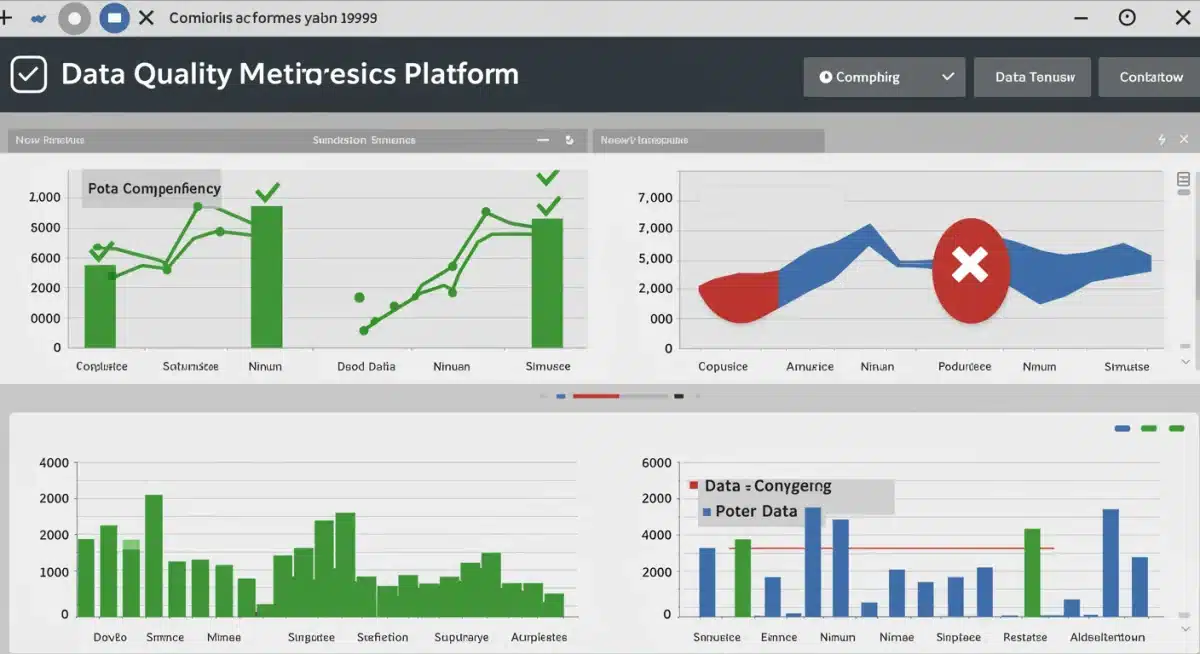
Investing in data quality initiatives, such as data cleansing, validation, and enrichment, is therefore critical. This involves implementing automated tools and establishing clear processes for data entry and maintenance. Regular audits and monitoring are also essential to identify and rectify data quality issues proactively.
Furthermore, high-quality data empowers advanced analytics and machine learning models to deliver more precise insights, driving better business outcomes. For example, accurate customer purchasing history allows for more effective predictive analytics, optimizing everything from product recommendations to inventory forecasting.
In essence, data quality is not just about technical correctness; it’s about making data actionable and reliable, ensuring that every business decision is based on a solid foundation of trustworthy information. This directly translates into a superior customer experience and a more efficient operational framework.
Key components of an effective data governance framework
Building an effective data governance framework in e-commerce requires a structured approach that encompasses policies, processes, roles, and technologies. It’s about creating a holistic system that ensures data is managed responsibly and effectively across the entire organization.
A well-designed framework provides clarity on who is responsible for what data, how it should be handled, and what standards it must meet. This eliminates ambiguity and fosters a culture of data stewardship.
Defining roles and responsibilities
Clear roles and responsibilities are foundational to any successful data governance program. This typically involves establishing a data governance council, data stewards, and data owners.
- Data Governance Council: Strategic oversight, policy formulation, and dispute resolution.
- Data Owners: Accountable for specific data sets, ensuring their quality and compliance.
- Data Stewards: Operational responsibility for data quality, consistency, and access within their domains.
These roles ensure that there is accountability at every level of data management, from strategic planning to day-to-day operations. Training and communication are also vital to ensure that all stakeholders understand their roles and the importance of data governance.
Beyond roles, the framework must also include robust data policies and procedures. These policies should cover data collection, storage, usage, retention, and disposal, ensuring consistency and compliance with internal and external regulations. Procedures should detail the practical steps for implementing these policies, from data entry guidelines to incident response protocols.
Technology also plays a crucial role, with tools for metadata management, data cataloging, data quality monitoring, and access control. These technologies automate many governance tasks, making the process more efficient and scalable. Ultimately, an effective data governance framework integrates people, processes, and technology to create a cohesive and resilient data management system.
Implementing data governance: practical steps for e-commerce
Implementing data governance in an e-commerce environment can seem daunting, but by breaking it down into practical, manageable steps, businesses can establish a robust framework. The journey often begins with a clear understanding of the current data landscape and identifying key areas for improvement.
Starting with a pilot project in a specific area, such as customer data or product information, can provide valuable insights and demonstrate the benefits of data governance before a full-scale rollout.
Phased implementation strategy
A phased approach allows organizations to build momentum and refine their strategy as they progress. This typically involves several stages, each building upon the success of the previous one.
- Assess Current State: Identify existing data assets, systems, and governance gaps.
- Define Goals and Policies: Establish clear objectives, data standards, and governance policies.
- Implement Technology: Deploy tools for data quality, metadata management, and security.
- Monitor and Optimize: Continuously track performance, adjust policies, and improve processes.
Engaging key stakeholders from various departments, including IT, legal, marketing, and operations, is essential throughout the implementation process. Their input ensures that the governance framework addresses the diverse needs and challenges of the business.
Training and communication are also critical for successful adoption. Employees must understand the importance of data governance, their roles within the framework, and the tools available to them. Regular communication about progress and successes can help build a culture of data responsibility.
Finally, data governance is an ongoing process, not a one-time project. It requires continuous monitoring, adaptation, and improvement to keep pace with evolving business needs, technological advancements, and regulatory changes. Regular reviews and audits ensure the framework remains effective and relevant.
Leveraging data governance for competitive advantage
Beyond compliance and operational efficiency, effective data governance can be a powerful source of competitive advantage for e-commerce businesses. By ensuring high-quality, trustworthy data, companies can unlock deeper insights, innovate faster, and build stronger customer relationships.
When data is reliable and accessible, it empowers businesses to make more strategic decisions, anticipate market shifts, and respond to customer needs with greater agility. This translates into a more resilient and growth-oriented enterprise.
Driving innovation and personalization
High-quality, governed data fuels innovation by providing a solid foundation for advanced analytics and artificial intelligence initiatives. This enables e-commerce businesses to develop more sophisticated personalization strategies.
- Creating highly personalized customer experiences
- Developing new data-driven products and services
- Optimizing pricing strategies and inventory management
For example, with accurate customer data, e-commerce platforms can offer highly tailored product recommendations, dynamic pricing based on individual preferences, and predictive customer service that anticipates needs before they arise. This level of personalization significantly enhances the customer journey and fosters loyalty.
Moreover, a well-governed data environment facilitates faster experimentation and iteration with new technologies. Businesses can confidently deploy AI models for fraud detection or supply chain optimization, knowing that the underlying data is clean, consistent, and compliant.
Ultimately, data governance transforms data from a mere operational byproduct into a strategic asset that drives differentiation and market leadership. It’s about building a data-driven culture where insights are readily available, trusted, and acted upon, positioning the e-commerce business for sustained success in a competitive landscape.
| Key Aspect | Brief Description |
|---|---|
| Compliance Assurance | Ensuring adherence to privacy regulations like GDPR and CCPA to avoid penalties. |
| Data Quality Improvement | Maintaining accurate, complete, and consistent data for better decision-making. |
| Operational Efficiency | Streamlining processes and reducing errors through reliable data management. |
| Competitive Advantage | Leveraging trusted data for personalization, innovation, and strategic growth. |
Frequently asked questions about e-commerce data governance
Data governance in e-commerce refers to the comprehensive system of policies, processes, roles, and standards that ensure the effective and compliant management of all data assets. It covers everything from customer information and transaction details to inventory and marketing data, focusing on quality, security, and ethical use.
Data quality is paramount because it directly impacts customer experience, operational efficiency, and decision-making. High-quality data leads to accurate personalization, fewer order errors, and reliable analytics, which are essential for driving sales, building trust, and maintaining a competitive edge in the market.
Data governance establishes clear guidelines and controls for data handling, ensuring that e-commerce businesses comply with privacy laws like GDPR and CCPA. It defines data retention policies, consent mechanisms, and security measures, thereby minimizing legal risks, avoiding fines, and demonstrating accountability to regulators and customers.
Begin by assessing your current data landscape, identifying critical data assets, and understanding existing data flows. Then, define clear objectives, establish a data governance council with defined roles (data owners, stewards), and develop initial policies focusing on key areas like customer data privacy and data quality standards.
Absolutely. By ensuring data is trustworthy and accessible, governance enables superior analytics and AI, leading to hyper-personalized customer experiences, innovative product development, and optimized operations. This strategic use of data helps businesses make faster, more informed decisions, differentiate themselves, and ultimately outperform competitors.
Conclusion
As e-commerce continues its rapid expansion, the imperative for robust e-commerce data governance for 2025 operations becomes undeniably clear. It’s not merely about adhering to regulations or improving data quality; it’s about fundamentally transforming how businesses perceive and utilize their most valuable asset – data. By embedding strong data governance principles, e-commerce entities can build an infrastructure that supports trust, fuels innovation, and drives sustainable growth in an increasingly competitive and data-driven marketplace. Embracing these practices now will ensure not just survival, but thriving success in the years to come.