Competitive Pricing Analysis: Outperform Rivals in US Sales
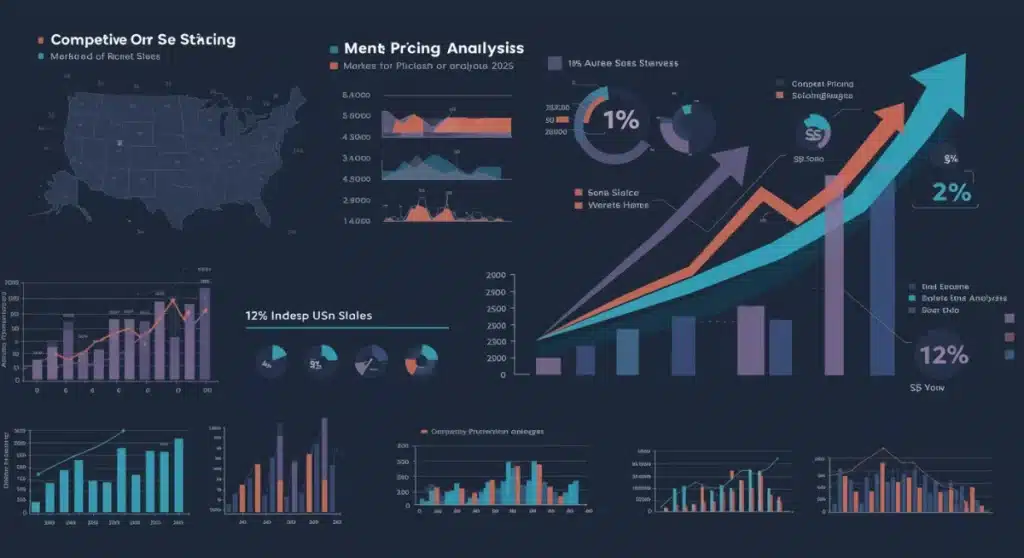
Implementing advanced competitive pricing analysis is essential for sellers aiming to secure a significant 12% advantage in US sales by 2025, leveraging data-driven tactics for market outperformance.
In the fiercely competitive landscape of US e-commerce, mastering competitive pricing analysis is not merely an advantage; it’s a necessity for survival and growth. As we approach 2025, sellers must evolve their strategies to not only keep pace with rivals but to significantly outperform them, aiming for a tangible 12% increase in sales. This article delves into five data-driven tactics designed to help you achieve just that, transforming raw market data into actionable insights and sustainable profit.
understanding the modern competitive landscape
The digital marketplace is a dynamic ecosystem where prices fluctuate rapidly, influenced by everything from supply chain disruptions to consumer sentiment. For sellers in the US, understanding this intricate web of factors is paramount. A superficial glance at competitor pricing is no longer sufficient; a deep, analytical dive is required to uncover true market opportunities and threats. This section explores why a nuanced understanding of the competitive landscape is more critical now than ever before.
The sheer volume of data available to sellers today can be overwhelming, yet it also presents an unprecedented opportunity. By harnessing this data effectively, businesses can move beyond reactive pricing to proactive, predictive strategies. This shift allows for the anticipation of market movements, enabling sellers to adjust their pricing models before competitors even register the change, thereby capturing market share and enhancing profitability.
the evolution of pricing strategies
Gone are the days when static pricing or simple cost-plus models sufficed. Modern e-commerce demands agility and responsiveness.
- Dynamic Pricing: Adjusting prices in real-time based on demand, competitor prices, time of day, and inventory levels.
- Value-Based Pricing: Setting prices primarily based on a product’s perceived value to the customer rather than on its cost.
- Penetration Pricing: Initially setting a low price to attract a large number of buyers quickly and gain market share.
- Skimming Pricing: Setting a high price for a new product to “skim” maximum revenues layer by layer from the segments willing to pay the high price.
Each strategy has its place, but the most successful sellers often employ a hybrid approach, adapting their methods based on product lifecycle, market conditions, and target audience. The key is not to pick one strategy and stick with it, but to build a flexible framework that can incorporate various tactics as needed. This adaptability is what truly differentiates market leaders from followers.
Ultimately, a comprehensive understanding of the modern competitive landscape involves not just observing competitor prices, but also analyzing their strategies, their customer acquisition costs, and their operational efficiencies. This holistic view provides the context necessary for informed decision-making, allowing sellers to craft pricing strategies that are both competitive and sustainable in the long run.
leveraging advanced data analytics for pricing insights
In the quest to outperform rivals by 12% in US sales by 2025, relying on intuition or outdated data is a recipe for stagnation. Advanced data analytics offers a powerful toolkit for extracting meaningful insights from vast datasets, transforming raw numbers into strategic advantages. This involves more than just collecting data; it requires sophisticated tools and methodologies to interpret market signals, predict trends, and pinpoint optimal pricing points.
The integration of artificial intelligence (AI) and machine learning (ML) into pricing models has revolutionized how businesses approach competitive analysis. These technologies can process and analyze data at speeds and scales impossible for humans, identifying subtle patterns and correlations that might otherwise go unnoticed. This capability allows for a level of precision in pricing that was previously unattainable, enabling sellers to react instantaneously to market shifts and competitor actions.
implementing predictive pricing models
Predictive pricing models are at the forefront of this data-driven revolution. They use historical data, current market conditions, and external factors to forecast future demand and optimal pricing.
- Demand Forecasting: Utilizing past sales data, economic indicators, and seasonal trends to predict future product demand.
- Competitor Price Prediction: Analyzing competitor pricing patterns and market events to anticipate their next pricing moves.
- Customer Behavior Analysis: Understanding how different price points influence customer purchasing decisions and willingness to pay.
- Elasticity of Demand: Calculating how sensitive demand for a product is to changes in its price.
These models empower sellers to set prices not just on what is happening today, but on what is likely to happen tomorrow. This foresight minimizes risks associated with overpricing or underpricing, ensuring that products are always positioned optimally in the market. The result is a pricing strategy that is both agile and robust, capable of navigating the complexities of the US e-commerce market.
Moreover, the continuous feedback loop inherent in these analytical systems means that pricing models are constantly learning and improving. As new data becomes available, the models refine their predictions, leading to increasingly accurate and effective pricing adjustments. This iterative process ensures that sellers maintain a competitive edge, consistently adapting to market dynamics and optimizing for maximum sales and profitability.
monitoring competitor pricing in real-time
The speed at which prices change in e-commerce necessitates real-time monitoring of competitor pricing. Waiting days or even hours to react to a competitor’s price adjustment can result in lost sales and diminished market share. Modern competitive pricing analysis tools provide instantaneous updates, offering sellers the ability to respond swiftly and strategically to any market shift. This proactive approach is a cornerstone of achieving a 12% sales increase by 2025.
Real-time monitoring extends beyond just price points. It also involves tracking competitor promotions, stock levels, and even customer reviews. A competitor running a flash sale, for instance, might require an immediate counter-strategy, while a sudden drop in their inventory could signal an opportunity to raise your own prices without losing competitiveness. The more comprehensive the monitoring, the more informed your pricing decisions become.

choosing the right monitoring tools
The market is replete with tools designed for competitive monitoring, each with its own strengths. Selecting the right one depends on your specific needs, scale, and budget.
- Automated Price Trackers: Software that automatically scrapes competitor websites for price changes and alerts you.
- Market Intelligence Platforms: Comprehensive platforms that offer not just price tracking but also insights into competitor strategies, product launches, and market trends.
- API Integrations: For larger businesses, integrating pricing data directly into their own systems via APIs for custom analysis.
- Manual Spot Checks: While less efficient, occasional manual checks can provide qualitative insights automated tools might miss.
The goal is to establish a system that provides a clear, up-to-the-minute overview of the competitive landscape without requiring constant manual intervention. This frees up valuable time for strategic analysis rather than data collection. The right tool acts as your eyes and ears in the market, allowing you to focus on developing winning strategies.
By consistently monitoring competitor pricing and related market signals in real-time, sellers can maintain a highly responsive and adaptive pricing strategy. This continuous vigilance ensures that your prices remain attractive to customers while maximizing your profit margins, a critical factor in achieving substantial sales growth targets in the dynamic US market.
implementing dynamic pricing strategies effectively
Dynamic pricing is no longer an optional luxury but a strategic imperative for any seller aiming for significant growth in US sales by 2025. It involves adjusting prices based on real-time market conditions, demand, competitor prices, and even individual customer behavior. The goal is to optimize prices constantly to maximize revenue and profit, rather than relying on static price points that quickly become outdated.
The effective implementation of dynamic pricing requires a robust technological infrastructure and a deep understanding of market dynamics. It’s about finding the sweet spot where prices are competitive enough to attract buyers but high enough to ensure healthy margins. This balance is constantly shifting, making dynamic pricing a continuous process of adjustment and refinement. Successful sellers use algorithms that learn and adapt, ensuring their prices are always aligned with market realities.
key considerations for dynamic pricing
To deploy dynamic pricing successfully, several factors must be carefully considered and integrated into your strategy.
- Data Accuracy: The effectiveness of dynamic pricing hinges on the quality and accuracy of the data feeding your algorithms.
- Algorithm Sophistication: Employing advanced algorithms that can process multiple variables and learn from outcomes.
- Inventory Levels: Adjusting prices based on current stock to prevent overstocking or stockouts.
- Customer Segmentation: Potentially offering different prices to different customer segments based on their purchasing history or loyalty.
- Competitive Thresholds: Defining boundaries within which your prices can fluctuate relative to competitors.
Moreover, transparency and customer perception are crucial. While dynamic pricing aims to optimize revenue, it must not alienate customers. Clear communication, fair pricing practices, and a focus on delivering value can help mitigate any potential negative reactions. The art of dynamic pricing lies in its ability to be both aggressive in market capture and sensitive to customer needs, ensuring long-term brand loyalty.
Ultimately, by embracing dynamic pricing, sellers can unlock significant potential for growth. This strategy allows for unparalleled flexibility, enabling businesses to capitalize on every market opportunity and mitigate risks effectively. It’s a powerful tool for achieving and exceeding sales targets in the highly competitive US e-commerce landscape, driving towards that ambitious 12% sales increase.
optimizing product assortment and positioning
While pricing is a critical lever, it’s intrinsically linked to product assortment and positioning. A superior competitive pricing analysis isn’t solely about matching or beating competitor prices; it’s about understanding how your product mix and its market placement influence perceived value and pricing power. To achieve a 12% increase in US sales by 2025, sellers must strategically review and optimize their product offerings, ensuring they align with market demand and competitive advantages.
This involves identifying gaps in the market, diversifying product lines to cater to different segments, and strategically positioning unique or high-demand items. For instance, if competitive analysis reveals that a particular niche is underserved, expanding your product range to fill that void can create new revenue streams and reduce direct price competition. Conversely, if a category is oversaturated, it might be wise to de-emphasize those products or differentiate them through unique features or bundles.
strategic product differentiation
Differentiation allows you to justify higher prices and reduce your vulnerability to price wars. It’s about offering something that competitors don’t, or doing it better.
- Exclusive Features: Developing products with unique functionalities or designs not available elsewhere.
- Superior Quality: Investing in higher quality materials or manufacturing processes to create a premium offering.
- Exceptional Customer Service: Differentiating through an unparalleled post-purchase experience.
- Unique Bundling: Combining products or services in novel ways that offer greater value than individual items.
- Brand Storytelling: Crafting a compelling narrative around your brand and products that resonates with consumers.
Effective product positioning also involves understanding your target audience’s needs and preferences. Are they price-sensitive, or do they prioritize quality, convenience, or ethical sourcing? Tailoring your product assortment and messaging to these specific preferences can significantly enhance your market appeal and command better prices. This strategic alignment ensures that your competitive pricing analysis is not just about numbers, but about delivering true value to the right customers.
By continuously optimizing your product assortment and positioning, you build a more resilient and attractive offering. This not only supports your pricing strategy but also strengthens your overall market presence, making it easier to achieve ambitious sales growth targets and sustain profitability in the long term.
harnessing customer feedback for pricing adjustments
In the pursuit of a 12% increase in US sales by 2025, the voice of the customer is an invaluable, yet often underutilized, resource for competitive pricing analysis. Customer feedback provides direct insights into perceived value, price sensitivity, and satisfaction, all of which are critical for fine-tuning pricing strategies. Ignoring this rich source of information means missing opportunities to align prices more closely with what customers are willing to pay and expect.
Collecting and analyzing customer feedback can reveal whether your prices are too high, too low, or just right. It can highlight areas where customers feel they are getting exceptional value, allowing you to potentially command a premium, or conversely, where they perceive a lack of value, signaling a need for price adjustments or product enhancements. This direct line of communication helps bridge the gap between internal pricing models and external market realities.
methods for gathering customer insights
A multi-faceted approach to collecting customer feedback ensures a comprehensive understanding of their perceptions and expectations.
- Surveys and Questionnaires: Directly asking customers about their price sensitivity and perceived value of your products.
- Online Reviews and Ratings: Monitoring platforms like Amazon, Yelp, and Google for mentions of pricing and value.
- Social Media Listening: Tracking conversations on social media to gauge public sentiment about your pricing and competitor pricing.
- Customer Service Interactions: Analyzing support tickets and live chat transcripts for common pricing-related queries or complaints.
- Focus Groups: Conducting targeted discussions with small groups of customers to delve deeper into their pricing perceptions.
The insights gained from customer feedback can be integrated back into your competitive pricing analysis framework. For example, if many customers complain about a competitor’s high shipping costs, you might highlight your own lower shipping fees as a competitive advantage. If feedback suggests a strong willingness to pay for a particular feature, you could justify a higher price point for products offering that feature.
Ultimately, prioritizing customer feedback in your pricing strategy fosters trust and loyalty. When customers feel heard and valued, they are more likely to make repeat purchases and recommend your brand, contributing significantly to your sales growth. This human-centric approach to competitive pricing analysis ensures that your strategies are not just data-driven but also customer-approved, paving the way for a sustainable 12% sales increase.
building a resilient pricing infrastructure for 2025
Achieving and sustaining a 12% increase in US sales by 2025 through competitive pricing analysis demands more than just tactical adjustments; it requires building a resilient pricing infrastructure. This infrastructure encompasses the technological backbone, organizational processes, and skilled personnel necessary to execute and adapt sophisticated pricing strategies continuously. Without a robust foundation, even the most brilliant pricing insights will struggle to translate into consistent market outperformance.
A resilient pricing infrastructure is characterized by its ability to integrate various data sources seamlessly, automate complex pricing decisions, and provide real-time performance monitoring. It minimizes manual intervention, reduces errors, and ensures that pricing strategies are always aligned with overarching business objectives. This long-term perspective is crucial for any seller serious about cementing their market position and driving sustainable growth in the competitive US market.
components of a strong pricing infrastructure
Several key components contribute to a resilient and effective pricing infrastructure.
- Integrated Data Systems: A centralized system that pulls data from sales, inventory, competitors, and customer feedback for holistic analysis.
- Automated Pricing Engines: Software capable of executing dynamic pricing adjustments based on predefined rules and algorithms.
- Performance Analytics Dashboards: Tools that provide clear, real-time visualizations of pricing effectiveness, sales trends, and profitability.
- Cross-functional Teams: Collaboration between sales, marketing, product, and data science teams to ensure alignment and shared understanding.
- Continuous Training and Development: Investing in personnel skills to keep pace with evolving pricing technologies and methodologies.
Furthermore, a resilient infrastructure includes robust testing capabilities. A/B testing different pricing models, promotional offers, and product bundles allows sellers to validate their hypotheses and optimize strategies before a full-scale rollout. This iterative testing process reduces risk and ensures that every pricing decision is backed by empirical evidence, reinforcing the data-driven approach.
By focusing on building a comprehensive and resilient pricing infrastructure, sellers can transform their competitive pricing analysis from a sporadic activity into a core, continuous business capability. This strategic investment ensures that the pursuit of a 12% sales increase is not a one-off achievement but a sustained trajectory of growth and market leadership, positioning your business for long-term success in the dynamic US e-commerce landscape.
| Key Tactic | Brief Description |
|---|---|
| Advanced Data Analytics | Utilize AI/ML for precise insights, predictive pricing, and market trend anticipation. |
| Real-Time Competitor Monitoring | Track competitor prices, promotions, and inventory to enable swift, strategic responses. |
| Dynamic Pricing Implementation | Adjust prices based on real-time demand, market conditions, and competitor actions for optimal revenue. |
| Customer Feedback Integration | Incorporate customer insights to fine-tune pricing, perceived value, and satisfaction. |
frequently asked questions about competitive pricing
Competitive pricing analysis involves evaluating competitor pricing strategies to determine optimal pricing for your products. It’s crucial for maintaining market competitiveness, attracting customers, and maximizing profitability by ensuring your prices are appealing yet sustainable in the dynamic US market.
Data analytics, including AI and machine learning, enhances pricing by providing predictive insights into market trends, demand fluctuations, and competitor behaviors. This allows for data-driven adjustments, optimizing prices in real-time to capture market share and increase sales efficiently.
Dynamic pricing involves adjusting product prices in real-time based on various factors like demand, supply, competitor prices, and customer behavior. This strategy aims to maximize revenue and profit by ensuring prices are always optimized for current market conditions, leading to better sales performance.
In the fast-paced e-commerce environment, real-time or near real-time monitoring of competitor pricing is essential. Automated tools allow for continuous tracking, enabling immediate responses to price changes, promotions, and inventory shifts, which is vital for maintaining a competitive edge.
Absolutely. Customer feedback offers direct insights into perceived value and price sensitivity. Integrating this feedback helps align your prices with customer expectations, revealing opportunities for price adjustments or product enhancements that can significantly boost satisfaction and sales.
conclusion
The journey to outperforming rivals by a significant 12% in US sales by 2025 hinges on a sophisticated and data-driven approach to competitive pricing analysis. By embracing advanced analytics, real-time monitoring, dynamic pricing, strategic product optimization, and invaluable customer feedback, sellers can build a resilient and adaptive pricing infrastructure. This holistic strategy not only navigates the complexities of the modern e-commerce landscape but actively shapes it, ensuring sustained growth and market leadership in an increasingly competitive environment.