Boost Q1 2025 Sales: Proven E-commerce Strategies for US Sellers
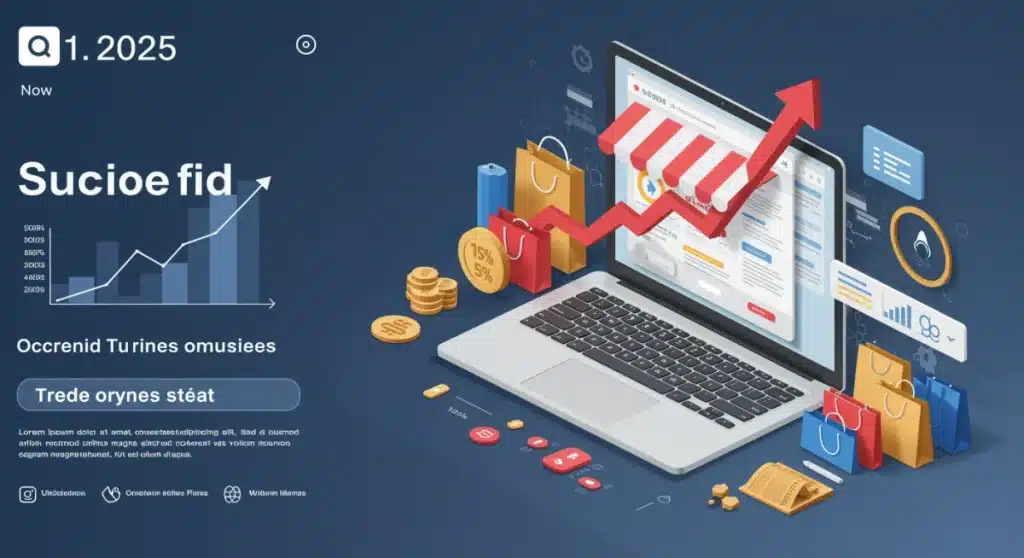
To significantly boost Q1 2025 sales in US e-commerce, sellers must implement targeted strategies focusing on customer engagement, market adaptation, and operational efficiency for a projected 15% revenue increase.
Are you ready to significantly boost Q1 2025 sales for your e-commerce business in the US? The first quarter of any year sets the tone for the months ahead, making strategic planning crucial for achieving substantial revenue growth. This article will delve into five proven seller strategies designed to help you achieve a remarkable 15% revenue increase in the dynamic US e-commerce landscape.
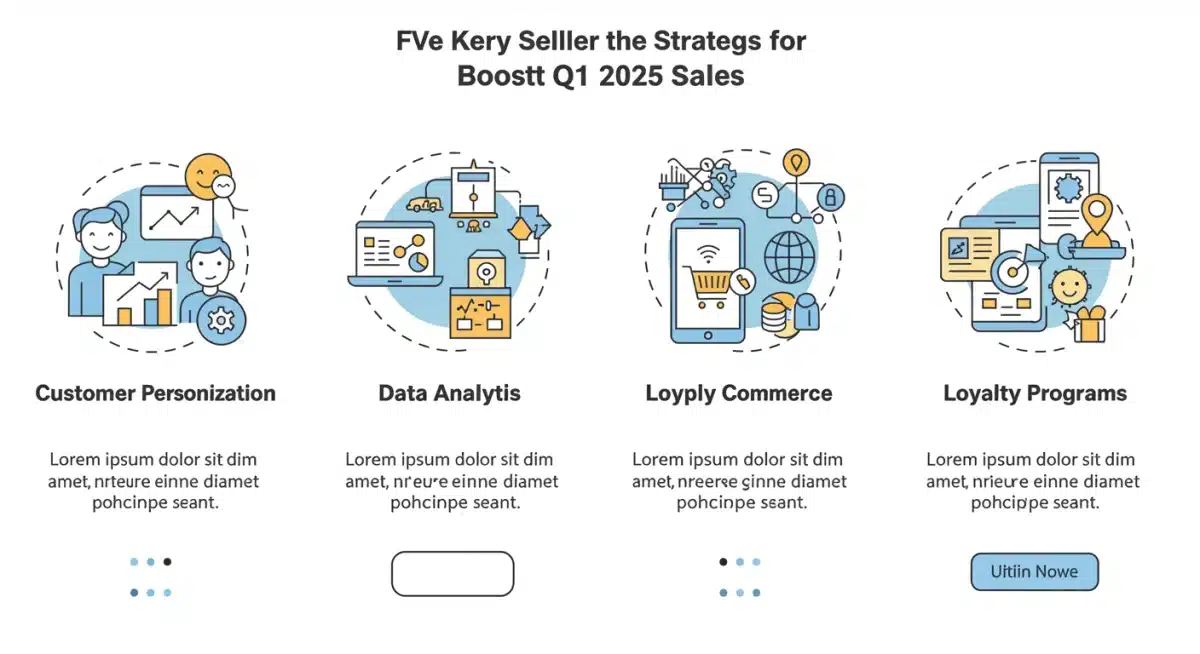
Mastering customer personalization and experience
In today’s highly competitive e-commerce environment, generic approaches no longer suffice. Customers expect experiences tailored to their individual preferences and past interactions. Mastering customer personalization is not just about addressing them by name; it’s about understanding their purchasing habits, browsing behavior, and even their preferred communication channels to deliver highly relevant content and product recommendations.
A personalized customer experience can significantly enhance engagement and loyalty, directly contributing to higher conversion rates and increased average order values. This strategy moves beyond basic segmentation, utilizing advanced analytics to create truly unique customer journeys.
Leveraging advanced data analytics
To truly personalize, sellers must harness the power of advanced data analytics. This involves collecting and interpreting vast amounts of customer data to identify patterns and predict future behavior. Tools like AI-powered recommendation engines and predictive analytics platforms are becoming indispensable.
- Behavioral tracking: Monitor clicks, page views, time spent, and abandonment rates to understand customer intent.
- Purchase history analysis: Identify frequently bought items, cross-purchase opportunities, and preferred brands.
- Demographic segmentation: Combine demographic data with behavioral insights for more nuanced targeting.
By understanding what customers are looking for, even before they explicitly search, businesses can proactively offer solutions that resonate, fostering a sense of being understood and valued.
Crafting tailored marketing campaigns
Personalization extends to every touchpoint, especially marketing communications. Generic email blasts are often ignored, but a personalized email sequence that recommends products based on recent browsing or purchase history can yield impressive open and conversion rates. This requires a robust CRM system integrated with your e-commerce platform.
Consider dynamic content on your website that changes based on the visitor’s profile or past interactions. For instance, a returning customer might see different promotions or product highlights than a first-time visitor. This creates a more engaging and efficient shopping experience, reducing friction and encouraging purchases.
Ultimately, a deep understanding of your customer base, powered by data, allows for the creation of unique and compelling experiences that drive both immediate sales and long-term loyalty. This foundation is critical for any serious effort to boost Q1 2025 sales.
Optimizing mobile commerce and user experience
With an ever-increasing number of consumers shopping on smartphones and tablets, optimizing your mobile commerce experience is no longer optional; it is a fundamental requirement for success in US e-commerce. A seamless and intuitive mobile user experience can drastically impact conversion rates and customer satisfaction, directly influencing your ability to boost Q1 2025 sales.
Mobile optimization goes beyond just having a responsive website. It involves designing for speed, ease of navigation, and a frictionless checkout process specifically for smaller screens and on-the-go usage patterns.
Prioritizing mobile-first design
Embracing a mobile-first design philosophy means starting the design process with the mobile experience in mind, then scaling up for desktop. This ensures that the core functionalities and content are perfectly optimized for mobile users. A cluttered or slow mobile site will quickly lead to high bounce rates and lost sales opportunities.
- Fast loading times: Compress images, minimize code, and leverage content delivery networks (CDNs) to ensure quick page loads.
- Intuitive navigation: Use clear menus, prominent search bars, and easily accessible categories.
- Thumb-friendly interfaces: Design buttons and interactive elements that are easy to tap with a thumb.
Every element, from product images to call-to-action buttons, should be optimized for mobile viewing and interaction. This attention to detail can significantly enhance the shopping journey.
Streamlining the checkout process
One of the biggest pain points for mobile shoppers is a convoluted checkout process. Minimizing the number of steps, offering guest checkout options, and integrating popular mobile payment methods like Apple Pay or Google Pay can dramatically reduce cart abandonment rates. Auto-filling forms and clear progress indicators also contribute to a smoother experience.
Security is paramount; ensure your mobile checkout uses SSL encryption and clearly displays trust badges. A fast, secure, and simple checkout process builds confidence and encourages completion, directly impacting your Q1 2025 sales targets. Regularly testing your mobile site’s performance and user experience on various devices is also crucial to identify and address any potential bottlenecks.
Leveraging social commerce and influencer marketing
Social media platforms have evolved far beyond mere communication tools; they are powerful marketplaces where consumers discover products, engage with brands, and make purchases. Leveraging social commerce and influencer marketing is a dynamic strategy to connect with your target audience, build brand awareness, and directly boost Q1 2025 sales in the US e-commerce sector.
This approach taps into the authentic connections and trust that users have with their favorite social media personalities and communities, transforming passive browsing into active shopping experiences.
Implementing shoppable posts and live streams
Many social media platforms now offer direct shopping features like shoppable posts, product tags, and in-app checkout. These features reduce friction by allowing customers to purchase items without leaving the social media environment. Live shopping events, where influencers or brand representatives showcase products in real-time, have also proven highly effective.
These interactive experiences create urgency and excitement, encouraging impulse purchases. Platforms like Instagram Shopping, Facebook Shops, and TikTok Shop are prime examples of where US e-commerce businesses can set up their virtual storefronts and engage directly with potential customers. The key is to integrate your product catalog seamlessly and provide clear calls to action.
Partnering with relevant influencers
Influencer marketing offers a powerful way to reach niche audiences with authentic endorsements. Identifying influencers whose values align with your brand and whose followers match your target demographic is crucial. Micro-influencers, with their smaller but highly engaged audiences, can often yield better conversion rates than mega-influencers due to their perceived authenticity.
- Authentic product reviews: Influencers can create genuine content showcasing your products in real-life scenarios.
- Exclusive discount codes: Offer unique codes for influencer followers to track campaign effectiveness.
- Collaborative content: Co-create content that resonates with both the influencer’s audience and your brand message.
When done strategically, influencer partnerships can significantly expand your reach, build trust, and drive substantial traffic and sales to your e-commerce store, providing a strong push to boost Q1 2025 sales.
Strengthening supply chain and logistics for efficiency
In the fast-paced world of e-commerce, a robust and efficient supply chain and logistics operation is the backbone of customer satisfaction and repeat business. Delays, errors, or unexpected stockouts can quickly erode customer trust and negatively impact your brand reputation. Strengthening these areas is paramount to ensuring smooth operations and achieving your goal to boost Q1 2025 sales.
Proactive management of your supply chain allows you to anticipate demand, manage inventory effectively, and ensure timely delivery, all of which are critical for meeting customer expectations in the US market.
Implementing robust inventory management systems
Effective inventory management is about having the right product, in the right quantity, at the right time. This prevents both overstocking (tying up capital) and understocking (missing out on sales). Modern inventory management systems utilize data to forecast demand, automate reordering, and track stock levels across multiple warehouses or fulfillment centers.
Consider integrating your inventory system with your e-commerce platform and even your suppliers for real-time visibility. This allows for quicker responses to market changes and helps avoid the disappointment of out-of-stock messages. Accurate inventory data is also vital for planning marketing campaigns and promotions, ensuring you can fulfill demand generated by efforts to boost Q1 2025 sales.
Optimizing fulfillment and delivery options
Customers today expect fast and affordable (if not free) shipping. To meet these expectations, e-commerce sellers must continuously optimize their fulfillment and delivery processes. This might involve:
- Multiple fulfillment centers: Strategically located warehouses can reduce shipping times and costs.
- Diverse shipping partners: Partnering with various carriers allows for flexibility and competitive pricing.
- Offering tiered shipping options: Provide standard, expedited, and same-day delivery to cater to different customer needs.
Transparent communication about shipping times and tracking information is also essential. A smooth, predictable delivery experience enhances customer satisfaction and encourages repeat purchases, directly contributing to your revenue growth objectives. Investing in these logistical improvements will pay dividends in customer loyalty and help to significantly boost Q1 2025 sales.
Implementing dynamic pricing and promotional strategies
In the highly competitive US e-commerce landscape, pricing is a critical lever that can significantly influence sales volume and profitability. Generic pricing models often leave money on the table or deter potential customers. Implementing dynamic pricing and strategic promotional strategies allows sellers to react swiftly to market conditions, competitor actions, and customer demand, thereby maximizing revenue and helping to boost Q1 2025 sales.
This approach moves beyond static price tags, using data-driven insights to adjust prices in real-time and create compelling offers that resonate with specific customer segments.
Utilizing dynamic pricing models
Dynamic pricing involves adjusting product prices based on various factors such as demand, supply, competitor pricing, time of day, and even customer browsing history. AI-powered pricing tools can automate this process, ensuring your prices remain competitive and profitable. For instance, prices might increase for high-demand items during peak shopping hours or decrease for slow-moving inventory to clear stock.
The goal is to find the optimal price point that maximizes both conversions and profit margins. This requires continuous monitoring and analysis to understand price elasticity for different products and customer segments. A well-executed dynamic pricing strategy can significantly enhance your ability to boost Q1 2025 sales by capturing more value from each transaction.
Crafting compelling promotional campaigns
Beyond dynamic pricing, strategic promotions are essential for attracting new customers and encouraging existing ones to purchase more. These campaigns should be carefully planned and timed, often aligning with seasonal events, holidays, or specific product launches. Effective promotions are not just about offering discounts; they are about creating perceived value.
- Bundling products: Offer complementary items together at a slightly reduced price to increase average order value.
- Limited-time offers: Create a sense of urgency with flash sales or expiring discounts.
- Loyalty program rewards: Incentivize repeat purchases with points, exclusive access, or special discounts for loyal customers.
Analyzing the performance of past promotions provides valuable insights into what resonates with your audience. By combining smart pricing with targeted, value-driven promotions, e-commerce businesses can effectively stimulate demand and achieve their ambitious goals to boost Q1 2025 sales.
Enhancing customer loyalty and retention programs
While acquiring new customers is vital, retaining existing ones is often more cost-effective and contributes significantly to long-term revenue stability. Enhancing customer loyalty and retention programs is a powerful strategy to ensure repeat business, foster brand advocacy, and ultimately boost Q1 2025 sales in a sustained manner. Loyal customers tend to spend more, refer new customers, and are less price-sensitive.
Building strong relationships with your customer base creates a competitive advantage that is difficult for rivals to replicate, transforming one-time buyers into lifelong advocates.
Developing tiered loyalty programs
A tiered loyalty program rewards customers based on their engagement and spending, offering increasing benefits as they climb through different levels. This incentivizes higher spending and creates a sense of exclusivity and achievement. Benefits might include exclusive discounts, early access to new products, free shipping, or personalized customer service.
Clearly communicate the benefits of each tier and how customers can progress. This transparency encourages participation and provides a clear incentive for customers to consolidate their purchases with your brand. A well-designed tiered program can significantly increase customer lifetime value and help boost Q1 2025 sales by encouraging consistent spending.
Fostering community and feedback loops
Beyond transactional rewards, building a sense of community around your brand can significantly enhance loyalty. This could involve creating exclusive online groups for loyal customers, hosting special events, or soliciting their feedback for product development. When customers feel heard and valued, their connection to your brand deepens.
- Customer surveys: Regularly collect feedback to understand satisfaction levels and areas for improvement.
- Review and testimonial requests: Encourage customers to share their experiences, which also serves as social proof for new buyers.
- Personalized follow-ups: Send thank-you notes, birthday wishes, or personalized recommendations based on past purchases.
Responding promptly and genuinely to customer feedback, both positive and negative, demonstrates your commitment to their satisfaction. By focusing on these aspects, businesses can cultivate a loyal customer base that consistently contributes to and helps to boost Q1 2025 sales and beyond.
| Key Strategy | Brief Description |
|---|---|
| Customer Personalization | Tailoring experiences using data to boost engagement and conversions. |
| Mobile Optimization | Ensuring seamless and fast mobile shopping experiences for higher conversion. |
| Social Commerce | Leveraging social media for direct sales and influencer partnerships. |
| Loyalty Programs | Retaining customers through tiered rewards and community building. |
Frequently asked questions about boosting Q1 2025 sales
Personalization boosts Q1 2025 sales by tailoring product recommendations and marketing messages to individual customer preferences. This increases engagement, improves conversion rates, and enhances the overall customer journey, making shoppers feel understood and valued, leading to more purchases.
Mobile optimization is crucial as a majority of online shopping occurs on mobile devices. A fast, intuitive, and secure mobile experience reduces cart abandonment, improves user satisfaction, and streamlines the checkout process, directly translating into higher conversion rates and increased revenue for Q1 2025.
Social commerce contributes by enabling direct sales within social media platforms. Shoppable posts, live streams, and influencer partnerships tap into engaged audiences, creating immediate purchasing opportunities and expanding brand reach, which can significantly drive sales growth for Q1 2025.
An efficient supply chain ensures timely deliveries and prevents stockouts, which are critical for customer satisfaction. Reliable fulfillment fosters trust, encourages repeat purchases, and minimizes negative reviews, all essential factors for sustaining growth and achieving a 15% revenue increase in Q1 2025.
Loyalty programs encourage repeat business by rewarding existing customers with exclusive benefits. This increases customer lifetime value, reduces customer acquisition costs, and fosters brand advocacy, creating a stable base of revenue that helps significantly boost Q1 2025 sales and beyond.
Conclusion
Achieving a 15% revenue increase in US e-commerce for Q1 2025 is an ambitious yet attainable goal through the strategic implementation of these five proven seller strategies. By prioritizing customer personalization, optimizing the mobile experience, leveraging social commerce, strengthening supply chain logistics, and enhancing loyalty programs, businesses can create a robust framework for sustained growth. The competitive nature of the e-commerce landscape demands proactive and data-driven approaches, ensuring that every effort contributes directly to a more profitable and resilient online store. Embrace these strategies to not only meet but exceed your Q1 2025 sales targets and set a strong foundation for the year ahead.