Headless CMS in E-commerce: Boost US Online Traffic 30% by 2025
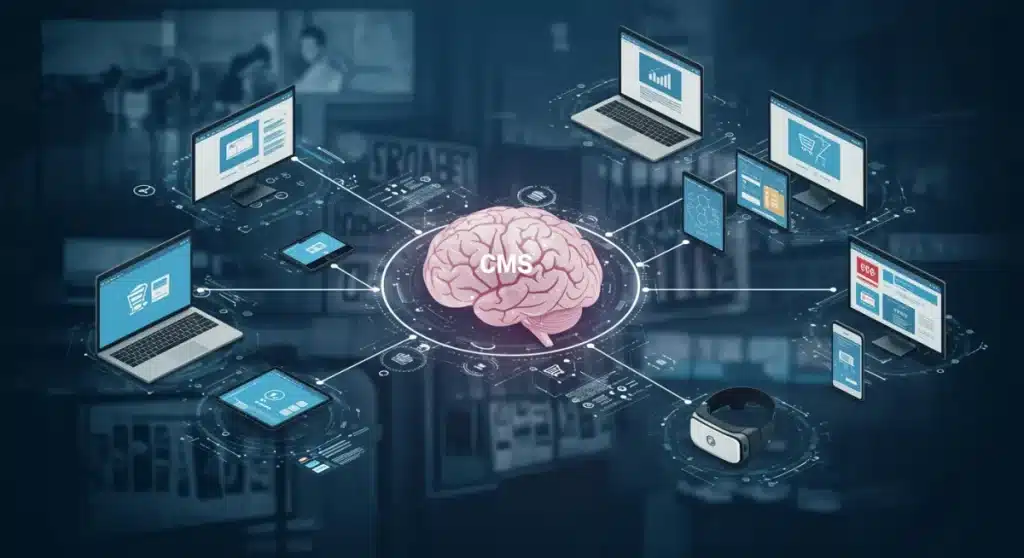
Headless CMS platforms are fundamentally transforming US e-commerce by decoupling front-end and back-end systems, enabling unprecedented flexibility and personalization that is projected to boost online store traffic by 30% by 2025.
The digital landscape of retail is continually evolving, and staying ahead means embracing innovation. For US online stores, the shift towards headless CMS in modern e-commerce platforms: driving 30% more traffic to US online stores in 2025 is not just a trend; it’s a strategic imperative. This architectural change promises a significant leap in performance and customer engagement, setting the stage for unparalleled growth.
Understanding the Headless CMS Paradigm Shift
A headless CMS fundamentally redefines how content is managed and delivered in e-commerce. Unlike traditional monolithic systems, it separates the content repository (the ‘body’) from the presentation layer (the ‘head’), allowing for greater flexibility and specialized development. This decoupling empowers businesses to deliver content to any touchpoint, from websites and mobile apps to IoT devices and smart displays, without being constrained by a single front-end.
The core advantage lies in its API-first approach. Content, once created, becomes accessible via APIs, enabling developers to build custom front-end experiences using their preferred frameworks and technologies. This level of agility is crucial for US online stores looking to innovate rapidly and respond to ever-changing consumer expectations.
Traditional vs. Headless: A Clear Distinction
To fully grasp the power of headless, it’s essential to understand its contrast with traditional CMS. Traditional systems often bundle the content management interface and the front-end presentation layer together, limiting design and deployment options. This integrated approach can lead to slower development cycles and difficulties in scaling across multiple channels.
- Traditional CMS: Tightly coupled front-end and back-end, offering a ‘what you see is what you get’ editing experience but limited flexibility.
- Headless CMS: Decoupled architecture, providing content as a service via APIs, enabling complete front-end freedom and multi-channel delivery.
- Hybrid CMS: A middle-ground approach, offering some front-end control while still providing API access for other channels.
The choice between these systems depends on a store’s specific needs, but for those aiming for significant traffic growth and enhanced customer experiences by 2025, headless offers a compelling future-proof solution.
In conclusion, the headless CMS paradigm represents a significant evolution in content management, offering US e-commerce businesses the architectural freedom needed to innovate, personalize, and scale their digital presence effectively. This foundational shift is key to unlocking new levels of engagement and traffic.
Enhanced Flexibility and Agility for US Online Stores
One of the most compelling benefits of a headless CMS for US online stores is the unparalleled flexibility it provides. By separating content from presentation, businesses are no longer tied to a single template or design framework. This freedom translates into the ability to rapidly create, test, and deploy unique customer experiences across various digital touchpoints, from responsive websites to cutting-edge progressive web apps (PWAs).
This architectural agility allows e-commerce teams to iterate faster on their front-end designs and functionalities. They can experiment with new user interfaces, optimize conversion funnels, and integrate emerging technologies without disrupting the core content infrastructure. Such responsiveness is critical in a competitive market where consumer preferences shift quickly.
Accelerated Development Cycles
The decoupled nature of headless CMS empowers development teams to work independently on the front-end and back-end. Front-end developers can utilize their preferred tools and frameworks, such as React, Vue, or Angular, to craft highly customized and performant user interfaces. This parallel development significantly shortens project timelines and allows for quicker market entry for new features or campaigns.
- Independent Development: Front-end and back-end teams work concurrently, speeding up time-to-market.
- Technology Freedom: Developers can choose the best tools for the job, leading to optimized performance.
- Rapid Iteration: New features and design updates can be deployed quickly and efficiently.
This acceleration is not merely about speed; it’s about maintaining a competitive edge. US online stores that can adapt and innovate faster are better positioned to capture market share and attract new customers, directly contributing to traffic growth.
Ultimately, the flexibility and agility offered by a headless CMS empower US online stores to build and maintain a dynamic digital presence. This capability is essential for meeting the evolving demands of modern consumers and for driving a substantial increase in online traffic by 2025.
Delivering Superior Customer Experiences and Personalization
In today’s crowded digital marketplace, a positive customer experience is paramount. Headless CMS platforms are instrumental in enabling US online stores to deliver highly personalized and seamless experiences across all touchpoints. By centralizing content and making it accessible via APIs, businesses can ensure consistency while tailoring interactions to individual customer preferences and behaviors.
Imagine a customer browsing products on their desktop, adding items to their cart, and then seamlessly continuing their shopping journey on their mobile device or even a smart home assistant. A headless architecture makes this level of omnichannel experience not just possible, but efficient to implement. This consistency and personalization build trust and loyalty, encouraging repeat visits and ultimately driving more traffic.
Omnichannel Consistency and Engagement
The ability to publish content to multiple channels from a single source ensures brand consistency and reduces content duplication efforts. This means product descriptions, promotions, and brand messaging remain uniform, regardless of where the customer interacts with the store. This unified approach enhances the customer journey, making it smoother and more engaging.
- Unified Content: Centralized content repository ensures consistent messaging across all platforms.
- Personalized Journeys: Tailored content and product recommendations based on user data and behavior.
- Seamless Transitions: Customers can move effortlessly between devices and channels without losing context.
By leveraging headless CMS, US online stores can craft experiences that feel intuitive and relevant to each individual. This deep level of personalization, from dynamic product recommendations to localized content, directly contributes to higher engagement rates and a significant increase in returning visitors.
In essence, a headless CMS provides the foundational technology for US online stores to create truly customer-centric experiences. This focus on personalized, omnichannel engagement is a powerful driver for boosting traffic and fostering long-term customer relationships.
Optimizing Performance: Speed and SEO Advantages
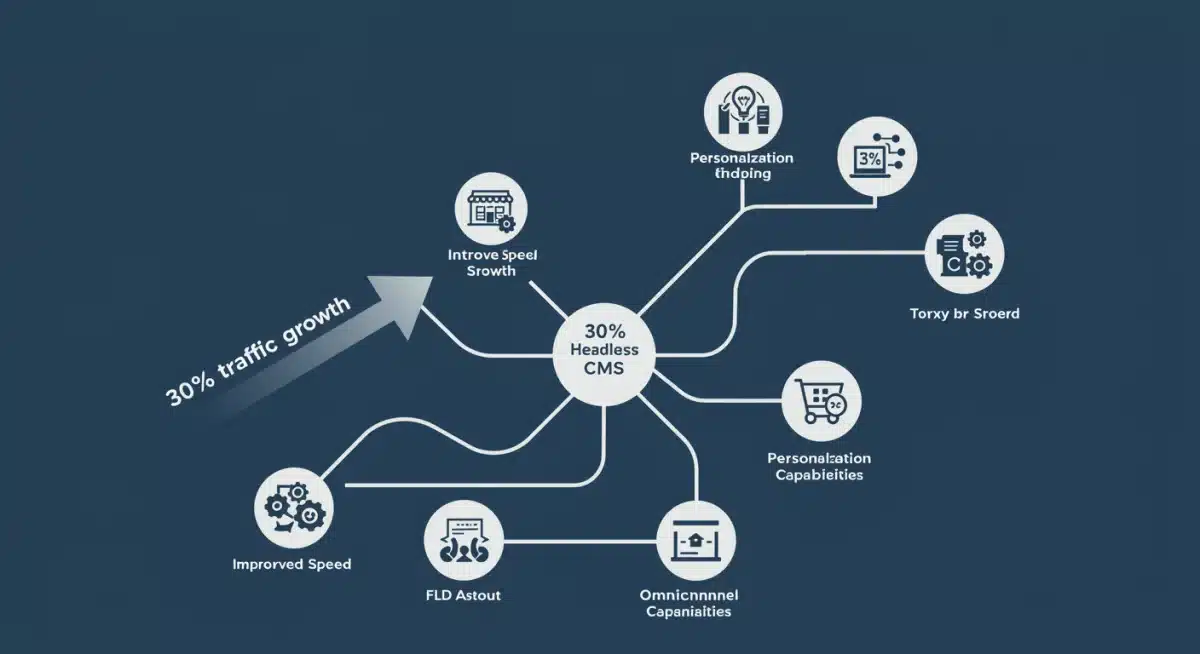
Website performance, particularly loading speed, is a critical factor for both user experience and search engine optimization (SEO). Headless CMS architectures inherently offer significant advantages in this area, directly contributing to the goal of driving 30% more traffic to US online stores by 2025. Faster websites lead to lower bounce rates, higher conversion rates, and improved search engine rankings, all of which positively impact traffic.
Because the front-end is decoupled, developers have full control over optimizing its performance. They can implement modern front-end frameworks that are designed for speed, leverage advanced caching strategies, and minimize unnecessary code. This technical freedom allows for the creation of lightning-fast e-commerce sites that delight users and satisfy search engine algorithms.
Boosting Search Engine Visibility
Improved site speed is a direct ranking factor for search engines like Google. A fast-loading website, often a hallmark of a well-implemented headless architecture, signals a positive user experience, which search engines prioritize. Furthermore, the flexibility of headless allows for precise control over SEO elements, enabling developers to implement best practices without being constrained by a monolithic system.
- Faster Load Times: Reduced server-side rendering and optimized front-end code lead to quicker page loads.
- Enhanced Core Web Vitals: Headless setups can be highly optimized for Google’s performance metrics.
- SEO Customization: Full control over meta tags, structured data, and URL structures for maximum search visibility.
The ability to create highly performant and SEO-friendly front-ends gives US online stores a significant competitive edge. By ranking higher in search results and offering a superior browsing experience, these stores are far more likely to attract and retain organic traffic, propelling them toward their 2025 growth targets.
Ultimately, the performance and SEO benefits derived from a headless CMS are not merely technical advantages; they are direct drivers of increased visibility and organic traffic. This optimization is crucial for any US online store aiming for substantial growth in the coming years.
Scalability and Future-Proofing Your E-commerce Infrastructure
The digital economy is characterized by rapid change and unpredictable growth. For US online stores, investing in an infrastructure that can scale effortlessly and adapt to future innovations is paramount. A headless CMS offers this future-proofing capability by design, ensuring that businesses can evolve without undergoing costly and disruptive platform migrations every few years.
Its modular nature means that individual components can be updated or replaced independently. If a new front-end technology emerges, or if a particular service needs to be swapped out, the core content repository remains untouched. This architectural resilience allows businesses to experiment with new digital channels, integrate advanced functionalities, and handle spikes in traffic without compromising stability or performance.
Preparing for Emerging Technologies
The landscape of digital interaction is constantly expanding, with new devices and platforms emerging regularly. From augmented reality (AR) shopping experiences to voice commerce via smart speakers, a headless CMS positions US online stores to embrace these innovations seamlessly. Content, being API-driven, can be delivered to any new ‘head’ that appears, ensuring future compatibility.
- Modular Architecture: Allows for independent upgrades and replacements of components.
- API-First Design: Ensures content can be consumed by any future device or application.
- Cloud-Native Benefits: Many headless solutions leverage cloud infrastructure for inherent scalability and reliability.
This forward-looking approach means that US online stores adopting headless CMS are not just solving current challenges; they are building a resilient foundation for sustained growth. The ability to adapt quickly to technological shifts is a powerful asset in driving long-term traffic and maintaining market relevance.
In summary, the scalability and future-proofing aspects of a headless CMS provide US online stores with the confidence to invest in their digital infrastructure. This strategic advantage ensures they can meet both current demands and future opportunities, securing their position for increased traffic and success.
Implementation Strategies for US E-commerce Businesses
Adopting a headless CMS is a significant strategic move that requires careful planning and execution. For US e-commerce businesses aiming to leverage this technology for 30% more traffic by 2025, a well-defined implementation strategy is crucial. It’s not just about selecting the right software; it’s about rethinking content workflows, development processes, and overall digital strategy.
The first step involves a thorough assessment of current needs, existing infrastructure, and long-term goals. Businesses should identify key pain points with their current system, such as slow performance, limited personalization, or difficulty scaling. This analysis will help in selecting a headless CMS that aligns with specific requirements and budget constraints.
Key Considerations for a Successful Transition
A successful headless implementation involves more than just technical migration; it requires organizational alignment. Teams need to understand the benefits and new workflows. Training for content editors on the new CMS interface and for developers on API integration is essential. Partnering with experienced agencies can also smooth the transition process.
- Platform Selection: Choose a headless CMS that fits your technical stack, scalability needs, and budget.
- Phased Rollout: Consider a gradual migration, starting with specific site sections or new digital channels.
- Team Training: Educate content creators and developers on new tools and workflows.
- API Integration: Plan for seamless integration with existing e-commerce platforms, CRMs, and other business systems.
By approaching implementation strategically, US online stores can minimize disruption and maximize the benefits of a headless architecture. This methodical approach ensures that the investment translates into tangible improvements in traffic, conversion, and overall business performance, positioning them for success by 2025.
Effective implementation of a headless CMS is a journey that, when navigated correctly, can unlock immense potential for US e-commerce businesses. A strategic approach ensures that the transition is smooth and that the benefits of increased traffic and enhanced customer experience are fully realized.
Measuring Impact: Traffic Growth and ROI
The promise of driving 30% more traffic to US online stores by 2025 through headless CMS is ambitious, yet attainable. However, realizing this goal requires diligent measurement and analysis of the impact. Businesses must establish clear key performance indicators (KPIs) before, during, and after the headless migration to accurately assess ROI and optimize their strategies.
Beyond raw traffic numbers, it’s crucial to track metrics such as bounce rate, conversion rate, time on site, and customer acquisition cost. A headless architecture, by improving site speed and personalization, should positively influence these indicators. By correlating these improvements with increased organic search rankings and direct traffic, businesses can build a compelling case for the investment.
Key Metrics for Success
Measuring the success of a headless CMS implementation goes beyond just traffic volume. It encompasses the entire customer journey and operational efficiency. Monitoring these metrics provides a holistic view of the platform’s impact.
- Website Traffic: Track unique visitors, page views, and traffic sources (organic, direct, referral).
- Engagement Metrics: Analyze bounce rate, average session duration, and pages per session.
- Conversion Rates: Monitor product page views to cart adds, and cart adds to purchases.
- SEO Performance: Observe keyword rankings, organic visibility, and search engine crawl rates.
- Development Efficiency: Measure time-to-market for new features and content updates.
These metrics provide actionable insights into the effectiveness of the headless CMS. By continuously monitoring and optimizing based on this data, US online stores can refine their content strategy, improve user experience, and ensure they are on track to achieve and exceed their traffic growth objectives for 2025.
In conclusion, robust measurement of traffic growth and ROI is essential for validating the strategic decision to adopt a headless CMS. By focusing on a comprehensive set of KPIs, US online stores can demonstrate the tangible benefits of this technology and continually refine their approach for optimal results.
| Key Aspect | Benefit for US E-commerce |
|---|---|
| Architectural Flexibility | Decouples front-end from back-end, allowing rapid innovation and custom experiences across devices. |
| Customer Experience | Enables highly personalized, consistent, and seamless omnichannel customer journeys. |
| Performance & SEO | Leads to faster loading sites, improved Core Web Vitals, and better search engine rankings. |
| Scalability & Future-Proofing | Supports growth, adapts to new technologies, and prevents costly platform overhauls. |
Frequently Asked Questions About Headless CMS in E-commerce
A headless CMS separates the content management system (back-end) from the presentation layer (front-end). Unlike traditional CMS which bundles both, headless delivers content via APIs, allowing e-commerce businesses to use any front-end technology for websites, mobile apps, or other digital experiences, offering greater flexibility and speed.
By enabling faster site speeds, superior personalization, and consistent omnichannel experiences, headless CMS improves user engagement and SEO. Better performance and tailored content attract more visitors, reduce bounce rates, and enhance search engine visibility, directly contributing to significant traffic growth for US online stores.
While often associated with large enterprises, many scalable headless CMS solutions are now accessible to SMBs. The benefits of flexibility, performance, and future-proofing can be highly advantageous for smaller businesses looking to rapidly grow and differentiate themselves in the competitive US online market.
Key challenges include a steeper learning curve for developers, the need for robust API integrations with existing systems, and a shift in content management workflows. Careful planning, skilled development resources, and potential partnerships with specialized agencies are crucial for a smooth transition.
Headless CMS significantly improves SEO by allowing for optimized site speed, better control over technical SEO elements like structured data and meta tags, and the ability to build highly performant front-ends. These factors lead to higher search rankings and increased organic traffic for US online stores.
Conclusion
The strategic adoption of a headless CMS is poised to be a game-changer for US online stores, offering a clear pathway to achieving a projected 30% increase in online traffic by 2025. This architectural shift provides the essential flexibility, performance, and personalization capabilities required to meet the demands of modern consumers and the dynamic digital landscape. By embracing headless technology, businesses can future-proof their e-commerce infrastructure, deliver exceptional customer experiences, and ultimately secure a significant competitive advantage in the ever-evolving online retail sector.