Mobile E-commerce Optimization: 6 Tactics for 10% Conversion Growth
To achieve a 10% increase in mobile e-commerce conversion rates by 2025, sellers must implement strategic optimization tactics focusing on user experience, speed, simplified checkout, and personalized engagement.
In the rapidly evolving digital landscape, mobile e-commerce optimization is no longer just an advantage—it’s a necessity for survival and growth. With consumers increasingly relying on their smartphones for shopping, businesses must refine their mobile strategies to capture attention and drive conversions. This article will explore six crucial seller tactics designed to boost your mobile conversion rates by a significant 10% by 2025, ensuring your brand stays ahead in the competitive online marketplace. Are you ready to transform your mobile sales?
prioritizing mobile-first design and user experience
The foundation of successful mobile e-commerce lies in a design philosophy that places the mobile user at its core. A mobile-first approach means designing for smaller screens and limited bandwidth initially, then scaling up for larger devices. This ensures that the core functionalities and content are perfectly tailored for on-the-go users, eliminating clutter and focusing on essential elements.
User experience (UX) on mobile devices is paramount. It encompasses everything from navigation ease to content readability. A clunky, slow, or confusing mobile site will inevitably lead to high bounce rates and lost sales. Investing in intuitive design and continuous UX testing is crucial for identifying and rectifying pain points before they impact your conversion goals.
responsive design versus adaptive design
While often used interchangeably, responsive and adaptive designs offer distinct advantages. Responsive design fluidly adjusts content to fit various screen sizes, providing a consistent experience across all devices. Adaptive design, on the other hand, detects the device type and serves a pre-designed layout specific to that device, potentially offering a more tailored, yet less flexible, experience.
- Responsive Design: Offers flexibility and consistency across all screen sizes with a single codebase.
- Adaptive Design: Delivers highly optimized experiences for specific devices but requires more development effort for multiple layouts.
- Prioritizing Content: Ensure the most critical information is visible above the fold on mobile screens.
- Touch-Friendly Elements: Buttons and links must be large enough and spaced appropriately for easy tapping.
Ultimately, the choice between responsive and adaptive design depends on your specific business needs and resources. However, the overarching goal remains the same: to provide an effortless and enjoyable browsing experience that encourages users to explore and purchase. A well-executed mobile-first design significantly reduces friction, paving the way for higher conversion rates.
optimizing page speed and performance
In the fast-paced world of mobile, every second counts. Mobile users expect instant gratification, and slow-loading pages are a guaranteed conversion killer. Research consistently shows that even a one-second delay in page load time can lead to a significant drop in conversions and an increase in bounce rates. Therefore, optimizing page speed is not just a technicality; it’s a critical business imperative.
Several factors contribute to page load times, including image size, server response times, and the efficiency of your code. Addressing these areas systematically can yield dramatic improvements in performance and, consequently, in your mobile conversion rates. A smooth and rapid user experience builds trust and encourages users to proceed with their purchase journey.
strategies for accelerating page load times
Implementing various technical optimizations can significantly improve your mobile site’s speed. These strategies often involve a combination of front-end and back-end adjustments, all aimed at delivering content to the user as quickly as possible.
- Image Optimization: Compress images without sacrificing quality and use next-gen formats like WebP.
- Leverage Browser Caching: Allow users’ browsers to store parts of your site, reducing load times on repeat visits.
- Minimize HTTP Requests: Combine files, reduce external scripts, and limit the number of elements on a page.
- Use a Content Delivery Network (CDN): Distribute your content across various servers globally, delivering it faster to users based on their geographic location.
Regularly monitoring your page speed using tools like Google PageSpeed Insights or GTmetrix is essential. These tools provide actionable recommendations for improvement, helping you maintain optimal performance. A fast-loading mobile site not only enhances user satisfaction but also positively impacts your search engine rankings, driving more organic traffic to your store.
streamlining the mobile checkout process
The checkout process is the final hurdle in the customer journey, and any friction here can lead to abandoned carts. On mobile devices, this hurdle can feel even higher due to smaller screens and the potential for distractions. A streamlined, intuitive, and secure mobile checkout is non-negotiable for maximizing conversion rates.
The goal is to make the process as quick and effortless as possible, minimizing the number of steps and form fields required. Every additional click or piece of information requested increases the likelihood of a user abandoning their purchase. Think of it as a guided path, where each step leads logically and simply to the next, culminating in a successful transaction.
key elements of an optimized mobile checkout
Several design and functional choices can significantly impact the efficiency of your mobile checkout. Focusing on these elements will help reduce cart abandonment and improve conversion rates.
- Guest Checkout Option: Allow users to purchase without creating an account, reducing initial commitment.
- Auto-fill Forms: Implement smart auto-fill features for addresses and payment details to save users time and effort.
- Progress Indicators: Visually show users where they are in the checkout process, managing expectations.
- Multiple Payment Options: Offer popular mobile payment methods like Apple Pay, Google Pay, and PayPal for convenience.
Furthermore, ensure that security badges and trust signals are prominently displayed throughout the checkout process. This reassures customers that their sensitive information is protected, fostering confidence and encouraging completion of the purchase. A well-optimized mobile checkout is the ultimate payoff for all previous optimization efforts.
leveraging personalized experiences and recommendations
In an increasingly competitive market, generic shopping experiences no longer cut it. Mobile users expect and respond positively to personalized interactions. Leveraging data to offer tailored product recommendations, personalized content, and targeted promotions can significantly enhance user engagement and drive conversion rates.
Personalization goes beyond simply addressing a customer by their first name. It involves understanding their past browsing behavior, purchase history, and stated preferences to predict what they might be interested in next. This creates a more relevant and enjoyable shopping experience, making customers feel understood and valued, which in turn fosters loyalty and repeat business.
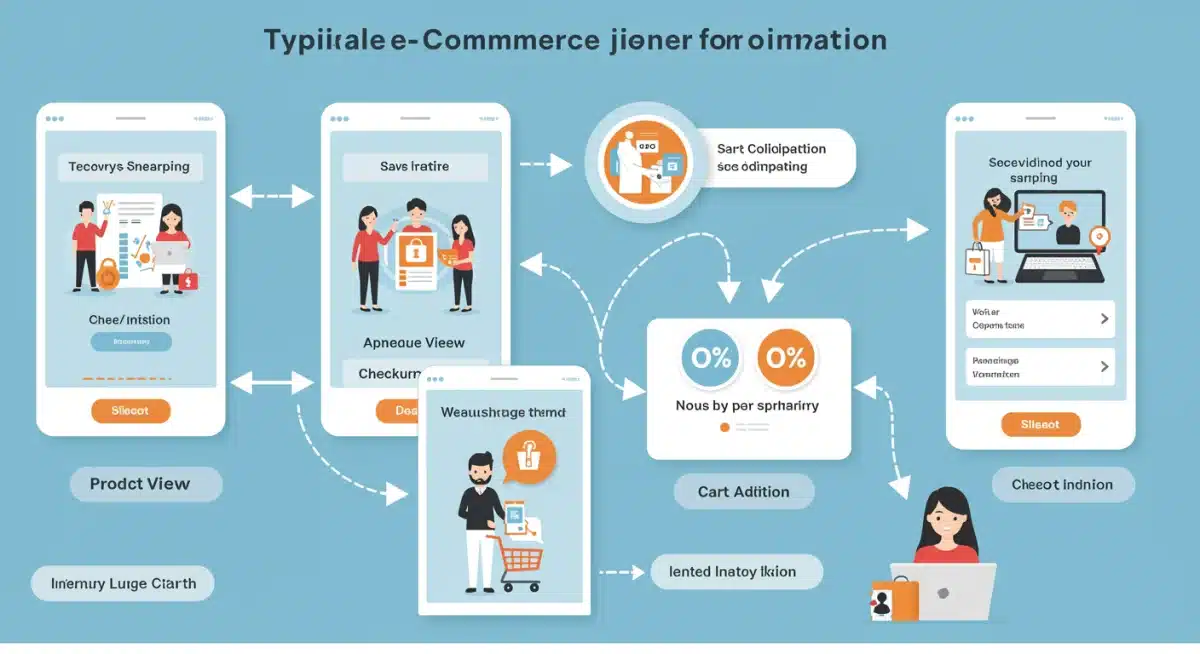
techniques for effective mobile personalization
Implementing personalization requires a strategic approach to data collection and analysis, followed by the deployment of intelligent recommendation engines and content delivery systems.
- Behavioral Targeting: Recommend products based on items viewed, added to cart, or previously purchased.
- Location-Based Offers: Provide discounts or promotions relevant to the user’s geographic location.
- Dynamic Content: Adjust website content, banners, and promotions based on user segments or individual profiles.
- AI-Powered Recommendations: Utilize artificial intelligence and machine learning to deliver highly accurate and relevant product suggestions.
Personalization should extend throughout the entire customer journey, from initial product discovery to post-purchase engagement. By delivering relevant content and offers at every touchpoint, you increase the likelihood of conversion and build stronger relationships with your customers, transforming casual browsers into loyal advocates.
implementing robust mobile SEO strategies
Even the most perfectly optimized mobile site won’t convert if users can’t find it. Robust mobile SEO is about ensuring your e-commerce store ranks highly in mobile search results, driving qualified organic traffic to your site. With Google’s mobile-first indexing, having a mobile-friendly site is no longer just a recommendation; it’s a fundamental ranking factor.
Mobile SEO encompasses various technical and content-related strategies aimed at improving your visibility on mobile search engines. It’s about making it easy for search engines to crawl, index, and understand your mobile content, ultimately connecting you with potential customers actively searching for your products.
key components of mobile SEO for e-commerce
A comprehensive mobile SEO strategy involves optimizing several aspects of your website to cater specifically to mobile search algorithms and user behavior.
- Mobile-Friendly Site Structure: Ensure your site is easily navigable on mobile, with clear hierarchies and internal linking.
- Optimized Content: Create concise, scannable content that loads quickly and is easy to read on smaller screens.
- Local SEO: For physical stores, optimize for local search queries, including business listings and location-based keywords.
- Schema Markup: Use structured data to help search engines understand your product information, prices, and reviews, leading to rich snippets in search results.
Regularly auditing your mobile SEO performance and staying updated with Google’s algorithm changes are essential. By prioritizing mobile SEO, you ensure that your investment in mobile e-commerce optimization yields maximum returns through increased organic visibility and, consequently, higher conversion rates.
harnessing the power of push notifications and SMS marketing
Direct communication channels like push notifications and SMS marketing offer unparalleled opportunities to re-engage mobile users and drive conversions. These channels allow you to reach customers directly on their devices, bypassing email inboxes and social media feeds, which can often be saturated.
When used strategically, push notifications and SMS messages can be highly effective for abandoned cart recovery, promotional offers, new product announcements, and even order updates. The key is to provide value, personalize messages, and respect user preferences to avoid being intrusive. These direct communication methods are powerful tools in a seller’s arsenal for driving immediate action.
best practices for mobile messaging campaigns
To maximize the effectiveness of push notifications and SMS marketing, it’s crucial to follow best practices that ensure relevance, timeliness, and user satisfaction.
- Segmentation: Target messages to specific user segments based on their behavior, preferences, or purchase history.
- Personalization: Address users by name and tailor offers based on their past interactions with your brand.
- Timing: Send messages at optimal times when users are most likely to engage, considering their time zone and daily routines.
- Clear Call-to-Action (CTA): Ensure each message has a clear, concise CTA that guides the user to the desired action.
Always provide an easy way for users to opt out of these communications, fostering trust and compliance with regulations. By integrating push notifications and SMS marketing into your broader mobile e-commerce strategy, you create a powerful re-engagement loop that can significantly impact your conversion rates, bringing back customers who might otherwise have been lost.
| Key Tactic | Brief Description |
|---|---|
| Mobile-First Design | Design for mobile screens first, ensuring intuitive navigation and content readability. |
| Page Speed Optimization | Reduce load times with image compression, caching, and CDNs for a smoother user experience. |
| Streamlined Checkout | Simplify the purchase process with guest checkout, auto-fill, and multiple payment options. |
| Personalized Experiences | Deliver tailored product recommendations and content based on user behavior and preferences. |
frequently asked questions about mobile e-commerce optimization
Mobile e-commerce optimization is crucial because a majority of online shopping now happens on mobile devices. An optimized experience directly impacts conversion rates, customer satisfaction, and overall sales, making it essential for staying competitive and profitable in the evolving digital market.
To quickly improve mobile site loading speed, focus on image optimization (compressing and using modern formats), leveraging browser caching, minimizing HTTP requests, and considering a Content Delivery Network (CDN). These technical adjustments can significantly reduce load times and enhance user experience.
Offering a guest checkout option significantly reduces friction in the purchase process. Many customers prefer not to create an account for a one-time purchase, and forcing registration often leads to abandoned carts. Guest checkout streamlines the process, encouraging more completed transactions and improving conversion rates.
Yes, personalization is highly effective. By tailoring product recommendations, content, and offers based on individual user behavior and preferences, you create a more engaging and relevant shopping experience. This increased relevance leads to higher click-through rates, improved conversion rates, and stronger customer loyalty over time.
Push notifications and SMS marketing provide direct, immediate communication channels to re-engage mobile users. They are excellent for abandoned cart recovery, timely promotions, and new product alerts. Their direct nature bypasses crowded email inboxes, leading to higher open rates and quick action, thus boosting conversion rates.
conclusion
Achieving a 10% increase in mobile e-commerce conversion rates by 2025 is an ambitious yet entirely attainable goal for sellers who commit to a strategic and holistic optimization approach. By prioritizing mobile-first design, relentlessly improving page speed, simplifying the checkout experience, and leveraging the power of personalization, businesses can create a mobile shopping journey that is not only efficient but also delightful. Furthermore, robust mobile SEO and intelligent use of direct communication channels like push notifications and SMS marketing will ensure your optimized store reaches and re-engages its target audience effectively. The future of e-commerce is undeniably mobile, and those who invest in these tactics today will be the ones celebrating significant growth tomorrow.