25% Conversion Rate Jump: Niche Retailer’s 2025 Success Story

A niche online retailer experienced a significant 25% conversion rate jump in 2025 by implementing a multi-faceted strategy focused on personalized customer journeys, advanced analytics, and seamless site experience, setting a new benchmark for industry success.
The digital landscape is constantly evolving, presenting both challenges and unprecedented opportunities for online businesses. For a niche online retailer navigating the competitive waters of 2025, achieving a conversion rate jump of 25% is not merely an improvement; it’s a testament to strategic foresight, meticulous execution, and a deep understanding of the modern consumer. This case study delves into the specific tactics and transformative decisions that propelled one such retailer to remarkable success.
Understanding the Initial Landscape and Challenges
Before any significant improvements could be made, it was crucial to thoroughly understand the niche retailer’s starting point. This involved a deep dive into existing analytics, customer feedback, and competitive analysis to identify pain points and areas ripe for optimization. The retailer, specializing in bespoke artisanal goods, had a dedicated customer base but struggled with converting first-time visitors into loyal patrons.
Initial challenges included a somewhat dated website interface, generic product descriptions that failed to convey the unique value of their handcrafted items, and a lack of personalized engagement. These factors contributed to a respectable but stagnant conversion rate, indicating a clear ceiling on growth without intervention.
Analyzing User Behavior and Site Flow
A comprehensive audit of user behavior was the first step. Heatmaps, session recordings, and funnel analysis revealed critical drop-off points in the customer journey. For instance, many users abandoned carts at the shipping information stage, suggesting issues with transparency or cost.
- Identified high bounce rates on product pages.
- Noted significant cart abandonment at checkout.
- Discovered poor engagement with generic content.
- Observed a lack of mobile optimization.
By dissecting these digital footprints, the team could pinpoint exact moments where potential customers were disengaging. This data-driven approach formed the bedrock of their subsequent strategic decisions, moving away from assumptions and towards actionable insights. The goal was not just to attract more traffic, but to make every visit count.
Strategizing for Enhanced User Experience and Personalization
With a clear understanding of the challenges, the next phase involved developing a multi-pronged strategy centered on improving both the user experience and the degree of personalization. The retailer recognized that in a niche market, a generic approach would simply not suffice. Customers expected a tailored journey that resonated with their specific interests and needs.
The strategy focused on several key areas: website redesign, content optimization, and the integration of advanced personalization technologies. Each element was carefully planned to work in concert, creating a cohesive and engaging online environment. The aim was to transform the website from a mere catalog into an interactive, personalized shopping assistant.
Implementing a Modern, Intuitive Website Redesign
The old website, while functional, lacked the aesthetic appeal and intuitive navigation expected by 2025 consumers. A complete redesign was initiated, prioritizing mobile responsiveness, faster loading times, and a cleaner, more visually appealing layout. The new design emphasized high-quality imagery of the artisanal products, allowing their craftsmanship to shine through.
- Streamlined navigation menus for easier product discovery.
- Optimized image loading for faster page speeds.
- Implemented a responsive design for all devices.
- Introduced clear calls-to-action on every page.
This redesign was not just about looks; it was about functionality. Every design choice was made with the user journey in mind, minimizing friction and guiding visitors smoothly towards conversion. The visual refresh played a significant role in establishing trust and professionalism, crucial for a premium niche brand.
Leveraging Advanced Analytics for Deeper Insights
The success of the conversion rate jump was heavily reliant on the intelligent use of data. Beyond basic traffic metrics, the retailer implemented advanced analytics tools to gain deeper insights into customer behavior, preferences, and purchasing patterns. This allowed for a more granular understanding of what truly motivated their audience.
Sophisticated A/B testing platforms were deployed to continuously optimize various elements of the website, from button colors to product page layouts. Every change was data-backed, ensuring that decisions were based on empirical evidence rather than mere speculation. This iterative process of testing and refinement proved invaluable.
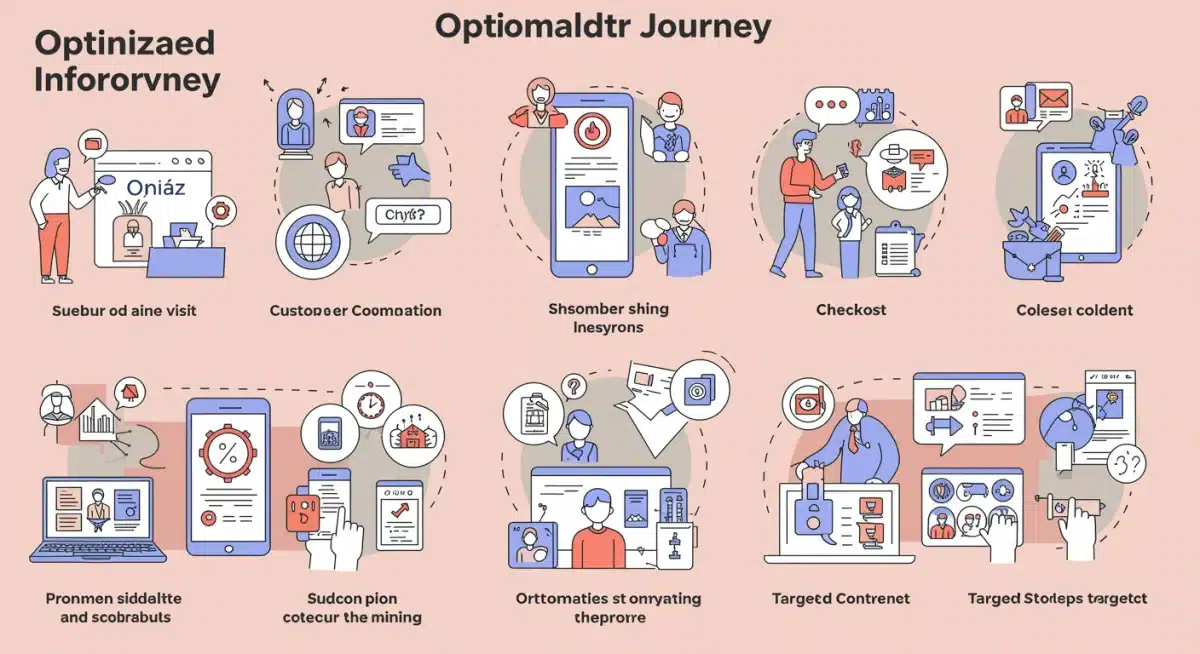
The team also utilized predictive analytics to anticipate future trends and customer needs, allowing them to proactively adjust their inventory and marketing efforts. This forward-looking approach gave them a significant competitive edge in their niche market.
Implementing Predictive Analytics and A/B Testing
Predictive analytics allowed the retailer to forecast demand for specific products, optimize pricing strategies, and identify potential churn risks among existing customers. This proactive stance helped in tailoring marketing campaigns more effectively and reducing wasted ad spend.
- Used machine learning models to identify high-potential customer segments.
- Conducted multivariate testing on landing pages to maximize impact.
- Analyzed customer lifetime value (CLV) to inform retention strategies.
- Monitored real-time data to respond quickly to market changes.
A/B testing became a continuous process, not a one-off project. Small, incremental changes, when tested rigorously, accumulated into significant improvements over time. This scientific approach to optimization instilled a culture of continuous improvement within the organization.
Optimizing Product Pages and Content Strategy
For a niche retailer specializing in artisanal goods, the product page is often the make-or-break point for conversion. The team recognized that generic descriptions and low-quality imagery were undermining the perceived value of their unique offerings. A complete overhaul of their product page strategy was initiated.
This involved not only enhancing visual content but also crafting compelling narratives around each product, telling the story of its creation, its materials, and its artisan. The goal was to create an emotional connection with the customer, transforming a simple purchase into an experience. Rich media, including detailed videos and 360-degree views, were integrated.
Crafting Engaging Product Narratives
Each product description was rewritten to be more evocative and informative, highlighting the craftsmanship and unique story behind the item. Instead of just listing features, the descriptions focused on benefits and the emotional connection the product offered. This approach resonated deeply with their target audience, who valued authenticity and uniqueness.
- Developed unique storytelling for each product.
- Integrated high-resolution images and videos showcasing details.
- Included customer testimonials directly on product pages.
- Provided transparent information on materials and sourcing.
Beyond individual product pages, the overall content strategy was refined to include blog posts, guides, and social media content that educated and inspired their audience. This established the retailer as a thought leader in their niche, building trust and authority.
Streamlining the Checkout Process and Post-Purchase Experience
Even with an engaging website and compelling product pages, a cumbersome checkout process can quickly derail a sale. The retailer meticulously analyzed their checkout flow, identifying and eliminating every point of friction. The aim was to make the final step of the purchasing journey as smooth and effortless as possible.
This involved implementing a single-page checkout, offering multiple payment options, and ensuring complete transparency regarding shipping costs and delivery times. Furthermore, the post-purchase experience was enhanced to foster customer loyalty and encourage repeat business. This included personalized follow-ups and exclusive offers.
Implementing a Frictionless One-Page Checkout
The transition to a one-page checkout significantly reduced abandonment rates. Customers could see all necessary information and complete their purchase without navigating through multiple screens. Guest checkout options were also prominently displayed, removing the barrier of account creation for first-time buyers.
- Reduced checkout steps to a single page.
- Offered diverse payment gateways, including digital wallets.
- Provided real-time shipping cost calculations.
- Ensured a secure and trustworthy payment environment.
The post-purchase experience was equally important. Personalized thank-you emails, order tracking, and easy access to customer support created a sense of value and care. This attention to detail extended the customer journey beyond the transaction, transforming buyers into brand advocates.
Measuring the Impact: The 25% Conversion Rate Jump
The culmination of these strategic efforts resulted in a remarkable and sustained conversion rate jump of 25% over a six-month period in 2025. This significant increase was not a fluke but a direct result of the integrated approach to user experience, personalization, data analytics, and customer journey optimization. The impact extended far beyond just conversion numbers.
The retailer observed a notable increase in average order value (AOV) and customer lifetime value (CLV), indicating that customers were not only buying more frequently but also spending more per transaction. The enhanced post-purchase experience also led to a surge in positive reviews and social media mentions, further bolstering brand reputation and organic reach.
Analyzing Key Performance Indicators (KPIs)
Beyond the headline conversion rate, several other KPIs showed impressive gains. The bounce rate decreased significantly, indicating that the improved website design and relevant content were effectively engaging visitors. Time spent on site also increased, suggesting a richer and more immersive user experience.
- 25% increase in overall conversion rate.
- 15% reduction in bounce rate across key landing pages.
- 10% increase in average order value (AOV).
- Improved customer satisfaction scores and repeat purchase rates.
The success story of this niche online retailer serves as a powerful illustration of how a holistic and data-driven approach can yield extraordinary results in the competitive e-commerce landscape of today. It underscores the importance of continuous adaptation and a relentless focus on the customer.
Future Outlook and Continued Optimization
Achieving a 25% conversion rate jump is a significant milestone, but the journey of optimization never truly ends. The niche online retailer is now focused on maintaining this momentum and exploring new avenues for growth and efficiency. This includes further investment in AI-driven personalization, exploring new marketing channels, and expanding their product lines based on emerging customer data.
The insights gained from this successful transformation are being applied to other aspects of the business, fostering a culture of innovation and data-informed decision-making. The goal is to not only sustain their current success but to continue pushing the boundaries of what’s possible in their specialized market.
Embracing Emerging Technologies for Sustained Growth
Future plans include integrating more sophisticated AI tools for hyper-personalization, such as dynamic pricing based on individual browsing history and AI-powered chatbots for instant customer support. They are also exploring augmented reality (AR) features to allow customers to virtually experience products before purchase, further enhancing the online shopping experience.
- Investing in AI for advanced personalization and customer service.
- Exploring new social commerce and live shopping opportunities.
- Continuously gathering customer feedback for product development.
- Monitoring market trends to adapt strategies proactively.
The commitment to innovation and customer-centricity remains at the core of their strategy. By staying agile and continuously seeking ways to improve, this niche retailer is well-positioned for sustained success in the ever-evolving e-commerce landscape.
| Key Strategy | Impact on Conversion Rate |
|---|---|
| Website Redesign | Improved user experience, mobile responsiveness, and visual appeal, reducing bounce rates. |
| Advanced Analytics | Provided deep insights into customer behavior, enabling data-driven optimization and personalization. |
| Product Page Optimization | Enhanced content, high-quality visuals, and storytelling increased product appeal and engagement. |
| Streamlined Checkout | Reduced cart abandonment through a frictionless, one-page process and transparent pricing. |
Frequently Asked Questions About Conversion Rate Optimization
A good e-commerce conversion rate typically falls between 1% and 4%, though this can vary significantly by industry, product niche, and average order value. Niche retailers often see higher rates due to targeted audiences.
Conversion rate is calculated by dividing the number of conversions (e.g., sales) by the total number of visitors to your website, then multiplying by 100 to get a percentage. For example, 10 sales from 1000 visitors is a 1% conversion rate.
Personalization significantly boosts conversions by tailoring content, product recommendations, and offers to individual customer preferences and behaviors. This creates a more relevant and engaging shopping experience, increasing the likelihood of purchase.
An optimized checkout process typically includes a single-page flow, guest checkout options, multiple secure payment methods, transparent shipping costs, and clear progress indicators. Minimizing steps and friction is paramount for reducing abandonment.
Mobile optimization is critical, as a majority of online traffic now comes from mobile devices. A seamless, fast, and user-friendly mobile experience directly impacts conversion rates, ensuring customers can easily browse and purchase on any device.
Conclusion
The case of this niche online retailer’s 25% conversion rate jump in 2025 underscores a fundamental truth in e-commerce: success is not accidental. It is the product of a deliberate, data-driven strategy that prioritizes the customer at every touchpoint. From a revitalized user experience and deeply personalized content to a frictionless checkout and robust post-purchase engagement, every element contributed to this remarkable achievement. Their journey serves as an invaluable blueprint for any online business aiming to thrive in an increasingly competitive digital marketplace, proving that strategic investment in optimization yields tangible, impressive returns.