Fraud Prevention for Online Sellers: 5 Essential Controls

Online sellers must implement five essential fraud prevention controls, including robust authentication, advanced transaction monitoring, and proactive chargeback management, to reduce losses by 5% in 2025 and safeguard their revenue.
In the rapidly evolving world of e-commerce, online fraud poses a significant threat to profitability and customer trust. To combat this, mastering online seller fraud prevention is no longer optional but a critical imperative for sustained business success. This guide will explore five essential controls designed to help online sellers reduce their losses by a projected 5% in 2025, safeguarding their hard-earned revenue and reputation.
Understanding the Evolving Landscape of E-commerce Fraud
The digital marketplace, while offering unparalleled opportunities, also presents a fertile ground for fraudsters. As technology advances, so do the methods employed by those looking to exploit vulnerabilities in online transactions. Understanding these shifting dynamics is the first step in building a resilient defense strategy.
Fraudsters are becoming increasingly sophisticated, moving beyond simple stolen credit card numbers to more complex schemes involving identity theft, account takeovers, and synthetic identities. The sheer volume of online transactions makes it challenging for sellers to differentiate legitimate customers from malicious actors. This constant cat-and-mouse game necessitates a proactive and adaptive approach to security.
Common Fraud Types Affecting Online Sellers
Several types of fraud predominantly impact online businesses. Recognizing them is crucial for effective prevention.
- Card-Not-Present (CNP) Fraud: This is perhaps the most common, where fraudsters use stolen credit card details for purchases, as the physical card is not presented.
- Account Takeover (ATO): Criminals gain unauthorized access to a customer’s existing account, change shipping details, and make purchases.
- Friendly Fraud (Chargeback Fraud): A customer makes a purchase, receives the goods or services, but then disputes the charge with their bank, claiming they never received the item or didn’t authorize the purchase.
- Triangular Fraud: This involves a fraudster acting as a legitimate seller, using stolen card details to purchase items from a real online store, and then shipping them to an unsuspecting buyer who paid the fraudster a lower price.
The financial and reputational damage from these fraud types can be substantial, leading to lost revenue, chargeback fees, and potential damage to merchant accounts. Therefore, a comprehensive understanding and strategic implementation of preventative measures are paramount for any online seller aiming for sustained growth and profitability.
Control 1: Implement Robust Customer Authentication Protocols
The foundation of any strong fraud prevention strategy lies in verifying the identity of your customers. Robust authentication protocols ensure that only legitimate users can access accounts and make purchases, significantly reducing the risk of unauthorized transactions and account takeovers.
Traditional username and password combinations are no longer sufficient against modern cyber threats. Fraudsters frequently use stolen credentials obtained from data breaches to access accounts across multiple platforms. Implementing multi-factor authentication (MFA) adds crucial layers of security, making it much harder for unauthorized individuals to compromise accounts.
Leveraging Multi-Factor Authentication (MFA)
MFA requires users to provide two or more verification factors to gain access. These factors typically fall into three categories:
- Something You Know: A password, PIN, or security questions.
- Something You Have: A mobile device for SMS codes, a security token, or a one-time password (OTP) app.
- Something You Are: Biometric data like fingerprints, facial recognition, or voice recognition.
For online sellers, integrating MFA options like SMS-based OTPs or authentication app codes at login or during high-value transactions can dramatically reduce ATO attempts. While it adds a small step for the customer, the enhanced security benefits far outweigh the minor inconvenience, especially when dealing with sensitive financial information.
Beyond MFA, consider implementing behavioral analytics that can detect unusual login patterns, such as login attempts from new devices, unfamiliar locations, or at odd hours. Such anomalies can trigger additional verification steps, further fortifying customer accounts against unauthorized access. Strong authentication is not just about blocking fraudsters; it’s about building a trusted environment for your genuine customers.
Control 2: Deploy Advanced Transaction Monitoring Systems
Once a customer is authenticated, the next critical step is to monitor their transactions in real-time for suspicious activity. Advanced transaction monitoring systems use sophisticated algorithms and machine learning to identify patterns and anomalies that may indicate fraudulent behavior, often before the transaction is completed.
These systems go beyond simple rule-based detection, which can be easily circumvented by agile fraudsters. Instead, they analyze a vast array of data points, including transaction value, frequency, location, IP address, device fingerprinting, and purchasing history, to build a comprehensive risk profile for each transaction. This allows for more accurate identification of potential fraud without disrupting legitimate customer experiences.
Key Features of Effective Transaction Monitoring
An advanced monitoring system should possess several core capabilities to be truly effective in fraud prevention.
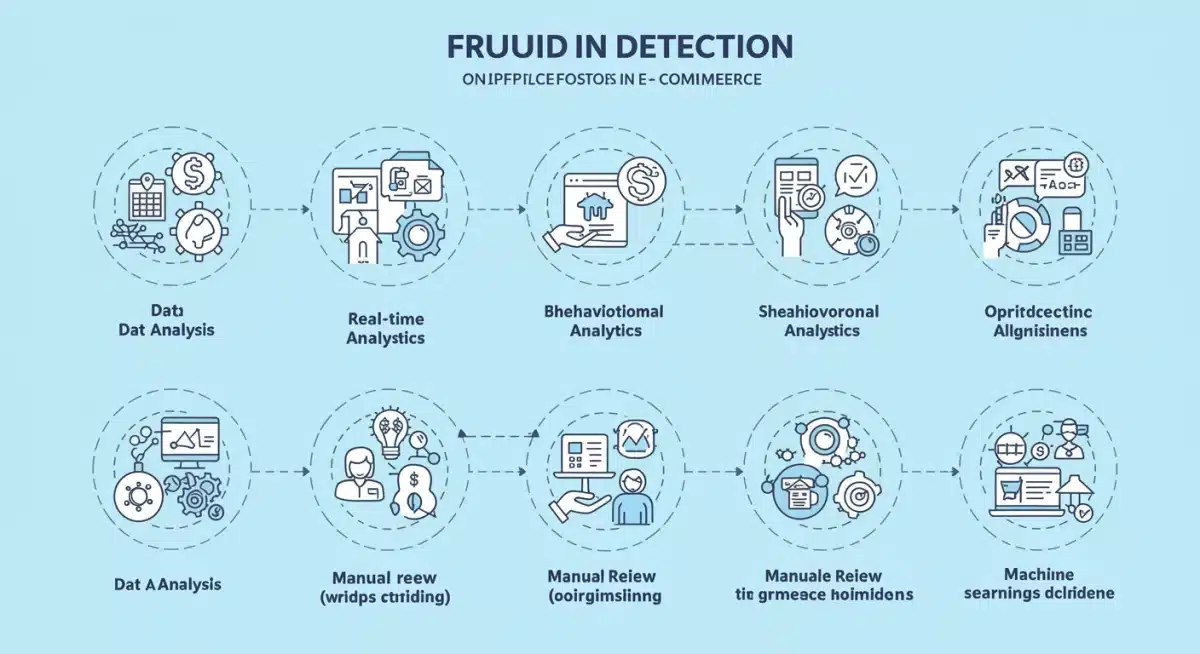
- Real-time Analysis: The ability to evaluate transactions as they happen, allowing for immediate action if fraud is suspected.
- Behavioral Analytics: Learning normal customer behavior to flag deviations, such as unusually large orders, rapid successive purchases, or shipping to multiple addresses.
- Device Fingerprinting: Identifying unique characteristics of a customer’s device (operating system, browser, plugins) to detect if multiple transactions are originating from the same device under different identities.
- Geolocation and IP Address Analysis: Cross-referencing billing and shipping addresses with IP locations to spot discrepancies that could indicate fraud.
- Machine Learning: Continuously adapting to new fraud patterns and improving detection accuracy over time, reducing false positives and negatives.
By integrating such a system, online sellers can significantly enhance their ability to detect and block fraudulent transactions, minimizing financial losses and preventing goods from being shipped to fraudsters. The goal is to create a dynamic defense that evolves with the threats, ensuring your business remains one step ahead.
Control 3: Implement Robust Chargeback Management Strategies
Chargebacks are a significant concern for online sellers, often resulting in lost revenue, goods, and additional fees. While some chargebacks are legitimate, many stem from friendly fraud or outright criminal activity. Effective chargeback management is crucial for mitigating these losses and protecting your merchant account health.
A proactive strategy involves not only preventing chargebacks but also successfully disputing those that do occur. This requires meticulous record-keeping, clear communication with customers, and a deep understanding of chargeback codes and procedures. By streamlining your internal processes, you can significantly improve your chances of winning chargeback disputes.
Essential Elements of Chargeback Management
To effectively manage and reduce chargebacks, online sellers should focus on several key areas.
- Clear Product Descriptions and Images: Reduce ‘item not as described’ disputes by providing accurate and detailed product information.
- Transparent Shipping Policies: Clearly communicate shipping times, costs, and tracking information to prevent ‘item not received’ claims.
- Responsive Customer Service: Address customer complaints and issues promptly to resolve problems before they escalate to a chargeback.
- Proof of Delivery: Always obtain signature confirmation for high-value orders to prove delivery.
- Data Collection for Disputes: Gather all relevant transaction data, including order details, customer communications, IP addresses, and tracking information, to build a strong case for disputing fraudulent chargebacks.
Additionally, consider using chargeback prevention services that analyze transactions for high-risk indicators and send alerts, allowing you to intervene before a chargeback is initiated. By taking a comprehensive approach to chargeback management, online sellers can transform a reactive problem into a controlled and manageable aspect of their business operations, ultimately contributing to that 5% loss reduction goal.
Control 4: Leverage Fraud Detection Tools and Machine Learning
The sheer volume and complexity of online transactions make manual fraud detection nearly impossible for most businesses. This is where specialized fraud detection tools, particularly those powered by machine learning, become indispensable. These tools can analyze vast datasets, identify subtle patterns, and make predictive assessments of fraud risk with high accuracy.
Machine learning algorithms are constantly learning and adapting. They can detect new fraud schemes faster than human analysts, improving their effectiveness over time. By moving beyond static rules, these systems offer a dynamic defense against evolving threats, minimizing both false positives (legitimate transactions flagged as fraud) and false negatives (fraudulent transactions that slip through).
Benefits of ML-Powered Fraud Detection
Integrating machine learning into your fraud prevention strategy offers several compelling advantages for online sellers.
- Enhanced Accuracy: ML models can uncover hidden correlations and patterns that human analysts might miss, leading to more precise fraud identification.
- Speed and Efficiency: Automated systems can process and analyze transactions in milliseconds, enabling real-time decision-making without delaying legitimate orders.
- Adaptability: As fraudsters develop new tactics, ML models can be retrained with new data to recognize and counter these emerging threats.
- Reduced Manual Review: By accurately flagging high-risk transactions, ML tools reduce the need for extensive manual reviews, saving time and resources.
- Improved Customer Experience: Fewer false positives mean fewer legitimate customers are inconvenienced by unnecessary transaction holds or cancellations.
Choosing the right fraud detection platform involves evaluating its integration capabilities, scalability, and the expertise of its data science team. A well-implemented ML-powered solution is a cornerstone of modern online seller fraud prevention, providing a robust and intelligent defense against financial losses.
Control 5: Regular Security Audits and Employee Training
Technology alone cannot fully protect your business from fraud. Human error and outdated processes can create vulnerabilities that fraudsters are quick to exploit. Regular security audits and comprehensive employee training are vital components of a holistic fraud prevention strategy, ensuring your entire operation is secure.
Security audits involve a thorough review of your systems, policies, and procedures to identify weaknesses and ensure compliance with industry best practices. This proactive approach helps to patch vulnerabilities before they can be exploited. Employee training, on the other hand, empowers your team to recognize and respond to potential threats, turning them into your first line of defense.
Key Aspects of Security Audits and Training
To maintain a strong security posture, online sellers should focus on these critical areas.
- Vulnerability Assessments: Regularly scan your website and payment infrastructure for security gaps and misconfigurations.
- Penetration Testing: Simulate cyberattacks to identify exploitable weaknesses in your systems.
- Data Handling Policies: Ensure all employees understand and adhere to strict protocols for handling sensitive customer data, including payment information.
- Phishing Awareness Training: Educate employees on how to identify and report phishing attempts, which are common tactics used to gain access to internal systems.
- Internal Fraud Prevention: Implement checks and balances to prevent internal fraud, such as segregation of duties and regular reconciliation of financial records.
Investing in ongoing training ensures your team is aware of the latest fraud trends and knows how to react appropriately. This includes understanding red flags in orders, recognizing social engineering tactics, and knowing when to escalate suspicious activity. A well-trained workforce, combined with robust technical controls, creates a formidable barrier against both external and internal fraud threats, significantly contributing to the overall goal of reducing losses.
Measuring Impact and Continuous Improvement
Implementing fraud prevention controls is an ongoing process, not a one-time fix. To truly achieve the goal of reducing losses by 5% in 2025, online sellers must continuously monitor the effectiveness of their strategies, adapt to new threats, and refine their approaches. This involves tracking key performance indicators (KPIs) and fostering a culture of continuous improvement.
Regularly reviewing fraud rates, chargeback ratios, and the cost of fraud prevention measures against the losses prevented provides valuable insights. This data-driven approach allows you to identify which controls are most effective, where adjustments are needed, and how new technologies can be integrated to further strengthen your defenses. The landscape of e-commerce fraud is constantly shifting, and your defense mechanisms must evolve alongside it.
Key Metrics for Fraud Prevention Success
Tracking the right metrics is essential for evaluating the success of your fraud prevention efforts.
- Fraud Rate: The percentage of fraudulent transactions relative to total transactions. Aim to consistently reduce this number.
- Chargeback Rate: The percentage of transactions that result in a chargeback. Keeping this below industry thresholds is crucial for merchant account health.
- False Positive Rate: The percentage of legitimate transactions incorrectly flagged as fraudulent. A high rate indicates an overzealous system that might be deterring good customers.
- Manual Review Rate: The percentage of transactions requiring human intervention. Lowering this indicates more efficient automated detection.
- Cost of Fraud vs. Cost of Prevention: A balanced approach ensures you’re not spending more to prevent fraud than the fraud itself would cost.
By regularly analyzing these metrics, online sellers can make informed decisions about their fraud prevention strategies. This iterative process of implementation, measurement, and refinement is key to not only meeting but exceeding loss reduction targets. Staying vigilant and adaptable ensures long-term security and sustained growth in the competitive e-commerce arena.
| Key Control | Brief Description |
|---|---|
| Robust Authentication | Verify user identity with MFA to prevent account takeovers. |
| Advanced Monitoring | Real-time analysis of transactions for suspicious patterns. |
| Chargeback Management | Proactive strategies to prevent and dispute fraudulent chargebacks. |
| Fraud Detection Tools | Utilize machine learning to identify and predict fraud risks efficiently. |
Frequently Asked Questions About Online Fraud Prevention
CNP fraud occurs when a fraudster uses stolen credit card details to make online purchases without the physical card being present. It’s a prevalent form of e-commerce fraud that online sellers must actively combat with robust verification processes.
MFA adds extra layers of security by requiring users to provide multiple forms of verification, such as a password and a code sent to their phone. This makes it significantly harder for unauthorized individuals to access customer accounts, preventing account takeovers.
Friendly fraud, or chargeback fraud, happens when a customer disputes a legitimate transaction. Prevention involves clear communication, accurate product descriptions, transparent shipping policies, and excellent customer service to resolve issues before chargebacks occur.
Machine learning algorithms can analyze vast amounts of transaction data in real-time to identify complex fraud patterns that human analysts might miss. They adapt to new threats, improving accuracy and efficiency in detecting and preventing fraudulent activities automatically.
Online stores should conduct security audits at least annually, or more frequently if significant changes are made to their systems or if new fraud trends emerge. Regular audits help identify vulnerabilities and ensure compliance with evolving security standards.
Conclusion
The journey towards effective online seller fraud prevention is a continuous one, demanding vigilance, adaptation, and the strategic implementation of robust controls. By prioritizing strong customer authentication, deploying advanced transaction monitoring, mastering chargeback management, leveraging intelligent fraud detection tools, and investing in regular security audits and employee training, online sellers can significantly fortify their defenses. Achieving the ambitious goal of reducing losses by 5% in 2025 is well within reach for businesses committed to these essential practices. Embracing these controls not only protects your bottom line but also enhances customer trust and ensures the long-term viability and growth of your e-commerce venture in an increasingly complex digital landscape.