Payment Gateway Fees: 1% Reduction for US E-commerce by 2025

The future of payment gateways on e-commerce platforms is set to redefine transaction costs for US merchants, with a projected 1% reduction in fees by 2025, promising significant savings and improved profitability across the online retail sector.
The landscape of online commerce is in constant flux, driven by technological advancements and market demands. For US merchants, a pivotal shift is on the horizon: the potential for a 1% reduction in payment gateway fees by 2025. This isn’t merely a minor adjustment; it represents a substantial opportunity to boost profitability and streamline operations in an increasingly competitive digital marketplace. Understanding the forces behind this potential reduction and how to capitalize on it is crucial for any e-commerce business looking to thrive.
The evolving landscape of payment processing
The journey of a payment, from customer click to merchant account, involves a complex ecosystem of entities, each with its own costs. Traditionally, these costs, known as transaction fees, have been a significant overhead for e-commerce businesses. However, the industry is experiencing a profound transformation, driven by innovation and a growing demand for efficiency.
New technologies and evolving regulatory environments are pushing for greater transparency and reduced friction in payment processing. Merchants, often caught between high processing costs and the need to offer diverse payment options, are increasingly scrutinizing these fees. This collective pressure is a primary catalyst for the anticipated fee reduction, encouraging payment service providers to innovate and offer more competitive pricing models.
Technological advancements driving change
- Blockchain and distributed ledger technology (DLT): These technologies offer the potential for peer-to-peer transactions, bypassing traditional intermediaries and their associated fees.
- Artificial intelligence (AI) and machine learning (ML): AI optimizes fraud detection and risk assessment, leading to lower chargeback rates and, consequently, reduced processing costs.
- Open banking initiatives: By enabling secure data sharing between banks and third-party providers, open banking fosters competition and innovative payment solutions that can be more cost-effective.
These advancements are not just theoretical; they are actively being integrated into payment gateway services, laying the groundwork for a more efficient and less expensive future for online transactions. The combined effect of these innovations offers a compelling pathway to achieving the 1% fee reduction target.
In essence, the payment processing landscape is becoming more sophisticated and user-centric. The shift is not just about technology but also about the business models that underpin these services, moving towards greater value for merchants. This evolution is critical for any e-commerce business seeking to optimize its financial operations.
Understanding current payment gateway fees for US merchants
Before delving into reductions, it’s essential to grasp the current structure of payment gateway fees. These are typically not a single charge but a combination of various costs, including interchange fees, assessment fees, and processor markups. Interchange fees are paid to the card-issuing bank, assessment fees go to the card networks (Visa, Mastercard, etc.), and processor markups are the profit margin for the payment gateway service provider.
For many US merchants, these fees can range anywhere from 1.5% to 3.5% or more per transaction, depending on factors like transaction volume, card type, and the processing model chosen. These percentages, while seemingly small, accumulate rapidly, significantly impacting profit margins, especially for businesses with high sales volumes or low-margin products.
Common fee structures encountered
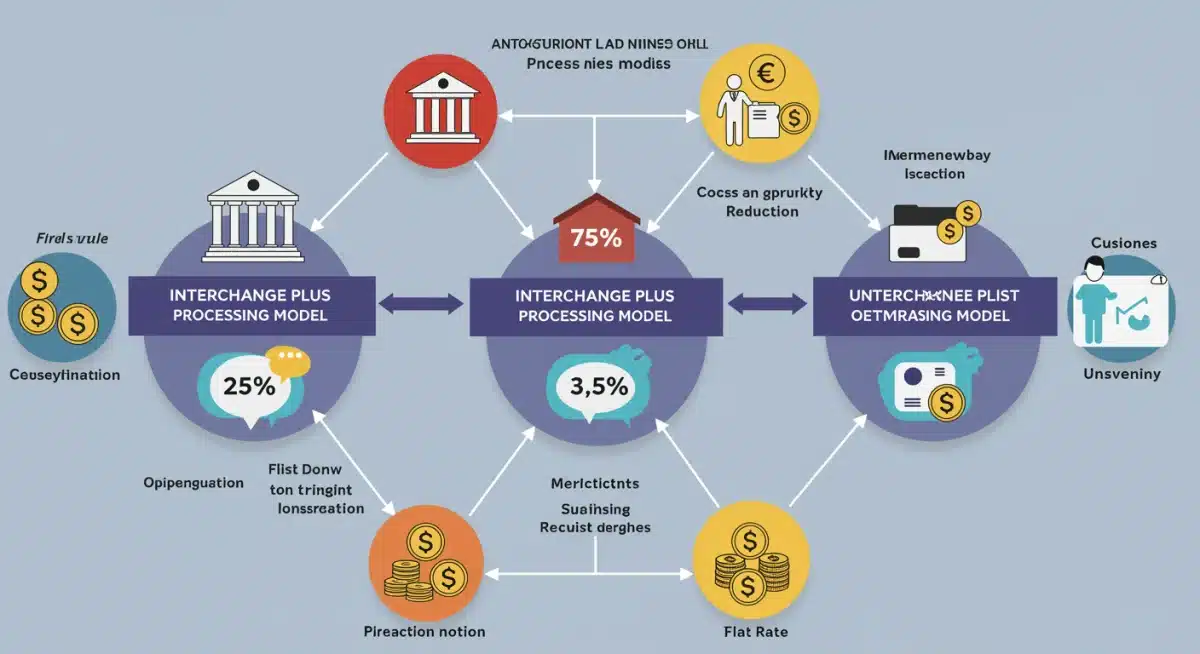
- Interchange-plus pricing: This transparent model passes interchange and assessment fees directly to the merchant, adding a fixed markup per transaction.
- Tiered pricing: This less transparent model categorizes transactions into qualified, mid-qualified, and non-qualified tiers, each with different rates.
- Flat-rate pricing: Often favored by smaller businesses, this model offers a single percentage rate for all transactions, simplifying cost prediction but potentially being more expensive for certain transaction types.
The complexity of these fee structures often makes it challenging for merchants to accurately predict and manage their costs. This lack of clarity has historically made it difficult to negotiate better rates or even understand where savings could be made. However, increased competition among payment processors and a demand for greater transparency are slowly eroding these opaque practices.
A comprehensive understanding of these fees is the first step toward identifying opportunities for reduction. Merchants must meticulously review their statements and understand each component of their processing costs to effectively strategize for lower rates.
Strategies for reducing transaction costs
Achieving a 1% reduction in transaction fees isn’t a passive endeavor; it requires proactive strategies from merchants and continuous innovation from payment providers. One of the most direct approaches involves negotiating with existing payment processors or exploring alternative providers.
Merchants with significant transaction volumes often have leverage to negotiate better rates. Demonstrating consistent growth and a reliable customer base can make a compelling case for a lower markup. Furthermore, comparing offers from multiple payment gateways can reveal significant discrepancies in pricing models and service offerings, allowing merchants to choose the most cost-effective option for their specific needs.
Leveraging alternative payment methods
The rise of alternative payment methods presents another powerful avenue for cost reduction. Many of these methods, such as ACH payments, digital wallets, and even cryptocurrency, often come with lower transaction fees compared to traditional credit card processing.
- ACH payments: Direct bank transfers typically incur much lower fixed fees, making them ideal for larger transactions.
- Digital wallets (e.g., Apple Pay, Google Pay): While still using card rails, these methods often benefit from tokenization and enhanced security, potentially reducing fraud-related costs.
- Buy Now, Pay Later (BNPL): While BNPL providers charge fees, they can boost conversion rates and often have different fee structures that might be beneficial for certain business models.
Encouraging customers to use these lower-cost options through incentives or clear communication can significantly shift a merchant’s overall fee burden. Implementing these strategies requires careful planning and integration but offers substantial long-term benefits.
Moreover, optimizing fraud prevention measures can also indirectly reduce costs. By minimizing chargebacks and fraudulent transactions, merchants can avoid associated penalties and processing fees, contributing to the overall goal of fee reduction. Implementing robust security protocols, such as 3D Secure, can be a game-changer in this regard.
The role of technology in fee optimization
Technology is not just a driver of change but also a powerful tool for merchants to actively optimize their payment processing costs. Advanced analytics, for instance, can provide granular insights into transaction data, helping businesses identify which payment methods are most expensive, during which periods, and for which customer segments. This data-driven approach enables targeted strategies for fee reduction.
Payment orchestration platforms are another technological innovation gaining traction. These platforms allow merchants to route transactions through multiple payment gateways, dynamically choosing the most cost-effective option based on real-time data, transaction type, and even geographic location. This intelligent routing ensures that each transaction is processed at the lowest possible cost, maximizing savings.
Emerging tech solutions for lower fees
- Tokenization and encryption: These security measures reduce the risk of data breaches, which can lead to costly fines and reputational damage, indirectly lowering overall processing costs.
- Payment routing optimization: Algorithms automatically select the most affordable gateway or network for each transaction, based on predefined rules and real-time fee data.
- Consolidated reporting: Provides a unified view of all payment-related data, making it easier to track fees, identify discrepancies, and negotiate effectively with providers.
The integration of these technologies requires an initial investment, but the long-term savings can be substantial. For US merchants aiming for a 1% reduction in payment gateway fees by 2025, embracing these technological solutions is not just an option but a necessity. They offer the tools needed to navigate the complexities of payment processing and actively drive down costs.
Ultimately, technology empowers merchants to move beyond simply accepting payments to strategically managing their payment ecosystem for maximum efficiency and profitability.
Industry collaboration and regulatory impact
The quest for reduced payment processing fees is not solely a merchant-driven effort; it’s also influenced by broader industry collaboration and regulatory shifts. Industry bodies, payment networks, and even governments are increasingly recognizing the economic burden that high transaction fees place on businesses, particularly small and medium-sized enterprises (SMEs).
Initiatives aimed at fostering greater competition among payment providers, standardizing payment protocols, and promoting transparency are gaining momentum. These collaborative efforts seek to create a more equitable and efficient payment ecosystem, where innovation thrives and costs are kept in check. Regulatory bodies in the US are also exploring ways to ensure fair practices and prevent monopolistic tendencies in the payment processing sector.
Key drivers of change
- Increased competition: A growing number of fintech companies and challenger banks are entering the payment processing space, offering innovative solutions and competitive pricing.
- Merchant advocacy groups: These groups actively lobby for lower fees and greater transparency, raising awareness and putting pressure on payment networks and processors.
- Potential regulatory intervention: Discussions around capping interchange fees or mandating greater data sharing could significantly impact the cost structure for merchants.
The Durbin Amendment, for example, previously capped debit card interchange fees, demonstrating the power of regulation to influence payment costs. While credit card interchange remains largely unregulated in the US, the ongoing dialogue and potential for future legislative action cannot be overlooked. These external factors create an environment conducive to fee reductions.
The interplay between technological innovation, market competition, and regulatory oversight forms a powerful trifecta that is steadily pushing the industry towards a more merchant-friendly fee structure. This collective momentum is crucial for realizing the ambitious goal of a 1% fee reduction by 2025.
Projected impact of a 1% fee reduction for US merchants
A 1% reduction in payment gateway fees might seem modest at first glance, but its cumulative impact on US e-commerce merchants, especially by 2025, would be profound. For businesses operating on thin margins, this reduction could translate directly into increased profitability, allowing for reinvestment in growth, marketing, or improved customer experiences.
Consider a medium-sized e-commerce business processing $10 million in online sales annually. A 1% reduction in fees would save them $100,000 per year. For larger enterprises, these savings could easily run into millions. This capital, previously absorbed by transaction costs, can now be strategically deployed to enhance competitiveness and foster innovation within the business.
Broader economic benefits
- Increased competitiveness: Lower operational costs allow merchants to offer more competitive pricing, benefiting consumers.
- Stimulated innovation: Saved capital can be reinvested into product development, technological upgrades, and market expansion.
- Support for small businesses: SMEs, which often struggle with high processing fees, would experience a significant boost to their bottom line, fostering growth and job creation.
Beyond individual business benefits, a widespread reduction in fees could have a ripple effect across the US economy. It would make e-commerce a more attractive and sustainable venture, encouraging new businesses to enter the market and existing ones to expand their online presence. This fosters a more dynamic and resilient digital economy.
Furthermore, it could lead to greater transparency in pricing across the payment industry, as providers are incentivized to compete on cost and value. This shift would empower merchants with more choices and better negotiating positions, creating a healthier market environment for all stakeholders. The 1% reduction is not just a number; it’s a catalyst for broader economic improvement in the e-commerce sector.
| Key Point | Brief Description |
|---|---|
| Fee Reduction Target | US merchants aim for a 1% reduction in payment gateway fees by 2025. |
| Driving Forces | Technological innovation, increased competition, and merchant advocacy are key drivers. |
| Merchant Strategies | Negotiation, alternative payment methods, and payment orchestration platforms are crucial. |
| Economic Impact | Increased profitability, competitiveness, and support for small businesses. |
Frequently Asked Questions About Payment Gateway Fees
Payment gateway fees are charges incurred for processing online transactions, typically comprising interchange, assessment, and processor fees. They are crucial because they directly impact a merchant’s profitability, especially for businesses with high sales volumes or thin margins, making their reduction a significant financial goal.
Merchants can reduce fees by negotiating with payment processors, exploring alternative payment methods like ACH or digital wallets, and implementing payment orchestration platforms. Optimizing fraud prevention measures also plays a role in minimizing costly chargebacks and associated fees, contributing to overall savings.
Blockchain, AI, machine learning, and open banking initiatives are key technological drivers. These innovations enhance security, optimize fraud detection, and enable more efficient, direct transaction routing, reducing the reliance on traditional, more expensive intermediaries, thereby fostering a more cost-effective payment ecosystem.
A 1% reduction would significantly boost merchant profitability, allowing for reinvestment in growth and innovation. It would also increase competitiveness, support small businesses by easing financial burdens, and potentially lead to more transparent pricing across the payment industry, fostering a more robust digital economy.
Yes, regulatory bodies and industry groups are actively exploring ways to foster greater competition and transparency in payment processing. While credit card interchange fees remain largely unregulated, ongoing dialogue and potential future legislative actions, similar to the Durbin Amendment for debit cards, could further influence fee structures.
Conclusion
The journey towards a 1% reduction in payment gateway fees for US merchants by 2025 is a multifaceted endeavor, propelled by technological innovation, strategic merchant action, and evolving industry dynamics. This potential shift promises not just financial relief but a transformative impact on the competitiveness and sustainability of e-commerce businesses. By understanding the current fee landscape, proactively adopting cost-saving strategies, and embracing emerging technologies, merchants can position themselves to fully capitalize on this impending change. The future of online payments points towards greater efficiency, transparency, and ultimately, a more profitable environment for all stakeholders in the digital marketplace.